







































![A Ledger of the Soul: Navigating the Allah-Bhagavant Nexus in a 19th-Century Puruṣākāra Jñāna Caupara [Gyan Chauper]](https://counterpointbd.com/uploads/images/202608/image_430x256_6a93baa3b09a7.jpg)


















The Case for Selling the Family Silver
Bangladesh does not need a government that owns everything. It needs a government that has the political will to solve issues from the perspective of its citizens and not of the ruling class.

This year’s national budget arrives with the language of relief. For ordinary citizens, it offers a slightly wider income tax cushion, some tax relief on essential commodities, concessions for farmers, cheaper mobile access, healthcare related relief, and encouragement for freelancers, startups and the digital economy.
These are not insignificant gestures. In a country where food prices, medical costs and uncertainty around employment shape household anxiety, even modest relief matters.
But the larger question remains unavoidable. Can a government that is short of cash, struggling to raise revenue, borrowing heavily, and trying to rescue a distressed banking system still justify owning and operating a sprawling empire of banks, mills, hotels, industrial units, transport entities and loss-making commercial enterprises?
The FY 2026/27 budget is large in ambition and fragile in arithmetic. Total expenditure has been placed at Tk 9.38 lakh crore, revenue is projected at Tk 6.95 lakh crore, and the deficit stands at Tk 2.43 lakh crore.
This means the government must borrow heavily while also trying to reassure citizens, creditors, depositors and international lenders that it has a credible path to stability.
For the ordinary citizen, the budget must therefore be judged not merely by what it promises, but by whether those promises can be financed without creating a bigger crisis later.
From a household perspective, several measures are welcome. Raising the tax-free income threshold gives some relief to salaried people. Reducing withholding tax on essential commodities such as rice, wheat, potatoes, fish, onions, garlic, salt, sugar and edible oil may ease pressure if the benefits are passed on to consumers.
Relief on agricultural inputs could help farmers, and VAT concessions on items such as cardiac stents, intraocular lenses and dialysis inputs are important in a country where medical bills can destroy family finances overnight.
The withdrawal of the Tk 300 SIM card tax and support for freelancers and startups also recognise the importance of digital access and youth income.
Yet the citizen should ask a simple bazaar question: will prices actually fall? Bangladesh has too often mistaken tax concessions for consumer relief. A tax may be reduced at import or wholesale level, but unless markets are competitive and supply chains are properly monitored, traders may simply keep the margin.
The state loses revenue, the middleman gains, and the consumer receives a press release instead of cheaper food. The social safety net allocation is also welcome, particularly the proposed Family Card program for women-headed households. But social protection must be clean, targeted and auditable. If it is captured by local patronage, it becomes politics wearing the clothes of compassion.
The real shadow over the budget, however, is the banking system.
Bangladesh is not facing a simple liquidity problem. A liquidity problem means a bank has decent assets but not enough immediate cash.
Bangladesh is not facing a simple solvency problem. A solvency problem means the assets themselves are impaired.
Bangladesh has both. In some banks, the liquidity crisis is only the visible fever. The deeper disease is bad lending, political capture, and the erosion of capital.
The budget speech itself acknowledges the severity of the problem. Non-performing loans have risen sharply. Several banks face acute liquidity pressure. Depositor confidence has been damaged.
Capital adequacy has weakened to alarming levels. The government has spoken of recapitalization, risk-based supervision, management reform, stronger central bank authority, reduction of political interference, and restrictions on family control of banks.
These are necessary steps, but they will not be enough if rescue money merely refills institutions that have already been looted or mismanaged.
The state must protect small depositors first. Ordinary savers should not pay the price for regulatory failure and politically connected lending. But protecting depositors is not the same as protecting owners. If a bank has been hollowed out by connected borrowers, weak directors or shadow owners, public money must not be used to restore the same people to control.
The S. Alam episode has made this lesson brutally clear. Whether the final numbers are settled through investigation, litigation, or asset recovery, the broad pattern is already familiar: concentrated ownership, related party lending, weak supervision, regulatory capture, and capital flight.
It is the oldest banking scandal in the world with a Bangladeshi accent. Weak regulation plus powerful borrowers equal national plunder.
Any banking rescue must therefore follow a hard sequence. First, conduct independent asset quality reviews. Second, identify the true capital hole. Third, remove unfit owners, directors, and senior managers. Fourth, pursue asset recovery inside and outside Bangladesh.
Fifth, recapitalize only after governance has changed. Sixth, where possible, sell rehabilitated banks to qualified investors through transparent public processes. To return sick banks to the same families or groups that helped make them sick would be less reform than theatre, and very expensive theatre at that.
This brings us to the broader question of nationalized assets. Why does the government still own so many commercial entities?
Some public ownership makes sense. Sonali Bank, for example, can remain as a core public banking institution because it performs treasury, pension, social transfer and rural banking functions that the state may reasonably want to retain.
Strategic infrastructure, ports, parts of energy security and certain development finance functions may also justify state control.
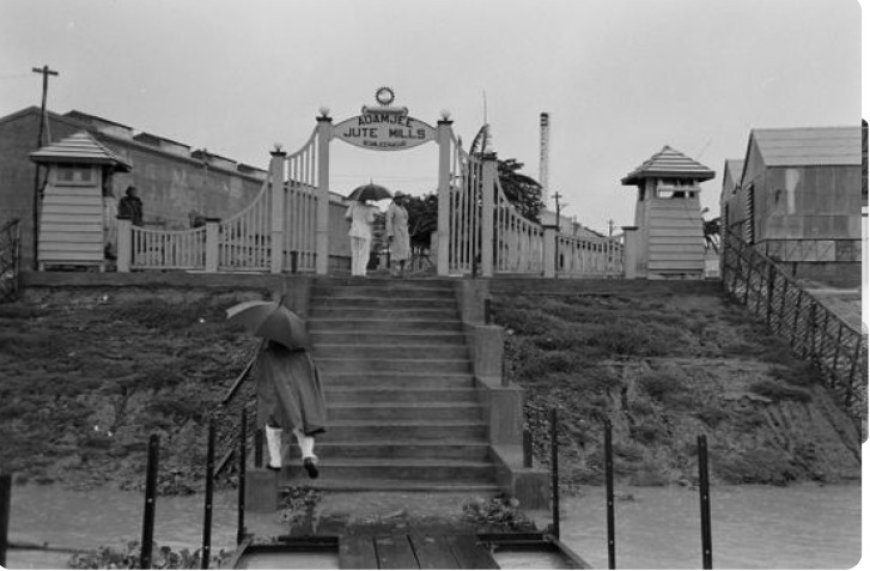
But why must the government own multiple weak commercial banks? Why must it remain in ordinary manufacturing, hospitality, airline operations, sugar, jute and industrial units that do not perform essential sovereign functions?
Why should public capital remain trapped in assets that private operators can run better, while hospitals, schools, urban transport, climate adaptation and bank restructuring need money?
The old argument that the state must own such assets for national dignity belongs to a post-colonial moment that has passed. A flag carrier is not a substitute for a functioning aviation policy. A state hotel is not tourism development. A loss-making mill is not heritage. A politically directed bank is not financial inclusion. It is a leaking bucket, and the taxpayer is repeatedly asked to refill it.
This does not mean everything should be sold blindly. Privatization without regulation can turn public inefficiency into private predation. Bangladesh knows this danger very well. The country does not need another round of assets quietly transferred to politically blessed buyers. It needs a disciplined national asset strategy.
The starting point should be a public national asset register. Every state-owned bank, company, hotel, industrial unit, land parcel, subsidiary, debt and contingent liability should be listed. The government should then classify assets into four groups: strategic assets to retain, public service assets to reform, commercial assets to sell, and dead assets to liquidate.
The second step is valuation. No asset should be sold without independent valuation, audited accounts and clear disclosure of liabilities. This is particularly important because profitable assets command better sale prices. If a hotel, bank or industrial unit can be made cleaner, more transparent and more profitable before sale, the taxpayer receives a higher price.
The purpose is not a distressed fire sale. The purpose is to convert poorly governed or non-strategic public assets into productive national capital.
The third step is buyer scrutiny. Every buyer must pass source of funds verification, tax clearance, anti-money laundering checks, loan default checks, politically exposed person screening and beneficial ownership disclosure. The public must know who is buying public property.
No industrial conglomerate should be allowed to control a bank if it is also a major borrower. Related party lending must be tightly capped and disclosed. Bank directors and controlling shareholders should face personal liability for fraudulent approvals and concealed ownership.
Hotels and airlines are useful examples, but they should not distract from the larger argument. The issue is not whether one particular hotel has charm or whether a national airline has emotional value.
The issue is whether the state should tie up public capital in commercial businesses while asking citizens to absorb austerity, banks to absorb rescues, and lenders to provide breathing room. If a unit is profitable, transparent and commercially attractive, that is precisely why it may fetch a stronger price.
If it is loss making, the state must decide whether reform can raise its value before sale or whether continued ownership only deepens the hole.
Proceeds from asset sales should not disappear into routine government spending. There should be a National Asset Recovery and Restructuring Fund, with proceeds ring fenced for bank restructuring after governance reform, reduction of expensive public debt, and targeted investment in health, education and social protection.
Selling assets to pay salaries would be fiscal vandalism. Selling assets to repair the financial system and reduce liabilities would be reform.
Can the sale of nationalized assets solve the government’s cash crunch? Not by itself. One-time proceeds cannot fix a recurring revenue problem. Bangladesh still needs a broader tax base, better compliance, less leakage, and more disciplined spending.
Asset sales can provide breathing room. They can reduce pressure on bank borrowing, improve fiscal credibility, attract foreign investment and help fund bank recapitalisation without simply printing money or piling more debt onto future taxpayers.
The budget gives citizens some relief, but relief without reform is aspirin. The banking sector needs surgery. The state-owned enterprise sector needs triage. The government must stop confusing ownership with sovereignty.
A modern state proves its strength not by running hotels, airlines and weak banks, but by regulating markets, protecting depositors, prosecuting plunder, and spending public money where only the state can act.
Bangladesh does not need a government that owns everything. It needs a government that has the political will to solve issues from the perspective of its citizens and not of the ruling class.
MK Aaref writes on culture, history, identity, and geopolitics from a South Asian and diasporic perspective.