


































































Who Can Afford to be a Politician Today
As the nation approaches another election marked by controversy and uncertainty, the composition of its candidate list serves as both a warning and a mirror. It reveals not only who seeks power, but why they seek it.
The candidate list for Bangladesh’s upcoming 13th National Assembly election offers a revealing, and troubling, portrait of the country’s evolving political economy. Nearly half of all validated candidates are businessmen, while barely one in four identifies politics as a profession.
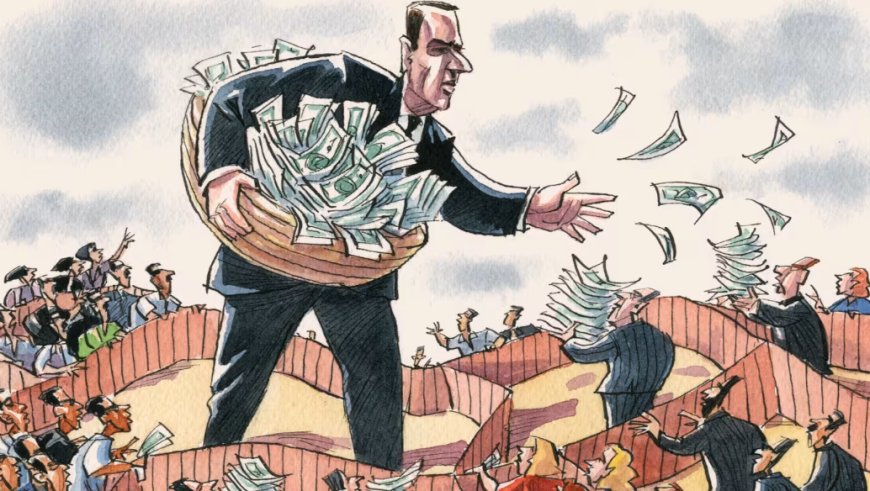
This imbalance is not accidental, nor is it new. It is the cumulative outcome of a political system that has steadily transformed parliamentary representation into a marketplace, where money increasingly substitutes ideology, organizational work, and public trust.
Out of 1,842 candidates whose nominations survived scrutiny, 814 are businessmen, accounting for more than 44 percent. In contrast, only 26 candidates, a negligible 1.4 percent, have declared politics as their sole profession.
The numbers are stark, and they tell a story more honestly than any campaign slogan. Parliament, once imagined as a forum of public service, is now widely perceived as an arena of private investment.
The dominance of businessmen across party lines underscores a structural shift rather than a partisan anomaly. The largest number of business candidates comes from the country’s major political players, followed closely by religious and smaller parties.
This convergence reveals a shared assumption that electoral viability increasingly depends on financial muscle rather than political credibility.
The cost of contesting elections has risen dramatically over the past two decades, and parties appear to have quietly accepted that only those with deep pockets can survive the grind of nomination battles, campaign financing, and post-election political bargaining.
The profession-wise breakdown of candidates further reinforces this transformation. Teachers form the second-largest professional group, numbering 244, followed by lawyers at 208. Farmers, doctors, former government officials, and consultants appear in far smaller numbers.
While this diversity might seem encouraging at first glance, a closer reading reveals that many candidates list multiple professions, often combining business with agriculture, teaching, law, or consulting.
Politics, notably, is rarely presented as a standalone vocation, suggesting that it is no longer viewed as a life-long commitment but rather as an extension of other economic pursuits.
This pattern raises uncomfortable questions about the nature of political representation in Bangladesh. When businessmen dominate legislative spaces, public policy risks being shaped less by social need and more by commercial interest.
Lawmaking becomes vulnerable to conflicts of interest, regulatory capture, and rent-seeking behaviour. The line between policymaker and beneficiary grows dangerously thin when those tasked with drafting economic regulations are themselves major players in the sectors they oversee.
The steady marginalization of career politicians also reflects a deeper erosion of party institutions. Once, parties functioned as training grounds where leaders emerged through grassroots mobilization, ideological work, and sustained engagement with communities.
Today, nomination processes increasingly resemble auctions, with financial capacity outweighing years of political labour. This shift discourages young activists, labour leaders, and civil society figures from pursuing politics as a profession, reinforcing a cycle where money becomes both the entry ticket and the ultimate prize.
The numbers surrounding nomination submissions offer additional insight into this reality. Out of 3,406 nomination forms collected, only 2,568 were submitted, and fewer than 1,900 survived scrutiny.
The high attrition rate reflects not just bureaucratic filtering but also the intense competition within parties, where financial leverage often determines who advances. Independent candidates, numbering 478 at submission stage, face even steeper odds in a system tilted toward resource-heavy campaigns.
The rise of businessmen-politicians must also be viewed against the backdrop of Bangladesh’s broader economic trajectory. Rapid urbanization, expansion of the private sector, and the growing influence of business conglomerates have reshaped the country’s power structure.
Political office now offers access to regulatory influence, public contracts, and policy leverage that can significantly enhance commercial fortunes. In such an environment, the incentive to enter politics is no longer driven primarily by public service but by the promise of return on investment.
This convergence of wealth and power has profound implications for governance. Empirical studies across developing democracies show that legislatures dominated by business elites tend to prioritize infrastructure spending, tax incentives, and regulatory leniency, often at the expense of social welfare, labour rights, and environmental protection.
Bangladesh, with its pressing challenges in education quality, healthcare access, and climate resilience, can ill afford a parliament that is skewed toward narrow economic interests.
The near absence of candidates who identify politics as their sole profession is particularly alarming. Politics, like medicine or law, requires expertise, ethical grounding, and institutional memory.
When it is treated merely as a side occupation or a strategic investment, policymaking becomes reactive, transactional, and short-term. The erosion of professional political leadership weakens parliamentary oversight, dilutes legislative debate, and reduces accountability.
The presence of teachers, lawyers, and professionals from other sectors does provide some balance, but their influence remains limited within a framework dominated by business interests.
Even among these groups, many are affiliated with parties where financial considerations play a decisive role in ticket allocation. The result is a parliament that may appear socially diverse on paper but remains economically homogeneous in practice.
This trend also has consequences for public trust. Voter cynicism deepens when elections are perceived as contests between wealthy elites rather than choices between competing visions for national development.
Declining voter turnout, growing disengagement among youth, and the rise of protest politics are symptoms of this disconnect. When citizens believe that parliamentary seats are bought rather than earned, democracy itself becomes a hollow ritual.
Yet, the responsibility does not lie solely with individual candidates or even parties. The regulatory framework governing campaign finance, asset disclosure, and conflict of interest remains weak and inconsistently enforced.
Without transparent limits on campaign spending and robust oversight of lawmakers’ financial dealings, the incentive structure will continue to favour wealth over merit.
Reversing this trajectory requires more than rhetorical commitment to reform. Parties must rediscover the value of ideological leadership and grassroots politics. Internal democracy, transparent nomination processes, and investment in political education are essential steps toward restoring balance.
Equally important is the need for electoral reforms that lower the cost of participation and level the playing field for candidates from non-elite backgrounds.
Bangladesh’s parliament should reflect the country’s social complexity, economic diversity, and moral aspirations. A legislature overwhelmingly populated by businessmen risks becoming detached from the lived realities of farmers, workers, teachers, and the urban poor.
Democracy thrives not when wealth dominates power, but when power is accountable to society as a whole.
As the nation approaches another election marked by controversy and uncertainty, the composition of its candidate list serves as both a warning and a mirror. It reveals not only who seeks power, but why they seek it.
Whether this moment prompts introspection or further entrenchment will shape the character of Bangladesh’s democracy for years to come.
H. M. Nazmul Alam is an Academic, Journalist, and Political Analyst based in Dhaka, Bangladesh. Currently he teaches at IUBAT.