



































































Why New Delhi is Losing the Bangladeshi Heart
India has not merely provoked a cyclical wave of anti-India sentiment; it has actively contributed to giving it a permanent, structural form. The alienation is no longer just about borders -- it is about sovereignty.

The historical bilateral relationship between India and Bangladesh is navigating an unprecedented crisis, signaling a profound re-evaluation in the subcontinent's geo-politics.
While the immediate catalyst for this bitterness may appear to be the political upheaval following August 2024, the seeds were sown over a decade and a half.
This period, ironically framed by both capitals as a Golden Chapter, witnessed a deep erosion of trust, primarily due to New Delhi's over-reliance on a single political entity and its consistent failure to connect with the aspirations of the Bangladeshi populace.
India’s inability to understand the pulse of a young, nationalistic Bangladesh has gradually distanced Delhi from the heart of its most crucial eastern neighbor.
The question is whether the reason behind Indian apathy among Bangladeshis is purely political, or if it encompasses additional dimensions. In my opinion, while the roots of this disconnect are political, non-political factors have also played a significant role in fueling anti-India sentiment.
In his article published last year in Counterpoint, Professor Ashok Swain explored several long-standing internal and external factors that have driven the recent shift in Bangladeshi sentiment against India.
From an academic standpoint, those factors and agents are certainly responsible for fostering anti-Indian sentiment in the country. However, if we examine popular discourse, we will find other elements that are more influential and widely discussed than those addressed by Professor Swain, which have fueled and intensified apathy toward India.
The purpose of this write-up is to investigate these specific elements within popular discourse that have profoundly impacted the relationship between India and Bangladesh over the past one and a half decades.
Based on mainstream media reports in Bangladesh, trends on social media, direct interactions with the youth, and personal observations, I have produced this analysis.
I believe the current crisis in the relationship between these two nations is not merely diplomatic; it is a psychological disconnect and the solution lies in a long-term, sustainable, and inclusive diplomatic practices.
The anti-Indian sentiment has started to sprout in Bangladesh after two massive incidents that took place during the early phase of the Hasina’s rule. The first was the 2009 Pilkhana massacre, commonly known as the BDR Mutiny, where 57 ‘pro-nationalist’ army officers were brutally killed.
This was not merely an internal security failure; it was perceived by a significant number of the Bangladeshi public, especially within military and nationalist circles, as an operation with external fingerprints.
Whether India covertly participated in this operation or not, the involvement of foreign agents became more apparent when investigators from the Bangladeshi army informed the press that they found evidence of weapons used in the operation that had not been used by BDR in recent times.
Furthermore, many survivors from BDR officer families told the media that they overheard some mutineers speaking in Hindi and other languages unfamiliar to them.
While India never officially addressed these allegations, scholars like Avinash Paliwal later revealed that New Delhi was prepared for military intervention in Bangladesh to secure Hasina from the crisis.
This paradox -- of suspected involvement in a national trauma, coupled with overt readiness to intervene -- created a deep-seated security anxiety in Bangladesh. The recently published re-investigation report, citing the presence of two dozen foreign agents, has only lent further credence to these popular suspicions, leaving a festering wound on the psyche of the nation's youth.
The second, more visceral blow came on January 7, 2011, with the killing of 15-year-old Felani Khatun by the Indian Border Security Force (BSF). Her body, left suspended for hours on the barbed-wire fence, became an indelible image of callousness.
For millions, it exposed the stark gap between India’s rhetoric of friendship and the brutal reality of its border management. The absence of a formal apology or meaningful accountability for this and subsequent border killings (which have continued despite diplomatic warmth) cemented a perception of India as a hegemon indifferent to Bangladeshi lives.
India’s role as a hegemon in regional political decision-making became more prominent during Bangladesh’s successive electoral crises. The 2014 election, boycotted by the opposition and deemed non-credible by much of the world, was instantly legitimized by India.
The Awami League’s uncontested victory in over half the parliamentary seats was framed by New Delhi as a necessity for stability. Then-Indian Foreign Minister Sushma Swaraj’s pivotal role in ensuring the nominal participation of the Jatiya Party to lend the process a veneer of competition is widely discussed in Bangladesh as evidence of direct orchestration.
This pattern repeated in 2018 and 2024, with India’s prompt congratulations effectively endorsing disputed outcomes. For Bangladesh’s opposition and a vast number of the youth, this strengthened India’s role as the chief external guarantor of a regime, prioritizing strategic interests over democratic principles.
Beyond the grand politics of security and elections, a series of unaddressed, asymmetric issues also destroyed India’s goodwill. The Teesta River water-sharing deal, promised and then abandoned in 2011 due to Indian domestic politics, remains the classic symbol of Indian unreliability.
The excitement in Dhaka before Hasina’s trip to Delhi, followed by the humiliating last-minute withdrawal, demonstrated that Bangladeshi interests could be overridden by the political calculations of an Indian state.
This disregard for Bangladeshi appeals, coupled with India's request for transit and corridor support from Bangladesh to access its Northeast region from the mainland, sparked widespread criticism on social media in Bangladesh. During the intervening years, several anti-Indian narratives gained traction within the informal conversations in Bangladesh.
For instance, the assertion that “millions of Indians” reside illegally in Bangladesh, with many purportedly serving as ‘Indian agents’ for Prime Minister Hasina, particularly within the police force and administrative sectors, became a prevalent topic of covert discussion in university settings across the country.
Additionally, there was growing concern over daily commodity prices in Bangladesh, where many believed that prices are artificially controlled by major marketers, with Indian suppliers of these commodities allegedly involved in criminal partnership.
The accusation was that this syndicate was exploiting poor consumers by fixing commodity prices and manipulating the market flow and availability of goods. This narrative often emerged before Ramadan and during crises such as the onion supply shortage, accompanied by claims that India was the direct beneficiary of this exploitation.
Moreover, India’s internal shift towards majoritarian politics, embodied by the Citizenship Amendment Act (CAA) and the National Register of Citizens (NRC), is watched with apprehension by Bangladesh’s Muslim-majority population, raising spectral fears of displacement. Incidents of anti-Muslim rhetoric in India resonate powerfully in Bangladeshi media.
Furthermore, events like the tragic murder of BUET student Abrar Fahad, allegedly over an anti-India social media post, are intertwined into a narrative of oppressive surveillance and enforced political correctness favouring India.
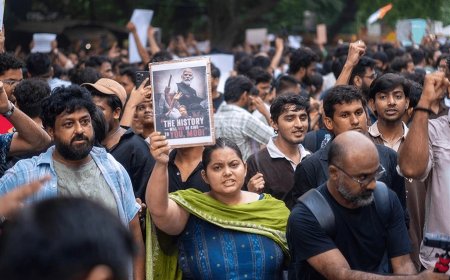
The historiographical irony is that the period of closest strategic alignment between governments (2009-2024) has also been the period of greatest decline in Indian popularity among the Bangladeshi public. When the rumblings of change began with the student-led mass uprising, India’s response revealed the rigidity of this bet.
Rather than engaging with the new political realities, the interim government, or civil society, New Delhi appeared to double down.
Offering refuge to ousted Awami League leaders, allowing its media eco-system to host venomous attacks on Bangladesh’s new development, and attempting to undermine figures like interim Chief Adviser Dr. Muhammad Yunus -- all were perceived as acts of sabotage against the Bangladeshi public’s will.
In doing so, India has not merely provoked a cyclical wave of anti-India sentiment; it has actively contributed to giving it a permanent, structural form. The alienation is no longer just about borders, water, or trade -- it is about sovereignty, respect, and agency.
The youth who led the uprising are the same generation that came of age witnessing the Felani killing, the Teesta betrayal, and the legitimization of disputed elections. Their worldview has been shaped by this very chronology of perceived Indian hegemony.
Until India realizes that the relationship with Bangladesh must be re-founded on equity, people-centric issues and respect for democratic sovereignty, the structural alienation, especially among the youth, will only deepen.
Muhammad Asiful Basar is a Doctoral Candidate from Institute of Development Policy, University of Antwerp, and a Senior Lecturer of Department of History & Philosophy at North South University.