







































































The UN Charter Is Not an Arrest Warrant
Normalizing forced extractions in the name of justice does not advance accountability; it advertises that power can dispense with law
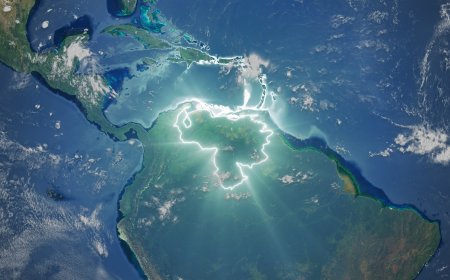
The US raid in Venezuela that ended with Nicolás Maduro and Cilia Flores in American custody has been marketed as a counter-narcotics “arrest.” That framing is the first breach.
International law does not permit a state to translate military intrusion into legality by borrowing the vocabulary of policing. If the use of force can be rebranded as procedure, the central restraint on interstate violence becomes a drafting exercise.
The governing law is the jus ad bellum. Article 2(4) of the UN Charter prohibits the threat or use of force against the territorial integrity or political independence of any state.
The exits are few: Security Council authorization, valid consent by the territorial state, or self-defense after an armed attack, constrained by necessity and proportionality. A unilateral seizure operation directed at the sitting leadership of another state sits outside those categories.
Self-defense is the easiest slogan and the hardest case to make. Organized crime and drug trafficking are grave problems, but gravity is not the Charter test. Article 51 responds to armed attacks, not to criminality and not to a general claim that another state is a source of harm.
Even on expansive readings of self-defense, necessity requires an immediate protective purpose -- repelling or halting an attack -- not punishment, retaliation, or political engineering.
Capturing a foreign president for trial in US courts is not self-defense; it is coercive jurisdiction by force.
Consent is equally thin unless one assumes the very point in dispute. Consent must come from authorities competent to represent the state in international law. It cannot be manufactured by recognizing a preferred rival, declaring that rival to be the government, and treating the resulting invitation as a legal key to the territory.
If recognition could substitute for consent, Article 2(4) would be hollow: Powerful states would legalize force simply by choosing who counts as the government.
The alternative claim is that the raid was merely extraterritorial law enforcement. Here international law is stricter, not looser. States may assert broad prescriptive jurisdiction over offences with cross-border effects, but enforcement jurisdiction -- the ability to arrest, search, and seize -- is overwhelmingly territorial.
Without Venezuelan permission, U.S. agents have no more right to execute a “warrant” in Caracas than Venezuela would have to execute one in Miami. This is why extradition and mutual legal assistance exist: They are the lawful mechanisms for moving suspects and evidence across borders.
The argument that illegality is excused by the alleged criminality of the target has been rejected before. When Israel abducted Adolf Eichmann from Argentina in 1960, the UN Security Council treated the operation as a violation of Argentine sovereignty even though Eichmann’s crimes were unparalleled.
The message was clear: Even the worst suspect does not give another state a roaming license to enforce its criminal process on foreign soil. Normalizing forced extractions in the name of justice does not advance accountability; it advertises that power can dispense with law.
Maduro’s personal status sharpens the breach. Under customary international law, a serving head of state enjoys immunity ratione personae from foreign criminal jurisdiction and inviolability from arrest and detention while in office.
These immunities are functional protections, designed to prevent precisely the kind of coercive interference that turns diplomacy into hostage-taking.
They do not depend on approval of the office-holder. A state that claims the power to arrest a sitting foreign leader is claiming a privilege that international law denies to all states.
This produces a legal dead end for Washington’s narrative. If the United States insists the operation was law enforcement, it collides with the territorial limits of enforcement jurisdiction and with head-of-state immunities.
If it insists the operation was a limited military action, it collides with the Charter prohibition and the absence of any lawful basis to initiate force.
The details -- whether the raid was “surgical,” how long it lasted, how many targets were struck -- do not cure the original defect: the resort to force was unlawful from the start.
The broader consequence is predictable. International law survives by reciprocity and by rules that apply even when the target is unpopular.
Once a major power asserts a right to conduct “arrest raids” abroad, others will imitate the method and supply their own labels: Counter-terrorism, anti-corruption, national security, protection of nationals.
Each imitation will be justified by a domestic indictment and performed with the same contempt for territorial integrity. The result is not accountability; it is a world where sovereignty is treated as negotiable and justice becomes a function of capability.
Those who want genuine accountability should reject this precedent most of all.
If Venezuelan officials have committed crimes, lawful avenues exist: Multilateral pressure, targeted sanctions consistent with due process, cooperative investigations, and support for legitimate international mechanisms that can exercise jurisdiction without turning the planet into an enforcement zone for the most powerful state.
A trial born from unlawful force does not strengthen international justice; it teaches that justice is whatever power can seize, and that is the opposite of the rule of law.
Khan Khalid Adnan is a Fellow of the Chartered Institute of Arbitrators (FCIArb), a Barrister in England and Wales, and an Advocate of the Supreme Court of Bangladesh. He has completed his LLM in Litigation and Dispute Resolution from UCL with distinction. Currently, he serves as the Head of the Chamber at Khan Saifur Rahman Associates, Dhaka, Bangladesh.