






























































2026 Bangladeshi Elections and Information Bombs
Rumour is part of politics and society but now it can be magnified and curated at speed in the age of the (un)smart phone. Compared to the digital control of the previous regime what we have now is the information bomb.

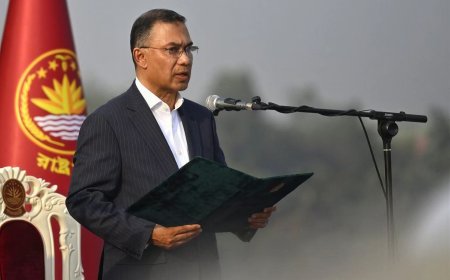
The onset of the much-awaited February 12, 2026 Bangladesh elections has commenced with some upbeat videos on YouTube, supported it seems by the Ministry of Cultural Affairs.
One of the videos posted by Independent TV titled Desher chabi apnar hate (the key of the country is in your hand) is gritty, upbeat, urban rap of the various Dhaka neighbourhoods.
Another heartwarming video posted by Banglavision titled Tolo dheu (raise the wave) is about the voting process across various landscapes of Bangladesh with its multiplicities of people, religions, music, cultures.
Both videos reference the July uprising, the graffiti, the icons, one video portraying Sheikh Hasina as a monstrous puppet. I momentarily questioned whether these videos are real or AI generated.
Such questioning is not surprising today given that such ‘information bombs’ characterize the interactions between India and Bangladesh who are in a tense relationship.
On December 12, 2025, the popular and anti-India Bangladeshi student leader Sharif Osman Hadi was shot. He died on December 18. It was alleged Hadi’s killers had escaped to India.
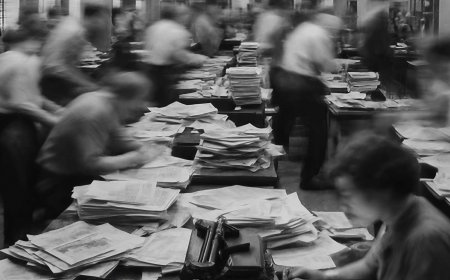
This rumour of Hadi’s killers seeking shelter across the border gave ammunition to critics already angry about Sheikh Hasina fleeing to India in 2024. Following the news of Hadi’s death on December 18, the buildings of the two biggest newspaper dailies Prothom Alo and Daily Star (sometimes mockingly referred to as Delhi Star) were set on fire as they were considered by antagonists as ‘Indian mouthpieces.’
The Daily Star had 28 journalists trapped on the terrace and it was reported that the emergency services were initially prevented from rescuing them. Many Bangladeshi friends feared that this event was a move to postpone the much-awaited elections.
The same night a Dalit Rabidas community garment worker Dipu Chandra Das was lynched by a mob following an argument with his garment factory (Pioneer Knitwears) co-workers in northern Bangladesh in Mymensingh.
His body was put on a tree which stood on the divider of the highway, set on fire, and videos were taken of this spectacle of the scaffold.
The same night, the house of a BNP politician was set on fire and his 7-year-old daughter Ayesha died.
On that night, a Dalit migrant worker Ramnarayan Baghel from Chattisgarh in India was fatally lynched by a mob in Kerala with 80 injuries as he was mistaken to be Bangladeshi/thief.
A few days later, an alleged extortionist Amrit Mandal of the Samrat gang died after clashes with the angry local people in Bangladesh. It was reported in India as another attack on Hindus.
On December 26, Jewel Sheikh from West Bengal was lynched in Odisha, India after being suspected of being Bangladeshi. Not so long ago Sonali Khatun was assumed to be Bangladeshi and deported to Bangladesh. After vigorous campaigns she could return and be reunited with her family in India.
Professor Virendra Balaji Sahare was suspended from Jamia Milia Islamia for setting a question on atrocities against Muslim minorities in India.
MP from Kerala and Chairperson of the Parliamentary external affairs Shashi Tharoor has reported how over Christmas, carol groups in Kerala were attacked allegedly by a BJP worker; a Santa Claus effigy has been attacked in a Chhattisgarh mall; prayers have been disrupted in a UP church, and a blind Christian girl has been assaulted.
As I write, the Tripura student Anjel Chakma has died because of a horrific racist attack in Dehradun as he repeatedly told his attackers that he was Indian and not Chinese. One of the accused has absconded to Nepal.
Student groups in the northeast have begun protests, demanding a national law against racial hate crimes.
I write as a political anthropologist from Kolkata, India; having carried out research in Bangladesh for nearly three decades and being a Professor of Anthropology in the UK.
I have written extensively and critically on the public memories, memorialization and testimonial cultures of documenting the experiences of birangonas -- women across various classes, religions and regions -- who were raped during the war of 1971 by the West Pakistani army and East Pakistani collaborators of the Pakistani army (Spectral Wound, 2015).
Having a close insight into the dynamics of both India and Bangladesh, I wanted to use the lens of rumour as an ‘information bomb’ (Virilio 2006) to reflect on the events of December 2025 at this sensitive time.
What are the dangers of this information bomb for the upcoming elections and what steps should be taken to address this phenomenon? As anthropologists we know that rumour -- ‘unverifiable speech’ -- can be a valuable source of historical representation.
At the same time, we need to be cautious about rumours today with the upcoming elections as fake news can so easily become part of and be open to misinformation/disinformation campaigns.
Rumour as Information Bomb
‘The citizen has access to more information than ever, confronting what Paul Virilio described as the ‘information bomb’ (Virilio 2006). Writing about the information bomb in the 1990s, Virilio began to see a world where disinformation and the sheer overwhelming of the citizen with information was a likely outcome of the network society or new digital age. The states now confront a world where the promise of easy access to news and information results in a landscape of fake news, disinformation campaigns and conspiracy theories. Now, control works not through shutting down access but by allowing the avalanche of information to flood and overwhelm the consumer.
In this sense, the openness promised by the information age of network society confronts a reality of online manipulations, internet shutdowns and new laws and digital security acts to police online activity creating what we have termed ‘digital vigilantes’ (Lacy and Mookherjee 2020)1. The individual/citizen/consumer can become an important element in the granularity of control in the hybrid state. (Mookherjee and Lacy 2022: 237)
This extract from an Afterword is from the book Masks of Authoritarianism (2022) which could not be publicized till September 2024 out of fear of what the past Bangladeshi government might do to the predominantly Bangladeshi authors as well as their family members (following instances of harassment of family members of diasporic bloggers).
The sense of fear as an ‘environment’ that had existed under the last government was palpable. Today, what we are dealing with is the opposite of the digital control of the previous regime. I want to to elaborate on this excess of information bomb through a contextualization of the attack on press, role of panelists and the minority question.
Attack on Press
The horrendous attack on Daily Star and Prothom Alo after the shocking death of Osman Hadi on December 18, 2025 needs to be understood through four ways.
One argument is that attackers were instigated by US and France-based YouTubers who are inciting people to react in ways which would confirm Bangladesh’s stereotype of ‘extremism.’
Second, those within the same algorithmic bubble are seeing the same polarized old posts and reels with no diversity of views, similar to those concerned about Hindu minorities in Bangladesh. Some have argued those attacking the newspapers felt insufficient respect was paid to Hadi.
We have explored the entrenched nature of censorships under the last government whereby any ‘likes’, shares and posts could result in ‘digital vigilantes’ (Lacy and Mookherjee 2020) as well as deaths (like engineering student Abrar Fahad in 2019; writer Mushtaq Ahmed in 2021).
Those openly critical of the July protestors after August 2024 were reminded by the student leaders that they are free to call them names because of the July uprising. In fact, everyone would joke how there was too much criticism now and everyone was voicing everything that they wanted to say.
However, the third reason for the attack on the two newspapers is attributed to their criticism of July student leaders. So, the culture of censorship central to the last government is being reinstituted today while the interim government is perceived to be wringing its hands and governing in absentia.
The fourth reason cited for the attacks is the sycophantic coverage of full page greetings to PM Hasina on her birthday, a common practice in Indian newspapers on birthdays of leaders. Given the endless cases of criminal defamation against newspaper editors in the past, this staged sycophancy is unsurprising.
Role of Panelists
In various discussions following Hadi’s killing, I heard well-respected commentators rushing to pronounce that the killers had fled to India while the government investigations were still inconclusive.
In some instances, there was no discussion of the attack on newspapers and the killing of Dipu. Bangladeshi commentators need to be cautious of their comments and their impacts in the context of this information bomb as the election nears.
Some Bangladeshi friends have commented that the way Bangladesh is talked about on Indian media it seems ‘a servant has fled their master’s house and the master is making these assertions!’
One of these assertions have been whether India helped Bangladesh in 1971. There is no acknowledgement of the role of the Bangladeshi people in fighting against the West Pakistani machinery. One invited Bangladeshi panelist is shouted down by three other pro-Indian voices.
Most Bangladeshis agree that India supported what was a Bangladeshi aspiration for independence. Geo-politically this was to India’s advantage and it also helped to curb the Naxalite movement in West Bengal of the early 70s.
After August 2024, there have been many overnight Indian ‘experts’ highlighting only the retributory attacks that took place on minorities, Awami League officials, and the police.
The killings of innumerable Bangladeshis over July-August 2024 (UN report refers to 1,400 dead, near 50 blinded by bullet pellets) by the Bangladeshi state police has been mostly ignored.
As I wrote in Spectral Wound, Hindu minorities were vulnerable in Bangladesh after 1971, more so under BNP, also under Hasina, and now. There is no doubt that the civilizational question of how we treat minorities is a question relevant for both India and Bangladesh.
Some Indian commentators and politicians have started acknowledging the undemocratic terrain of the last government by saying: ‘Hasina was not as democratic’ (Tharoor 2025); that the ‘students rejected the “pro-liberation” label as a justification for modern-day authoritarianism’ and that ‘The animosity toward India has evolved from purely historical grievances to a sophisticated, multi-layered movement encompassing economic, religious, and territorial dimensions. (both Sengupta 2025).
Recent Netra News publication have highlighted that the last government killed more left-wing activists, a point reflected in my book of the events between 1972-75. We know how the last government threw the secular bloggers under the bus to build and support Hefazat-e-Islam.
The Minority Question
On December 18, 2025, the horrific killing of a Dalit Rabidas community garment worker, Dipu Chandra Das, became a global viral post. After his killing, his campaigners reiterated how Dipu who had a button/mutho phone could have written anything blasphemous on social media.
Reports have highlighted how his killing was caused by workplace rivalry and entrenched caste bias given the marginal status of the Rabidas community. Within this remit of systemic exclusion, Dipu had a degree but also had surpassed his co-workers to be a nominated as a supervisor.
As the anthropologist Lila Abu-Lughod (1988: 104) shows in Veiled Sentiments, the honour of the weak is only ensured through their exhibition of co-dependency and subservience.
The birangonas I worked with -- who were publicly talking about their experiences of 1971 -- were also seen to have transgressed this honour of the weak and poor of subservience and dependency.
As a result, khota (scorn) was inflicted on them through everyday squabbles by known individuals, to reinscribe their weakness and inequality. A similar threat was inflicted towards the minority Hindu communities which I describe in my book.
I remember Akul, a member of the minority Hindu community who said that villagers take things from his shop without paying because they know that he, as a member of a minority community, cannot protest for fear of rendering his existence and business precarious.
His survival strategy was to stay quiet in the face of everyday transgression. He already had a house across the border in India which he felt would enable him to leave Bangladesh right away in situations of crisis.
Khota thereby becomes an additional means to subjugate already existing unequal, antagonistic relations (the poor, a raped woman, a single woman, or a minority) into tongue-tied silence and withdrawal.
The economy of envy that operated among Dipu’s co-workers was also experienced by birangonas and they would explain it as everyone being in a state of obhab (destitution). Within this obhab, where bribes were fruitlessly paid by Dipu's colleagues for promotions, his nomination thereby created a lot of resentment among them. To them, it seemed he had transgressed his subservience, and they then used the rumour of blasphemy to teach him a lesson.
The fact that the guard had no authority to keep him arrested safely and had to ‘hand him over’ to the waiting mob also highlights how security forces are yet to build any legitimacy in Bangladesh after the role of the police in killing the 2024 protestors.
When I visited Bangladesh in August 2024, I saw the police stations were desolate. Police officers were asking for forgiveness via YouTube videos.
Anyone researching on the innumerable cases of blasphemy, killings, lynchings being carried out in India and Bangladesh are bound to come across how each of these events become a means to prey on existing codes of vulnerabilities, to ensure the weak remain weak and the powerful remain powerful.
When this everyday infraction gets infused with social media, rumour and mobs the end is chilling and fatal.
A Third Way Before the Elections?
East Pakistan started protesting when the results of the 1970 elections were not heeded and a genocide was started by West Pakistan in March 1971.
The Indian support and scaffolding (when most other countries were critical) of the three Bangladeshi non-elections of 2014, 2018 and 2024 has left a disenfranchised generation without being able to vote for a decade.
I notice various chat shows discussing how Indian interests were supported by the past government. But that friendly Indian foreign policy has turned inimical within Bangladesh and towards India. This cannot be a future template where the support for a dynastic legacy is at the cost of the wider population of the country.
The knife edge that Bangladesh is within itself and with India is following a similar template today (like the last government) to acquire hegemony at the cost of decimating the Bangladeshi plurality.
At the same time, as neighbours with long-term history, respectful, equal and non-hegemonic interactions needs to always be the cornerstone between India and Bangladesh on both sides.
As everyone waits for the ensuing elections on February 12, both countries need to be cautious of the deep fakes, algorithmic crimes, and try to help limit disinformation, fake news and conspiracy theory in this time of the information bomb.
Because fake news is one of the key dangers in this critical time. Rumour is part of politics and society but now it can be magnified and curated at speed in the age of the (un)smart phone. Compared to the digital control of the previous regime what we have now is the information bomb.
There needs to be a third way to address this information bomb and leaders (government, press) on all sides need to promote caution as political response before (following the above election jingle) ‘the key of the country is in one’s own hand.’
References:
- Lacy, Mark and Mookherjee, Nayanika 2021. ‘Afterword: Democracy in Scare Quotes: The Granularity of Control in the Hybrid State of Bangladesh’ in Arild Ruud and Mubashar Hasan eds. Masks of authoritarianism: Hegemony, power and public life in Bangladesh. Singapore: Palgrave Macmillan: 237-246.
- Lacy, Mark and Nayanika Mookherjee. 2020. ‘“Firing cannons to kill mosquitoes”: Controlling virtual ‘streets’ and the ‘image of the state’ in Bangladesh.’ Contributions to Indian Sociology: 280-305. https://doi.org/10.1177/0069966720917923.
Nayanika Mookherjee is a professor of political anthropology in Durham University, UK and author of Spectral Wound: Sexual Violence, Public Memories and the Bangladesh War of 1971 (2015), Birangona (2018) and Irreconciliation (2022).