































































A New Iran on the Horizon: Tehran’s Clerical Establishment Has Lost any Legitimacy to Rule
Echoes of the 1979 Islamic Revolution are loud and clear, except this time the ayatollahs are on the receiving end. To save this nation from calamity, it’s time for Khamenei to leave.

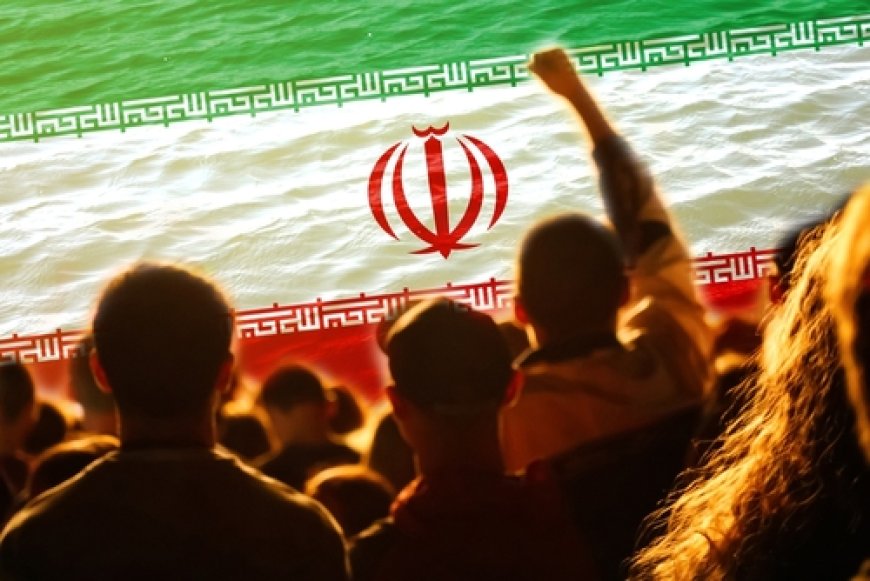
As Iran is engulfed in the flames of civil unrest, those of us watching this thousand-year civilization of Cyrus the Great and Imam Reza are hoping for the dawn of a new era.
In general, people don’t want much from their government -- security from illness and injury, in addition to providing avenues for economic growth. When said government is unable to even provide water, and regularly beats the population into submission, it’s only a matter of time until the tinderbox explodes.
In late December, what started as an operational shutdown by shopkeepers has now resulted in a thundering uprising against the Islamic Republic of Iran, with protests reaching more than 100 towns and each Iranian province.
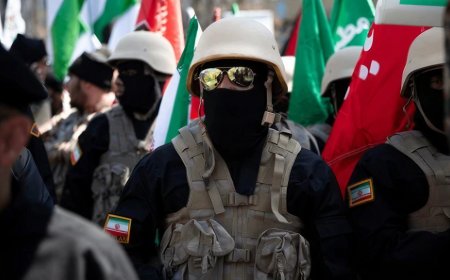
If social media videos are to be used as evidence, it certainly looks like the elite Islamic Revolutionary Guard Corps (IRGC) and paramilitary force Basij are in for the battle of their lives, as are hundreds of thousands of protestors.
The protests may be the largest since the overthrow of the Shah, ironically called on by his son Prince Reza Pahlavi from the comfort of his upper-class residence near Washington, DC.
Even the middle class has joined this protest, as The World Bank has noted that over a third of Iranians live in poverty, with an expected 20 percent increase this year. Ironic, considering Iran has $27.3 trillion in resources, according to the Arab Center, Washington DC.
The core argument that bullets cannot stop hunger comes into the foray.
I have a dear Iranian friend who came to the US in mid-2010s. Over the years, he has helped me translate Farsi documents from the time of the Bengal Sultanate; thanks to him, I know that my ancestors were stewards of a mosque in Sylhet that is among the 55 masjids still standing in the land.
Our commonality rests with a shared history of Islam, the conquest of India by Farsi-speaking Afghans and later on Mughals. Like millions of Iranians living abroad, he dreams of a better future for Iran. His father is a small business owner, and has weathered through economic turmoil.
When this unrest started, I advised that his parents leave Tehran for awhile, and stay at their coastal residence. Instead, they have also joined the mass protests. These senior citizens didn’t have to join the march, they chose to do so, despite bullets flying and fatalities an everyday occurrence.
This is simply a culmination of the 2009 Green Movement that marched against a rigged election, the 2022 rebellion after the custodial death of a woman over hijab enforcement.
Echoes of the 1979 Islamic Revolution are loud and clear, except this time the ayatollahs are on the receiving end. The regime has utilized its old playbook -- gun down and arrest the agitators; the death toll has well surpassed 500, and the unofficial count goes into the thousands.
If this regime continues on this path, it risks further protests triggered from the fall of the Iranian currency and hyperinflation that exceeded fifty percent.
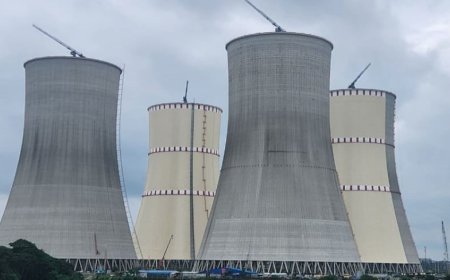
Moreover, the ambitions for a nuclear program have only resulted in aerial attacks by Israel and US that struck its nuclear and missile sites last summer, in addition to assassination of its generals and scientists. Its 47-year reign that was cultivated by a messianic call to Shia Islam has simply not delivered the intended results.
As the country’s merchant class has spearheaded this round of protests, surely the top brass can see the unsustainability of their crumbling economic model. IRGC controls a multibillion-dollar enterprise, which includes the $50-billion conglomerate Khatam al-Anbiya and half of Iran’s registered firms, according to The Economist.
Kamran Bokhari, a geopolitical analyst, noted in Forbes that there is an ongoing power struggle between Artesh, Iran’s conventional armed forces and IRGC. After Israel decimated several IRGC commanders, the head of Artesh became chief of the armed forces general staff.
Artesh has become the dominant section of Iran’s Supreme National Security Council. The strategic forecaster has remarked that Artesh alongside the pragmatic side of IRGC could stage a coup, if the regime proves unsustainable.
Dina Esfandiary, a Middle East analyst at Bloomberg Economics, has also predicted this as the most likely scenario. To provide further evidence, there are social media videos of army/police officers defecting into the resistance.
Consider if Iran agrees to America’s terms of a political transition after an aerial bombardment of IRGC, intelligence ministry, and Basij facilities, in addition to Khamenei’s residence.
The command-and-control infrastructure of the security force would not be able to rehabilitate itself afterwards. Ethnic minorities and opportunists would likely seek independence, leading to a fragmentation of the nation.
Iran’s armed forces have already stated that they would protect “strategic infrastructure and public property.” If conducting a political calculus, they are far better off providing a safe exit for supreme leader Ayatollah Ali Khamenei, his family, and aides.
An Iran devoid of physical infrastructure due to bombings by the US or Israel is a real possibility, and this must be avoided by the Iranian military leadership. To save this nation from calamity, it’s time for Khamenei to leave; this Islamic Republic is already burning to the ashes. Trying to salvage this sclerotic regime will only cost more blood and treasure.
Tamim Choudhury is a public affairs specialist for an international volunteering agency within the US government. With a business administration bachelor’s degree and public administration master’s degree -- both from Texas A&M University.