


















































![A Ledger of the Soul: Navigating the Allah-Bhagavant Nexus in a 19th-Century Puruṣākāra Jñāna Caupara [Gyan Chauper]](https://counterpointbd.com/uploads/images/202608/image_430x256_6a93baa3b09a7.jpg)





















Rethinking the Path to Revive Shuttered Industries
Liquidity is a necessary condition for industrial revival, but it is not sufficient.


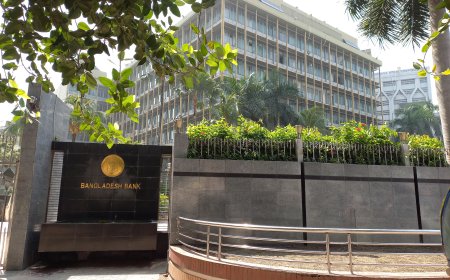
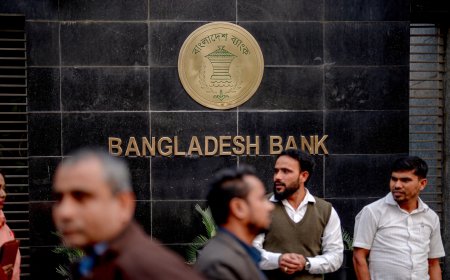
Bangladesh Bank’s recent circular dated June 4, introducing a Tk 20,000 crore pre-finance scheme to support closed and underperforming industrial and service sector enterprises, is a timely and pragmatic policy intervention. It reflects an important acknowledgment that a considerable portion of the country’s productive capacity remains idle not necessarily due to structural weakness, but due to acute liquidity constraints.
In a period marked by global uncertainty, supply chain adjustments, and domestic financial tightening, such an initiative seeks to reactivate dormant capacity, restore employment, and sustain export momentum. The intent is clearly aligned with broader macroeconomic stability and growth objectives.
However, the critical question remains: Can liquidity support alone revive closed industries in a sustainable manner?
At its core, the scheme is designed as a liquidity injection mechanism. Central bank will provide funds to commercial banks at a concessional rate, enabling them to extend working capital financing to eligible firms. The logic is straightforward -- if firms that have halted operations due to cash flow shortages can access affordable financing, they may be able to restart production, fulfill orders, and gradually return to normal operations.
In theory, this is sound. In practice, however, the scheme’s effectiveness hinges on how risks are distributed and managed within the financial system.
A fundamental issue arises from the allocation of credit risk. While the central bank assumes the cost of funds risk by offering low-cost refinance, the entire credit risk remains with the participating banks. Banks are inherently cautious institutions, tasked with protecting depositors’ money and maintaining asset quality.
Lending to firms that are already closed or distressed -- many of which may have weak balance sheets, irregular repayment histories, or uncertain business prospects -- poses significant risks. Even with detailed guidelines, eligibility criteria, and monitoring requirements, assessing the viability of such firms is far from straightforward.
In this context, banks are likely to exercise heightened caution. The fear of future non-performing loans (NPLs), additional provisioning requirements, and potential regulatory scrutiny may outweigh the attractiveness of accessing low-cost funds.
Consequently, credit flow under the scheme may not reach the intended scale or target group. Instead, banks may prefer to lend only to relatively stronger firms -- those that are technically ‘closed’ but still financially sound -- thereby limiting the scheme’s inclusiveness and overall impact.
This leads to a broader structural concern. When access to subsidized finance is mediated through risk-averse institutions, there is always a possibility of selective disbursement. In some cases, lending decisions may be influenced by relationships, reputation, or perceived recoverability rather than objective economic viability.
As a result, genuinely viable but less connected enterprises may remain excluded, while better-positioned borrowers secure access. Such outcomes not only reduce efficiency but also raise questions about fairness and policy effectiveness.
Another critical issue lies in the classification of ‘closed’ or ‘non-operational’ firms. Industrial closure is not a uniform phenomenon. Some firms temporarily suspend operations due to short-term liquidity shortages, delayed payments, or external shocks such as supply disruptions or exchange rate volatility.
These firms may respond positively to liquidity support. Others, however, suffer from deeper structural problems -- obsolete technology, poor governance, declining market demand, or persistent inefficiencies. For these firms, liquidity infusion may only delay an inevitable decline rather than facilitate genuine recovery.
Operational complexity adds another layer of challenge. The scheme requires banks to conduct detailed due diligence, including viability assessments, working capital estimation, risk grading, and continuous monitoring of borrower performance. While these are essential from a prudential standpoint, they impose significant administrative and analytical burdens.
For banks already dealing with elevated NPL levels and constrained human resources, the incentive to engage deeply in such processes may be limited. This could further slow down implementation and reduce uptake.
Given these limitations, it is worth exploring whether liquidity support should be complemented by alternative financing and institutional mechanisms.
One promising approach is the establishment of a government-backed revitalization fund, structured on quasi-equity or buyback equity principles. Unlike traditional debt financing, this model would provide capital support in exchange for a temporary ownership stake, with a defined exit mechanism over a medium- to long-term horizon.
Such a framework offers several advantages. First, it introduces a more balanced risk-sharing arrangement. Instead of placing the entire credit risk burden on banks, the government assumes part of the risk, recognizing that industrial revival generates positive externalities such as employment, supply chain continuity, and export earnings.
Second, equity-type support reduces immediate repayment pressure, allowing firms to stabilize operations and rebuild cash flows before meeting financial obligations. Third, it embeds accountability, as firms would be required to meet performance benchmarks to repurchase the equity stake.
Equally important is the role of management and governance in industrial revival. Financial distress is often accompanied by managerial weaknesses, inadequate planning, and operational inefficiencies. Therefore, any revitalization initiative should not be limited to financial support alone.
It should include provisions for professional management intervention, restructuring expertise, and performance monitoring. In certain cases, temporary management takeover or the appointment of turnaround specialists could significantly enhance the probability of success.
This approach has precedents in international practice, where asset management companies and restructuring funds have played an active role in rehabilitating distressed firms. By combining financial support with operational restructuring, such models address both symptoms and root causes of industrial distress.
In the Bangladesh context, the concept of a corporate safety net merits serious consideration. Just as social safety nets protect vulnerable populations from economic shocks, a corporate safety net can prevent viable firms from collapsing due to temporary disruptions.
The economic logic is compelling: Preserving existing industrial capacity is often more efficient and less costly than creating new capacity. It safeguards jobs, maintains supplier networks, and supports export competitiveness.
However, the design of such a mechanism must prioritize transparency, accountability, and governance. Clear eligibility criteria, independent oversight, performance-based disbursement, and well-defined exit strategies are essential to prevent misuse and ensure effectiveness. Public-private collaboration could also enhance credibility and operational efficiency.
Returning to the Bangladesh Bank scheme, it should be viewed as a necessary but partial solution. It is well-suited for firms that are fundamentally viable but temporarily constrained by liquidity shortages. For these firms, access to affordable working capital can provide a critical lifeline. The scheme also signals a broader policy shift toward diversifying financing mechanisms and reducing overreliance on traditional instruments.
Yet, expecting it to single-handedly revive a large segment of closed industries may be overly optimistic. The challenges of risk allocation, firm selection, and operational capacity cannot be overlooked. A more comprehensive approach -- combining bank-led liquidity support with a structured, government-backed revitalization framework -- would likely yield better and more sustainable outcomes.
In conclusion, liquidity is a necessary condition for industrial revival, but it is not sufficient. Reviving closed industries requires an integrated approach that addresses financial constraints, managerial capacity, governance standards, and risk-sharing mechanisms.
Bangladesh Bank’s initiative is a step in the right direction, but its impact will depend on complementary reforms and institutional innovation. A well-designed hybrid framework could transform this effort into a robust and effective strategy for restoring industrial dynamism and supporting long-term economic resilience.
Nasrin Sheely is an analyst and commentator based in Dhaka, Bangladesh, specializing in banking, economic policy, and international trade.