






























































Are We Looking at a February Surprise?
As we enter the final phase before elections Jamaat-e-Islami may be poised to win far more votes than previously predicted. There is still time for BNP to regain the momentum if it appreciates the situation and pivots accordingly. But there is little evidence that it does so.

Back in January or February 2025, I wrote in a Facebook post that Jamaat’s vote share had not increased significantly and was unlikely to exceed 15%.
I was wrong.
Jamaat’s electoral gains appear to be substantially higher. Based on my recent field visits, I would estimate that Jamaat’s vote share is now close to -- if not exceeding -- 30%. If Jamaat-e-Islami’s competitors remain in denial and fail to respond effectively, the country may well be headed toward an electoral surprise.
Throughout 2025, JI played an exceptionally effective game of what may be termed the “politics of distraction.” At the grassroots level, it went on the offensive against BNP’s extortion and related activities.
At the national level, it invested heavily in reform-oriented discourse, effectively diverting BNP’s attention. This strategy worked. BNP, struggling to discipline local activists in the absence of its top leadership in the country, became absorbed in reform debates. Meanwhile, JI quietly built a robust ground campaign.
By this stage, JI campaigners had reached most voters at least once. Notably, they mobilized the well-known Talim Group to engage women voters. Simultaneously, JI introduced a simple but highly effective message: Voting is part of one’s religious duty.
Voters were told they need not vote specifically for Jamaat, but must vote for an honest candidate who would work for Islam -- otherwise, they would face consequences in the afterlife. This was a strategically sophisticated pitch, and it resonated widely.
It resonated largely because there was no counter-strategy. BNP activists, in many cases, were preoccupied with “other matters.” JI read the situation accurately.
While it already enjoyed relative strength among educated urban youth, it recognized its weakness in rural areas. Accordingly, it recalibrated its strategy to target rural voters.
I recall arguing in a seminar in August-September that survey data showed BNP losing ground among urban youth, while retaining strength in rural areas -- particularly among middle-aged and elderly men, low-educated unemployed youth, and rural male voters more broadly.
I suggested that instead of adopting a W-T strategy (overcoming weaknesses to address threats), BNP should pursue an S-O strategy: leveraging its existing strengths to capitalize on opportunities.
This required, above all, safeguarding its rural base.
That did not happen. BNP was -- and still is -- so confident about its rural support that it has largely neglected it. In effect, events unfolded almost entirely in line with JI’s strategy. This raises a critical question: If Jamaat’s position was so strong, why did it opt for a coalition while sacrificing a significant number of seats?
Two developments appear to explain this decision. First, the events of December 18-19 alarmed many urban voters who had been considering either voting for JI or abstaining altogether, rejecting the “lesser of two evils” logic.
Their perceptions have since shifted. This does not mean JI has lost its advantage among urban youth or the urban middle class -- it has not -- but the surge has slowed, and a gradual counter-surge seems to be emerging.
Second, the return of Tarique Rahman has had a pronounced effect. For those living in urban Dhaka, the “TR effect” may be difficult to appreciate. In rural areas, however, BNP activists have become noticeably energized.
Previously disorganized and fragmented, rural leaders have, for the first time in a long while, begun acting as a cohesive party unit. This creates the possibility for BNP to develop a counter-strategy.
This is where the situation becomes particularly interesting -- and concerning for BNP. Despite this renewed momentum, BNP is not using its revived rural strength to consolidate its base. Instead, it is focusing disproportionately on further gains in urban areas. This approach is unlikely to succeed.
Voters who were open to switching to BNP have largely already done so; those who have not are unlikely to change their preferences. Urban constituencies are, for the most part, settled. At this stage, door-to-door campaigning in urban areas should be left primarily to individual MP candidates.
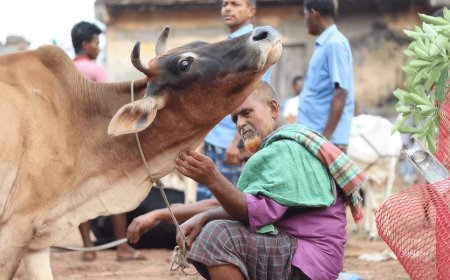
The strategic focus should instead be on rural voters. While JI is conducting systematic door-to-door campaigns with simplified messaging, BNP leaders and activists are largely failing to do the same.
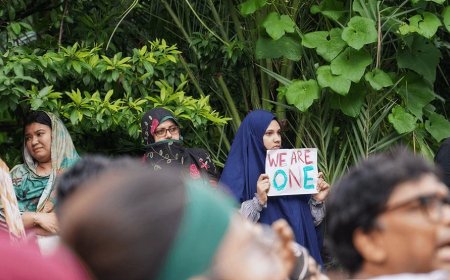
More critically, they are not engaging women voters. Part of this stems from the absence of an organizational equivalent to Jamaat’s Talim Group. Another reason is the persistent belief that women’s votes can be “controlled” through male household heads.
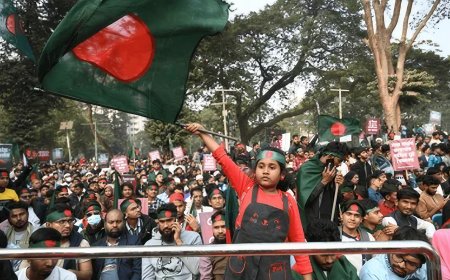
At the grassroots level, there is also a failure to appreciate the importance of personalized outreach. BNP continues to rely on processions and large-scale rallies, assuming these will translate into votes.
This overlooks a basic reality: Many voters prefer not to attend mass gatherings, but do respond positively to personal engagement. Voters want to be approached, asked directly for their support, and made to feel important. BNP is missing this entirely. If this continues, the electoral outcome may differ sharply from what the party currently expects.
Contrary to popular belief, Jamaat is gaining ground in rural areas. It remains unclear how AL voters will ultimately behave, or whether they will feel secure enough to turn out on election day.
However, in terms of outreach -- particularly to women voters -- JI is currently performing better.
If BNP intends to win, it must urgently reorganize its ground campaign. App-based or digital strategies are highly unlikely to be effective in rural settings; sustained door-to-door mobilization is essential.
BNP possesses two significant but underutilized assets. First is Tarique Rahman himself, whose presence needs to be made visible to rural voters. Second are Zubaida Rahman and Zaima Rahman, both of whom could play a crucial role in countering Jamaat’s appeal among women.
Remarkably, BNP has so far shown little interest in strategically deploying these assets or in bringing Zubaida Rahman and Zaima Rahman closer to rural women voters.
Rural female voters may prove decisive this time. If they do, February 12 may deliver an outcome that surprises many.
By the way, amid all the “noise” surrounding electoral campaign strategies, one critical issue has been largely overlooked: the referendum. I am increasingly concerned that the referendum could very well be rejected.
At present, no major political party appears to be campaigning for it in any meaningful way, and a large segment of the electorate does not adequately understand what is at stake.
Moreover, the Interim Government’s strategy of emphasizing the Upper Chamber, constitutional arrangements, and other broad “reform” ideas is excessively elitist.
These themes do not easily translate into messages that resonate with ordinary voters. If this situation persists, we may be headed toward yet another unexpected outcome.
Asif M Shahan is a PhD Associate Professor in the Department of Development Studies at University of Dhaka.