





























































Asif M Shahan, PhD Associate Professor, Department of Development Studies, University of Dhaka
Contrary to what regime defenders believe, this government is not safe. People who are encouraging it to become more coercive are doing it a serious disservice.

The party's political and economic actions are not converging or complementing each other, and instead the party is letting its economic vision lead the governing process without considering the political consequences. This is a risky bet and may not work.
As a supporter of substantive reform within the political structure of this country, this dim scenario really makes me sad. And it also clarifies one thing: our failure has come from one major shortcoming -- we didn’t reach out to people.

Ensuring accountability is the key, and a state cannot design a system, cannot create an institutional design where the only protection is a party's or an individual’s goodwill. A state’s guiding operational principle cannot be to be ruled by the angels.

Jamaat can only win if this is a wave election, signaling a tectonic shift in the national mood. There is little evidence of this in the polls and available data. It is possible, but not probable.
To understand whether an individual is honest, we need to know whether that person is committed to alternation of power, whether he understands the value of inclusivity and dissent, whether he knows that people with different ideas live within the same society, and whether he is willing to let them survive, grow, and challenge him.

As we enter the final phase before elections Jamaat-e-Islami may be poised to win far more votes than previously predicted. There is still time for BNP to regain the momentum if it appreciates the situation and pivots accordingly. But there is little evidence that it does so.
It is unfortunate that most civil society organizations have failed to recognize that these reforms could open new pathways for them -- creating fresh opportunities to empower citizens and strengthen the accountability of state institutions, ultimately shaping their own future governance agenda.
The July Charter is quite clear: The proposed Upper Chamber will not have the power to block legislation, and the question of leading to a hung parliament does not even arise.

How revolutionary aspiration transformed into an elite settlement
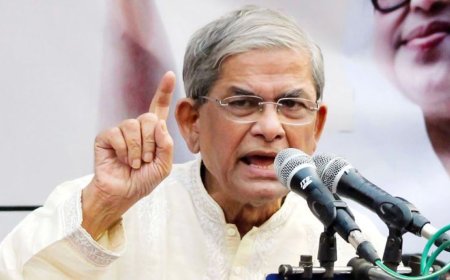
Mirza Fakhrul raised an important and honest concern about the growing influence of extreme right-wing ideas. Instead of blaming him, we should be talking about it.

If we are serious about democracy, the path of confrontation must be abandoned. Someone must blink -- not to lose face, but to lead. It is time to reimagine strength not as stubbornness, but as the courage to compromise.

PR-based upper house is not only good for the country, it will serve BNP's interest as well. The sooner the party understands why opposing PR is self-defeating, the better for everyone. Most crucially, for itself.

We have an uneasy truce but still a long way to go. If the BNP doesn't understand that a bare minimum of reform is necessary to end the impasse, give it legitimacy , and help set the table for good governance, then the nation will lose, including BNP.