
































































Let’s Bring Down the Temperature
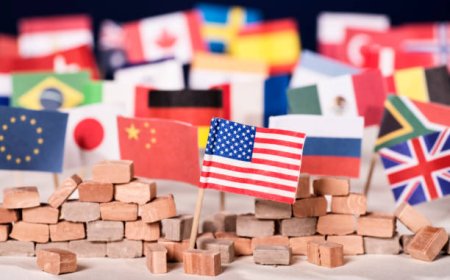
We cannot let the Bangladesh-India relationship and discourse be hijacked by the hard-liners on either side of the border who favour hostility and antagonism over cordiality and cooperation.


Who could have predicted that the BCCI instructing Kolkata Knight Riders to release Bangladeshi pace bowler Mustafizur Rahman from his IPL contract would lead to an escalation in the ongoing hostilities between Bangladesh and India?
Just about everyone.
It is too obvious to lament that this was an unfortunate and disgraceful decision on the part of the BCCI. Some things go without saying.
His release has of course led to Bangladesh requesting that their matches in the upcoming T20 World Cup be moved from India to Sri Lanka (for which action there is precedent) in a saga that remains ongoing but seems unlikely to end well for either side.
The key point to note, however, is that the pressure on KKR to release Mustafiz came hard on the heels of the Indian Foreign Minister’s visit to Bangladesh to attend Begum Khaleda Zia’s funeral and to make nice with the BNP high command, presumed to be the government in waiting post-February.
In short, what we learned from the juxtaposition of these two events is that normalization of Bangladesh-India relations is going to remain a challenge, despite the best efforts on both sides.
India’s consistent opposition to the Interim Government since it took office in August 2024, together with its continued harboring of deposed and now convicted former prime minister Sheikh Hasina, as well as its long-term support for her autocratic regime has ensured that the bilateral relationship would remain frosty as long as the Interim Government remained in office.
But it is important to distinguish between the Indian government and the Indian media, social media, and commentariat, including former diplomats who seem to be leading the charge to demonize Bangladesh.
While the suspicion remains that these non-state actors are acting at the behest of the government to a large extent, it is still significant that in its official MEA statements the government of India has been far more restrained than those of its presumed proxies in the media.
With elections around the corner and visible efforts on the part of the Indian government to make nice, this means that we can hope for some kind of sanity to return to the bilateral relationship after an elected government is in place.
We need to accept that the current state of hostilities between both countries serves neither side in the final analysis, and it makes no sense for the two countries to remain in an adversarial relationship. Neither country benefits from the current state of hostility and both sides stand to gain from normalization.
To be sure, normalization does not mean that we will or can ever go back to the way things were prior to August 5, 2024. Those days are gone forever, and the latest indications are that India understands this.
Moving forward, a new bilateral relationship must be one conducted on the basis of greater equality and mutual respect, not subordination of one side to the other, that much is understood.
But by the same token, it is important to underline that friendly relations with India are in Bangladesh's interest (and vice versa) and that keeping the bilateral relationship on an even keel is going to be a top priority of the incoming government.
That this is well understood and supported by the general population is confirmed by opinion polls which show comfortably more than 70 percent of the country favor good relations with India.
However, there is a vocal and noisy minority that favors hostility with India, and will use events such as the Mustafiz snub and India’s subsequent high-handedness with respect to the world cup to throw a spanner in the works of mutual cooperation.
They will be helped in this endeavor by the venom and vitriol that is pouring out of Indian media and social media on a daily basis (as a result of which the BCCI took its decision in the first place), but it is important that we do not play into their hands by letting this impact our own decision-making process.
There are cool heads on both sides of the border and it is imperative that they prevail.
We cannot let the Bangladesh-India relationship and discourse be hijacked by the hard-liners on either side of the border who favour hostility and antagonism over cordiality and cooperation.
This will be no small task. And with the West Bengal elections also on the horizon, we can expect anti-Bangladesh rhetoric to only increase. This will in turn only further empower hard-liners here.
It should also be mentioned in this connection that the primary driver fuelling such rhetoric is atrocities on minorities here in Bangladesh, which have registered a worrisome uptick in the past month.
The order of the day therefore, both for the Interim Government, as well as the incoming one, is to do it utmost to protect minorities (which we should be doing regardless of the impact in India) and to try to reach out to the sane voices on the other side of the border who are also looking to bring down the temperature.
We cannot let the haters on either side dictate the discourse when it comes to the Bangladesh-India bilateral relationship.