



































































What Bangladesh needs now is nothing less than a new social contract between the state and its citizens.
The Bangladesh we aspire to build will not emerge from slogans alone. It will emerge from the courage to reform, the discipline to implement, the wisdom to learn, and the integrity to put national interest above narrow interests.

Law is not static; like people, society, and technology, it can evolve. Every advance in rights, every institutional reform, and every step toward justice has been shaped by individuals who believed that change was possible.

The party's political and economic actions are not converging or complementing each other, and instead the party is letting its economic vision lead the governing process without considering the political consequences. This is a risky bet and may not work.
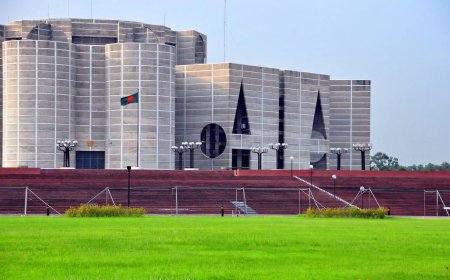
The country needs leaders from all political parties in parliament to be self-made men hailing from humble origins, shrewd, hardworking, ruthless, and fiercely nationalistic, capable of building a strong state and transforming society.

There is a sensible way out, and it lies inside the Constitution, not outside it. If the new government wants to preserve the Reform Council model, it should table a constitutional amendment under Article 142 defining the Council’s status, powers, voting threshold, relation to Parliament, and oath.
As a supporter of substantive reform within the political structure of this country, this dim scenario really makes me sad. And it also clarifies one thing: our failure has come from one major shortcoming -- we didn’t reach out to people.
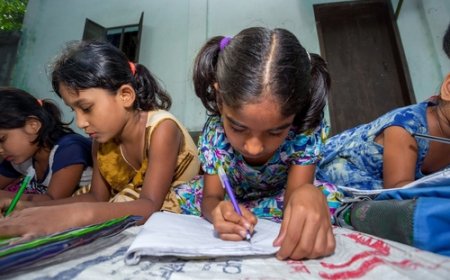
In the end, the controversy is not about a mechanism. It is about a mindset. It reveals a society that remains deeply anxious about opportunity and deeply divided in access to it.

Import cost is ultimately a function of trust. When global banks and suppliers trust that payments will be made on time and that policies will remain predictable, they offer better terms. Conversely, when uncertainty prevails, they demand confirmation, higher spreads, and tighter conditions.

A yes vote is only the beginning, not the end. The real work of implementation of the reform agenda is what matters. Similarly, we should not interpret a no vote to suggest that the voters are against reform or that the reform agenda dies there.

As with the constitution, good principles can only help if properly applied in practice. In the long run, the verdict of history on the interim government will depend on the ability of its successors

Now, at any moment, a mob can be summoned and the state paralyzed. The potential that emerged after Hasina’s fall is now impossible. This country will become a playground for fallen Indians and Chinese.

Bangladesh faces simultaneous pressure from the IMF program and revenue reforms. Currently, effective PFM reform is not just a development strategy -- it is essential for economic stability.

The sooner our politics and our voters align with this demand for structural change, the sooner Bangladesh's power structure reforms will begin their sustainable journey. Mamdani's victory kindles our hope that in the near future people-oriented politics will also shine in our land.
It is unfortunate that most civil society organizations have failed to recognize that these reforms could open new pathways for them -- creating fresh opportunities to empower citizens and strengthen the accountability of state institutions, ultimately shaping their own future governance agenda.

True judicial independence cannot rest on the discretion of one office, no matter how elevated.