




























![A Ledger of the Soul: Navigating the Allah-Bhagavant Nexus in a 19th-Century Puruṣākāra Jñāna Caupara [Gyan Chauper]](https://counterpointbd.com/uploads/images/202608/image_430x256_6a93baa3b09a7.jpg)


















Why the World Watches but Rarely Acts
The systems that govern the world are powerful, but they are not immutable. They derive their strength, in part, from acceptance, from the belief that they cannot be altered.
The world does not collapse in a single moment. It erodes gradually, almost politely, as if trying not to disturb our routines. Prices rise, conflicts intensify, headlines darken, yet life continues with a strange sense of continuity. People go to work, markets open, screens glow with endless updates.
Nothing appears to stop, and yet something fundamental seems to be slipping beneath the surface. This is the unsettling paradox of our time. Crisis no longer announces itself with a single catastrophic event. It unfolds as a constant condition, shaping our lives in ways that feel both immediate and distant.
Across continents, the signs are unmistakable. Wars are no longer confined to battlefields. They seep into economies, into food systems, into the fragile balance of everyday survival.
Energy shortages are not simply technical disruptions. They are instruments that reshape power relations, determining who can sustain growth and who must endure decline.
The politics of fuel has evolved into a politics of control, where the flow of resources dictates the rhythm of entire societies. In this landscape, the distance between a decision made in a distant capital and its consequences in a rural field has collapsed.
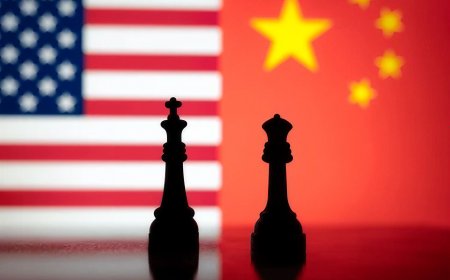
From the writings of Thucydides to the theories of modern realists like Hans Morgenthau, the pursuit of power has been understood as the central force of international relations. States act not out of moral obligation but out of strategic necessity.
Conflict, therefore, is not an exception but a recurring feature of the system. Carl von Clausewitz captured this logic when he described war as the continuation of politics by other means.
If this framework holds true, then what we are witnessing today is not a deviation from order but it’s very expression.
And yet, there is something deeply insufficient about this explanation. It accounts for the mechanics of conflict but fails to address the deeper question of acceptance.
Why does a system that produces such widespread suffering persist with so little resistance? The answer cannot be found solely in the actions of states or institutions. It must also be sought within the collective consciousness of humanity itself.
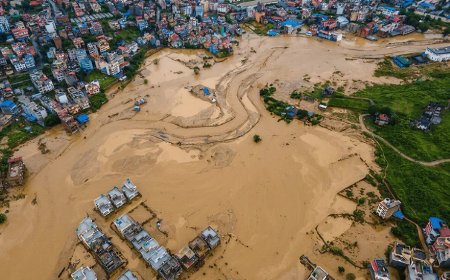
At the centre of this unfolding crisis lies a metaphor that is both haunting and revealing. When a severe cyclone tears through a region, it does not do so with unrelenting intensity. At its core lies the eye, a space of uncanny calm where the violence seems to pause.
The winds subside, the sky may even clear, and for a brief moment, there is a deceptive sense of relief. But this calm is not the end of the storm. It is merely an interlude before the destruction resumes, often with greater force.
The present global condition resembles this unsettling stillness. Around us, the turbulence is undeniable. War rages in one part of the world, fuel crises destabilize economies in another, and the spectre of food insecurity looms over millions.
Yet there is also a strange quietness, a sense that humanity is suspended within the storm rather than actively confronting it. This is not peace. It is a pause filled with uncertainty, where the full extent of the crisis has yet to reveal itself.
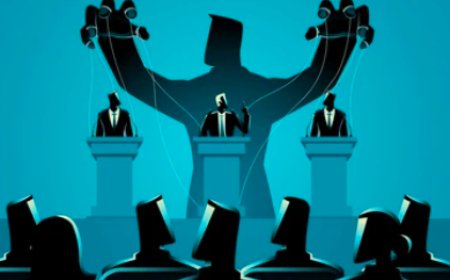
Within this fragile calm, decisions of immense consequence are being made. They are not made in public squares or open assemblies but within enclosed spaces far removed from the lives they affect. These are rooms where the air is controlled, the atmosphere composed, and the language measured.
Yet the outcomes of these deliberations are anything but contained. A policy shift, a sanction, a disruption in energy supply can alter the fate of entire populations. The impact is rarely immediate for those who make these decisions, but it is immediate and often devastating for those who live with their consequences.
Energy politics provides one of the clearest illustrations of this dynamic. Oil, once seen primarily as a resource, has become a symbol of dominance. To control its flow is to influence the very circulation of the global economy.
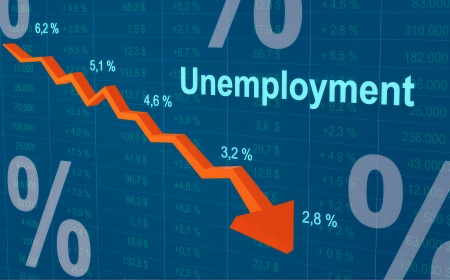
When that flow is interrupted, the effects extend far beyond fuel stations or industrial output. Agriculture, one of the most fundamental pillars of human survival, becomes vulnerable. Fertilizer production declines, irrigation systems falter, and transportation costs rise. The result is a chain reaction that leads to reduced food production and increased scarcity.
This is not a new phenomenon. History is replete with examples of how control over resources translates into power. The oil shocks of the 1970s revealed the fragility of global dependence on energy supplies.
More recently, conflicts in resource-rich regions have demonstrated how abundance can become a source of instability. The concept of the resource curse, widely discussed in political economy, highlights the paradox that nations rich in natural resources often experience greater conflict and weaker governance.
In such a world, the line between economic strategy and human suffering becomes increasingly blurred.
Yet structural explanations alone cannot fully account for the persistence of this crisis. There is also a psychological and cultural dimension that demands attention.
The philosopher Hannah Arendt, in her exploration of the banality of evil, argued that great injustices are often sustained not by monstrous individuals but by ordinary people who fail to question the systems they inhabit.
This insight is particularly relevant today. The global order does not rely solely on coercion. It is also sustained by a form of passive consent.
Silence, in this context, is not always a sign of ignorance or indifference. It can be a product of fragmentation. In an age of constant information, attention is divided and diluted. Crises compete for visibility, and in doing so, they weaken the possibility of sustained engagement.
The sociologist Zygmunt Bauman described modern society as fluid, characterized by fleeting commitments and shifting priorities. In such an environment, outrage becomes temporary, and empathy, while widespread in expression, often lacks the depth required for meaningful action.
The role of media and technology in shaping perception cannot be ignored. The way suffering is presented influences how it is understood. When human tragedies are reduced to statistics, they lose their emotional resonance. Numbers inform, but they do not always move.
This abstraction creates distance, allowing individuals to acknowledge suffering without feeling compelled to respond to it. It is a subtle but powerful mechanism that aligns with the functioning of a system that benefits from limited resistance.
Philosophically, this raises profound questions about responsibility. The social contract, as envisioned by thinkers like Thomas Hobbes, John Locke, and Jean-Jacques Rousseau, was based on the idea of mutual obligation within a defined community. In a globalized world, however, this framework becomes increasingly complex.
Decisions made by distant actors affect individuals who have little or no influence over them. The traditional boundaries of accountability are blurred, and the mechanisms of democracy struggle to operate effectively at this scale.
At the same time, the internal dimensions of the crisis become impossible to ignore. The gradual erosion of empathy, the normalization of injustice, and the prioritization of individual gain over collective well-being reflect deeper shifts within human civilization.
Immanuel Kant’s moral philosophy emphasized the intrinsic worth of every individual, insisting that people should never be treated merely as means to an end.
Yet the realities of the global system often contradict this principle, reducing human lives to variables within broader strategic calculations.
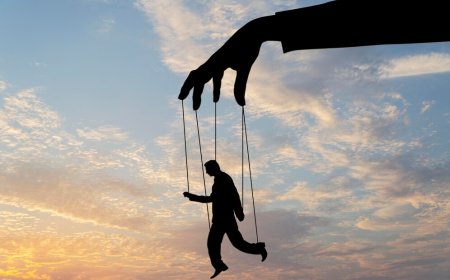
This contradiction advances a sense of disillusionment. When people perceive the system as inherently unjust and resistant to change, they are more likely to withdraw from active engagement.
Cynicism becomes a form of adaptation, a way of coping with the perceived limits of influence. But this withdrawal, while understandable, ultimately reinforces the very structures that produce it.
History, however, offers a counterpoint to this narrative of inevitability. Transformative change has often emerged from shifts in collective consciousness.
The abolition of slavery, the expansion of civil rights, and the dismantling of colonial empires were not the result of sudden decisions by those in power. They were driven by sustained challenges to existing norms, by the refusal to accept injustice as an unchangeable reality.
The present moment, for all its uncertainty, contains a similar potential. The calm within the storm is not merely a pause. It is an opportunity to reflect, to question, and to reconsider the assumptions that underpin the global order.
Change does not begin with grand gestures. It begins with a shift in perception, with the recognition that the forces shaping the world are not entirely beyond human influence.
The question, then, is not simply who is responsible for the current crisis. It is whether humanity is willing to confront its own role within it. The systems that govern the world are powerful, but they are not immutable. They derive their strength, in part, from acceptance, from the belief that they cannot be altered.
To challenge this belief is to take the first step toward transformation. The storm may continue, and its intensity may even increase. But the recognition of its nature, and of our place within it, offers a possibility that is often overlooked.
Even in the eye of the cyclone, where stillness conceals danger, there exists a moment of awareness. What humanity chooses to do with that moment will determine not only how the storm unfolds, but whether it can ever be calmed.
H. M. Nazmul Alam is an academic, journalist, and political analyst based in Dhaka, Bangladesh. Currently he teaches at IUBAT. He can be reached at [email protected].