































































The Distance Between the Page and the Street
Bangladesh’s future depends not just on dismantling authoritarian systems, but on building institutions resilient enough to safeguard rights, mediate conflict, and hold power, whoever holds it, accountable.

On paper, Bangladesh is among South Asia’s more committed human rights states. It is party to the ICCPR, the ICESCR, the Convention against Torture, the Convention on the Rights of the Child, and the Convention on the Elimination of All Forms of Discrimination against Women (CEDAW).
In August 2024, the interim government added the International Convention for the Protection of All Persons from Enforced Disappearance. The Constitution itself guarantees equality before the law, freedom of speech and religion, and protection from arbitrary detention.
If a country were judged only by what it has signed, Bangladesh would appear a model. The lived experience of its citizens over the past 35 years tells a different story.
A useful way to read this history is to measure the distance between the page and the street across four periods: The multi-party years after 1990, the 15-year Awami League era under Sheikh Hasina, the Yunus interim caretaker government, and the elected BNP government formed in February 2026 under Prime Minister Tarique Rahman.
Gains Amid Structural Fragility
After General Ershad’s autocratic regime fell in 1990, Bangladesh entered an era of competitive politics. From 1991 to 2006, a neutral caretaker government system enabled relatively fair elections, with power alternating between the Awami League and the BNP.
Civil society enjoyed greater space, the media operated with relative freedom, and abuses, while at present, lacked the systematic scale of what followed.
The Rapid Action Battalion was created under a BNP-led government in 2004, and “crossfire” killings began almost immediately, the seed of a problem that would grow far worse in the next decade.
From Democracy to Authoritarianism
The Awami League’s return to power in 2009 marked the start of a sustained regression. The 2014 and 2018 elections were widely described as fraudulent, with ballot stuffing and the exclusion of opposition parties. The dismantling of the caretaker system in 2011 removed the safeguard that had underpinned electoral credibility.
The Digital Security Act of 2018, the ICT Act of 2006, and the Cyber Security Act of 2023 criminalized criticism through vague offenses such as “hurting religious sentiments.”
The writer Mushtaq Ahmed died in custody in 2021 after Facebook posts. Two Odhikar leaders were sentenced to two years in prison in 2023 over a fact-finding report written a decade earlier.
Impunity for violence against the press long predated these laws, and one case came to symbolize it. On 11 February 2012, the journalist couple Sagar Sarowar, news editor of Maasranga Television, and Meherun Runi, senior reporter of ATN Bangla, were stabbed to death in their Dhaka flat in the presence of their four-year-old son.
Then-Home Minister Sahara Khatun promised arrests within 48 hours. Fourteen years later, no one was convicted. The investigation moved from the Detective Branch to RAB and, in November 2024, to the Police Bureau of Investigation.
By February 2026, the probe report had been deferred for the 124th time, prompting a Dhaka magistrate to issue a show-cause notice to the investigating officer; in April 2026, the court directed it be filed “very soon.”
Journalist leaders have publicly attributed the delay to “deep state” influence. The Sagar-Runi case, unresolved across the late-BNP, Hasina, interim, and current BNP governments, has become a benchmark for how successive Bangladeshi administrations have treated the killing of journalists.
Most alarming was the normalization of state violence. Odhikar figures reported by Al Jazeera record at least 2,597 people killed by security forces between 2009 and 2022. In 2018, hundreds died in a so-called war on drugs.
Human Rights Watch documented about 600 cases of enforced disappearance; Odhikar puts the figure above 700, with nearly 100 still missing. Many were held at a network of secret cells known to former prisoners as Aynaghor, the “House of Mirrors,” some for eight years or more.
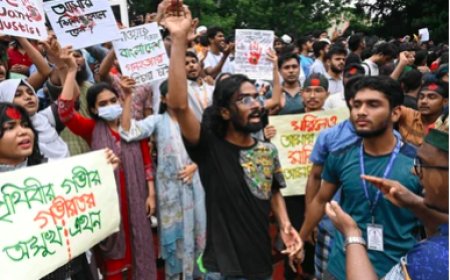
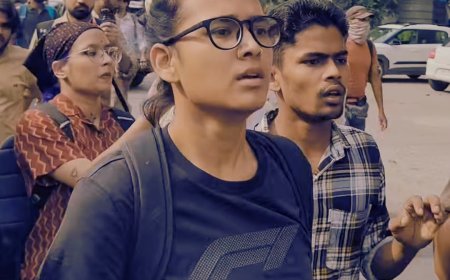
In July-August 2024, when students rose against the job-quota system, security forces killed around 1,400 people in three weeks. A UN fact-finding mission published in February 2025 concluded there were reasonable grounds to believe these killings amounted to crimes against humanity.
A Fragile Interlude
The interim government led by Professor Muhammad Yunus delivered unprecedented steps. It opened the Aynaghor sites, signed the disappearance convention, established 11 reform commissions, and in 2025 promulgated ordinances criminalising enforced disappearance, outlawing secret detention sites, and rebuilding the National Human Rights Commission with stronger investigative powers.
On October 9, 2025, formal charges were filed against twenty-eight people, including Hasina and former home minister Asaduzzaman Khan, for running the disappearance system. The Commission of Inquiry received about 2,000 complaints and estimated that the total number of victims exceeded 4,000.
On November 17, 2025, the International Crimes Tribunal sentenced Hasina and Khan to death in absentia for crimes against humanity, a verdict the UN welcomed as significant for victims, while expressing concern about capital punishment and trial standards.
The same period was also one of acute disorder. Ain o Salish Kendra (ASK) recorded at least 259 people killed and 313 injured in 413 mob-violence incidents between August 2024 and January 2026. Odhikar documented at least forty extrajudicial killings between August 2024 and September 2025 -- lower than under Hasina, but with similar methods, including custodial deaths from torture.
Hindus, Ahmadis, and the indigenous Bawm (Kuki-Chin-Mizo) community faced sharply increased targeted violence; at least fifty-nine Bawm remain in detention on terrorism charges Amnesty International calls baseless. Press freedom expanded formally; cyber laws were amended, and abusive sections were removed, but by October 2024, authorities had filed cases against at least 129 journalists and revoked nearly 200 press accreditations.
ASK recorded 351 incidents of harassment of journalists in the first ten months of 2025. The government also arbitrarily detained thousands of opponents and, on 12 May 2025, banned the Awami League under the Anti-Terrorism Act. In the weeks before the February 2026 election, the Rights and Risks Analysis Group documented at least fifteen murders of Hindus, including journalist Rana Pratap Bairagi.
The February 2026 Election and the Return of BNP
Elections were held on February 12 alongside a constitutional referendum, with the Awami League barred from participation. Turnout was roughly 60 percent. The BNP, led by Tarique Rahman, son of the late Khaleda Zia, returned from 17 years of exile in London and won 209 seats and a two-thirds majority. Jamaat-e-Islami won around 68 seats, becoming the principal opposition party. Rahman was sworn in as prime minister on February 17.
In his first speeches, he pledged to restore the rule of law and equal rights, and to build a country safe for Muslims, Hindus, Buddhists, Christians, and ethnic minorities alike. Early successes followed: a peaceful national election after nearly two decades, the arrest of three former army officers linked to abuses under the 2007-2009 military-backed government, and continued movement of cases against the architects of the Aynaghor system.
A Litmus Test Failed
The most consequential early decision concerned the interim ordinances. Four of them, covering the NHRC and enforced disappearance, together moved Bangladesh substantially closer to compliance with the Paris Principles and the disappearance convention. According to Human Rights Watch, the Kennedy Human Rights Center, Amnesty International, and Article 19, the BNP government, despite its two-thirds majority, allowed those ordinances to lapse rather than enact them, rendering them void.
Draft replacements have since been criticized by Transparency International Bangladesh and others for requiring the NHRC to seek government or law-enforcement permission before investigating allegations involving security forces and for expanding executive influence over commissioner appointments.
As of late May, nine international organizations described this as a “serious setback” that contradicted the BNP’s own commitments in the July 2025 National Charter to ensure justice for victims of disappearance, killing, and torture.
Accountability, Freedom of Expression, and the Press
Progress on accountability for Hasina-era abuses has slowed but not stopped. The Commission of Inquiry’s final report, “Unfolding the Truth,” documented the central role of RAB, the Directorate General of Forces Intelligence (DGFI), the Detective Branch, and the Counter Terrorism unit in the system of disappearances.
The new parliament passed legislation formalising the Awami League ban in April 2026. Rights groups note that officers accused of running the secret cells continued to serve, and that the inquiry commission reported evidence destruction and limited cooperation.
On expression, the government enacted the Cyber Protection Act 2026, which the Committee to Protect Journalists (CPJ) says retains the vague definitions and weak oversight that made its predecessors instruments of repression. On April 17, AM Hasan Nasim was arrested at his Dhaka home after a ruling-party supporter complained about a cartoon depicting a BNP lawmaker; he was one of at least four people arrested that month for social-media content critical of the government. Human Rights Watch called this “an alarming continuation” of the previous government’s repressive practices.
CPJ’s 100-day assessment, published on June 2, found that through three governments in under two years, journalists have been detained, prosecuted, attacked, and vilified “for their perceived alignment with whichever government had just fallen.”
Farzana Rupa, Shakil Ahmed, and Mozammel Babu of Ekattor TV, and Shyamal Dutta of Bhorer Kagoj, remain in custody as of June 2026 in connection with cases filed after the 2024 uprising.
CPJ’s ten recommendations, issued on 3 June 3, call for the replacement of the Cyber Protection Act 2026 and the reform of the Anti-Terrorism Act, the Special Powers Act, and the Official Secrets Act.
Minorities, Mob Violence, and Security Forces
Independent monitors record at least 124 attacks on minorities in January 2026, with more than 95 affecting Hindus, and 118 in February 2026 with more than 80 targeting Hindu-temple arson, idol desecration, land grabbing, and intimidation during religious observances.
The Bangladesh Hindu Buddhist Christian Unity Council documented at least 2,442 incidents of violence against minorities between August 2024 and June 2025. Although researchers have shown that much of the international online discourse on a “Hindu genocide” involves cross-border disinformation, the underlying pattern of weakly investigated communal attacks is real and well documented.
Mob violence has persisted under the elected government, suggesting it is now rooted in local impunity networks rather than tied to any single political moment. Bawm detainees remain in custody, and Rohingya conditions in Cox’s Bazar worsen as international funding shrinks.
The BNP government has not announced any plan to abolish RAB, despite calls from nine international rights groups to do so, and the Law Society of England and Wales has written to Rahman raising concerns about harassment of lawyers and irregularities in bar association elections between February and April 2026.
Continuity, Not Rupture
The most striking feature of Bangladesh’s human rights trajectory is its continuity. The politicized police, the unaccountable intelligence agencies, the dependent judiciary, the cybercrime laws that criminalise speech, and the culture of impunity that allows each new majority to prosecute the last have outlasted one regime change after another.
Signing a treaty, opening a secret prison to inspection, airing an inquiry report, and convicting a former prime minister are real human rights gains.
The harder work -- including an independent prosecutor, a police force under civilian control, an empowered NHRC that can investigate the security forces without their permission, an election commission no party can capture, and laws that protect speech rather than punish it -- remains undone.
On those measures the BNP government’s early record is mixed. The country has moved out of consolidated authoritarianism and out of the chaotic interregnum, but the architecture that enabled both has not been dismantled.
Letting the strongest interim ordinances lapse, passing a Cyber Protection Act that rights groups call the old one in new clothes, holding journalists detained before the transition, and tolerating continued mob and communal violence all point to one conclusion: A change in who holds power is not the same as a change in how power is held to account.
Bangladesh’s future depends not just on dismantling authoritarian systems, but on building institutions resilient enough to safeguard rights, mediate conflict, and hold power, whoever holds it, accountable. Until then, the distance between the page and the street will remain wide, and the next list of names will already be forming.
Dr. Mohammed A Rab is currently a free lunch consultant on Financial Risk Management, Quantitative Risk Modeling and Enterprise Risk Management.