



































































How Bangladesh Slipped into the Global High-Risk Category
What is ultimately at stake is not merely the ease of obtaining visas. It is how Bangladeshi citizens are perceived as participants in the global order.


Bangladesh’s uneasy passage into the world’s expanding web of migration suspicion has acquired a new, politically charged layer.
Just as Bangladeshi travelers and students confront tightened visa regimes in the United States and Australia, a fresh narrative has emerged from Washington that threatens to harden these barriers further.
According to figures circulated by US President Donald Trump, more than half of Bangladeshi immigrant families in the United States receive some form of government benefit.
Placed neatly into a comparative table of 120 countries, Bangladesh now appears not only as a mobility risk but as a fiscal burden in the political imagination of America’s immigration debate.
This claim does not exist in isolation. It arrives at a moment when Bangladesh has been placed under a visa bond system by the United States, requiring temporary visitors to deposit between five and fifteen thousand dollars to secure a B1 or B2 visa.
Almost simultaneously, Australia has reclassified Bangladesh as a high-risk country for student visas, dramatically increasing documentation and financial scrutiny.
Together, these developments form a pattern that goes beyond bureaucratic coincidence. They reveal how Bangladeshi mobility is being reframed globally through a lens of suspicion, cost, and containment.
The statistic itself is striking. A rate of 54.8 percent places Bangladesh nineteenth among 120 countries listed, far below the very top but high enough to be politically useful. In South Asia, only Bhutan and Afghanistan rank higher, while Pakistan and Nepal sit much lower.
The Bangladeshi immigrant population in the United States has grown rapidly, rising from around forty thousand in 2000 to approximately two hundred and seventy thousand by 2023, an increase of nearly 570%.
Growth of this scale inevitably reshapes socioeconomic profiles, but the way such data is presented matters as much as the data itself.
Government benefits are not a monolith. In the United States, they include a range of programs such as food assistance, housing support, healthcare subsidies, and child tax credits, many of which are designed to support working families rather than replace work.
National data consistently shows that immigrant households, including those from South Asia, have high labor force participation rates and are heavily concentrated in service, healthcare, transport, and small business sectors.
Benefit usage often reflects household size, wage levels, and eligibility rules rather than dependency or unwillingness to work. Yet when reduced to a single percentage and broadcast without context, the nuance disappears.
This matters because numbers travel. When Bangladeshi immigrants are framed as high welfare recipients, that perception feeds directly into policy decisions such as visa bonds and risk-tier classifications. The bond system itself is premised on the assumption that certain nationalities are more likely to overstay or misuse visas.
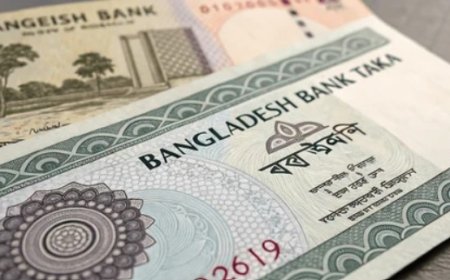
By introducing a financial collateral requirement, the United States has effectively converted trust into a purchasable commodity. For Bangladeshis, whose per capita income remains below three thousand dollars annually, even the minimum bond exceeds a year’s earnings.
Travel for family events, academic milestones, or short-term business engagements becomes a privilege reserved for those with liquidity, not merit.
The operational details compound the burden. Limited entry and exit airports, strict compliance conditions, and the risk of forfeiture for procedural missteps create a climate of anxiety rather than facilitation.
The lack of clarity on refund timelines further discourages applicants, particularly middle-class families who must mobilize funds through loans or asset sales. While officially framed as a pilot program, the bond’s symbolic impact is already clear. It signals that Bangladeshi travelers are pre-emptively suspect.
Australia’s decision to downgrade Bangladesh to the highest student visa risk level reinforces this signal from another direction. Despite recent approval rates approaching 98%, Bangladeshi students now face extensive financial disclosures and heightened document verification.
This shift has been justified through concerns about fraud, yet its timing and scale raise questions. Bangladesh was only recently placed in the lowest risk category, and no public data has been released to explain such a dramatic reversal.
International education is one of Australia’s largest export sectors, generating tens of billions of dollars annually. Bangladeshi students, though not the largest cohort, represent a growing segment driven by demographic pressure and limited domestic higher education capacity.
Increased scrutiny raises costs, delays decisions, and increases rejection risk, effectively filtering applicants by financial resilience rather than academic potential. Over time, this reshapes who gets access to global education and who does not.
Seen together, the visa bond, the student visa downgrade, and the welfare usage narrative form a reinforcing loop. Bangladeshis are portrayed as migration risks, then treated as such administratively, and finally cited as evidence to justify further restrictions.
This is how reputational damage becomes institutionalized. Once embedded, it does not remain confined to one country. Other states observe, emulate, and quietly adjust their own procedures.
The domestic implications are significant. Travel agencies, airlines, and education consultancies will feel the immediate economic impact of reduced applications. More subtly, families will recalibrate aspirations.
International exposure, once attainable through planning and sacrifice, increasingly appears contingent on wealth and risk tolerance. This deepens inequality and narrows horizons for a generation whose greatest asset is mobility of skills rather than capital.
There is also a responsibility Bangladesh must confront honestly. Irregular migration, document fraud, and politicized asylum claims do contribute to international perceptions.
Denial will not help. Strengthening documentation integrity, improving financial transparency, and managing migration channels more effectively are essential. But reform must be matched by strategic diplomacy that challenges misleading narratives with evidence, not emotion.
At the same time, it is impossible to ignore the broader global trend. Wealthy nations are increasingly externalizing migration control through financial barriers and administrative risk classifications.
Visa bonds, heightened verification, and benefit-based narratives are tools in this evolving regime. They allow governments to appear open while quietly narrowing access. Countries like Bangladesh, with large young populations and rising mobility aspirations, find themselves squeezed by a system that monetizes trust.
What is ultimately at stake is not merely the ease of obtaining visas. It is how Bangladeshi citizens are perceived as participants in the global order. When a nationality becomes shorthand for risk, cost, or dependency, individual stories are drowned out by aggregate suspicion. The challenge now is urgent.
Bangladesh must respond with reforms that address genuine concerns and diplomacy that resists unfair generalization. Otherwise, today’s visa bonds and risk lists may become tomorrow’s permanent barriers, quietly redefining who gets to move, study, and belong in an increasingly gated world.
H. M. Nazmul Alam is an Academic, Journalist, and Political Analyst based in Dhaka, Bangladesh. Currently he teaches at IUBAT.