
























![A Ledger of the Soul: Navigating the Allah-Bhagavant Nexus in a 19th-Century Puruṣākāra Jñāna Caupara [Gyan Chauper]](https://counterpointbd.com/uploads/images/202608/image_430x256_6a93baa3b09a7.jpg)




















A Stroll Down Memory Lane: Book Review of Calcutta Kebabs and Christmas Cake
To me it is the story of a city that by its very nature of absorbing for more than 300 years a continued multifarious and rich cultural history of diversity into its DNA offered Zeenie the chance to be a player and observer and gain a wealth of experiences that would shape her befittingly in her later years.

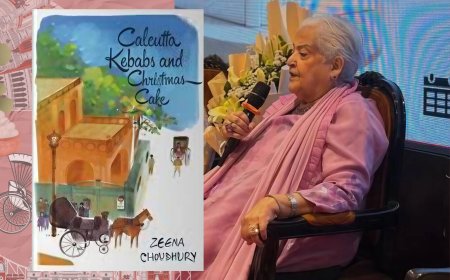
Zeena Choudhury’s memoir, Calcutta Kebabs and Christmas Cake, nearly six hundred pages long, is a tour de force of childhood, memory, emotion and storytelling, presenting the reader with a slice of life lived between 1946 to 1951 in Calcutta.
An account densely rich and delicious like the Christmas cakes and spicy kebabs that titillate the reader's palate and senses, when they become privy to the skeletons that lurk in youthful Zeenie’s cupboard, or the risqué proceedings that she is occasionally part of.
The title of the book is a metaphor for the holidays Zeenie spent in Calcutta, away from her school, Loreto Convent, Darjeeling. She writes of a home and time shared between her maternal and paternal grandmothers whose domain was 7 Park Lane, Calcutta. Nanna, the matriarch of ‘Upstairs,’ and Maggie, presiding over ‘Downstairs,’ the two Queens who ruled Zeenie's heart and the physical domain she inhabited.
The timeline of the book, postcolonial India but with Calcutta at it’s centre, poised on the brink of Independence, it’s ensuing troubled years, followed by yet another period where the city finds its feet and flow, makes engrossing reading for the cognoscenti intimately familiar with Calcutta of the last century and equally with those who are not.
Zeenie is a youthful, inquisitive, precocious yet endearing protagonist who recounts her story with great flourish, gusto and drama, the last quality present in her persona in liberal doses.
Tongue-in-cheek and with the greatest insouciance, she admits to the reader that she is the 7 Park Lane resident drama queen. A fact well known to all denizens residing both ‘Upstairs’ and ‘Downstairs’ of that once beloved home. Most of Zeenie’s memories are recounted with such candour and innocence that it disarms the reader from the get-set-go.
The memoir is dotted with instances where the narrative's main players are her Nanna (Upstairs Nani) and Maggie (Downstairs Dadi), and includes a long cast of beloved extended family, friends, and other stellar performers.
Throughout its pages, Zeenie emerges as a warrior, champion of causes, a would-be empowerer of downtrodden women; caring, soft-hearted, on occasion imperious, between the tender ages of roughly 8 and 12, but still, a very young soul! Nevertheless, she tells her story with clarity, empathy, and objectivity.
One such example I delight in quoting from the book: Zeenie spends a night with Maggie grandmother from ‘Downstairs’ 7 Park Lane:
Maggie was so exhausted that she had forgotten to take me to the bathroom. Now she was softly snoring, so I did the next best thing I could think of -- I pretended I was a slain princess lying in a pool of blood -- my henchmen were all dead too.
The enemy surrounded me, spears poised. Some were digging into my wrists. I was about to die; I needed to make my last confession before I finally closed my eyes, then suddenly I was awake, everywhere I turned it was wet -- sopping wet -- yet still Maggie slept.
Finally unable to bear my bloody predicament any longer, I screamed, “I want to go to Nanna. I want Makmul Khala to come and take me”. “Shh ... little Princess,” whispered a gentle voice. Maggie had quietly woken. She smiled, took me to her bathroom, bathed me, and dressed me in one of her gowns.
She brought me some hot milk, and while I drank, she washed and changed her clothes. Then she took me upstairs and handed me gently to Nanna.
An epic anecdote of bed-wetting, recounted by Zeenie where the aftermath is not degradation or scolding, only love and understanding.
The dramatis personae in the book are diverse, manifold in creed, race, religion, ethnicity, personality and colour, holding one enthralled. Bak Bak Makmul Khala, ever-inquisitive cook, maid, general factotum, guide and mentor of Nanna’s ‘Upstairs’ household, three gorgeous ‘Chutney Marys’ Zeenie's extended aunts, Sunburnt aka Rhett Butler Zeenie's ‘pretend beau’ oozing gallantry and tanned good looks, and later ‘Sirloin’ who nearly threatens to replace Sunburnt in her childish affections; There is also Master Moshoi, her Bangla tutor -- whom she adores and reveres, forming just a few of the men in her saga.
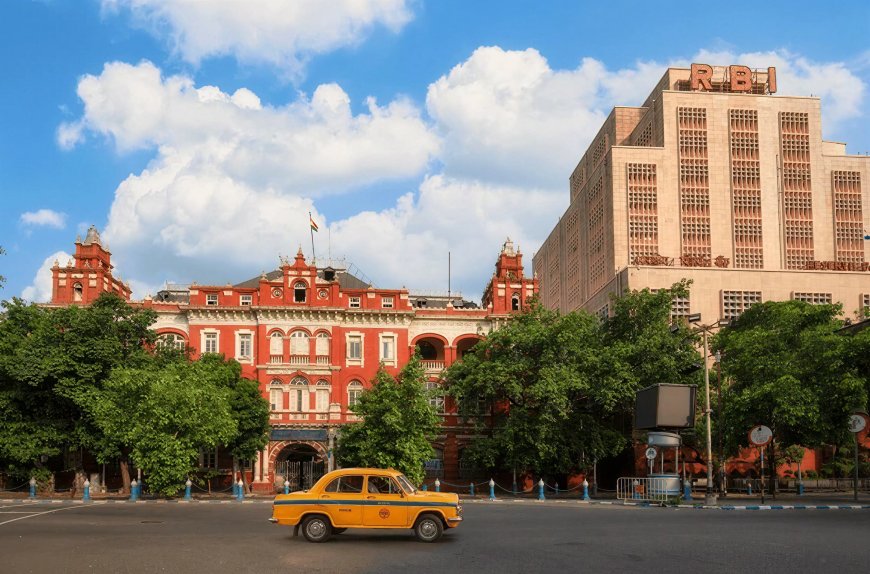
As a Calcutta-born, Loreto Convent educated woman, following Zeena Choudhury's footsteps and fairly similar experiences a decade or more later, I personally loved the fact that Calcutta (the city in which I too spent 13 years of my early life) is most definitely a parallel protagonist, Zeenie’s episodes, incidents, experiences in those years from 1946 to 1951 in Calcutta manages to invest and turn the city into a living breathing entity with a soul.
The City pulsates with life, marble palaces, Baroque buildings, palaces of the merchant princes such as the Tagore's living in JoraShanko, the marble palaces belonging to Raja Rajendro Mullick, ‘Master Moshois’ exceptionally and grandly decorated palace with his fleet of Bentleys, Bugattis and other highly priced automobiles jostling with motorized taxies, horse drawn carriages, tangas, phaetons, electric trams, buses and hand-pulled rickshaws, a chaos and energy that drives this massive pulsing city.
Zeena Choudhury interweaves within the decade of the 40’s and 50’s stories of her Anglo Indian forebearers, her Bengali Muslim family, intermarried with descendants of Hakka Chinese settlers who came to Calcutta in the mid 19th century keeping their trade, their food, their culture and traditions alive and yet being amalgamated into a broader Calcutta lifestyle.
Zeena Choudhury parades a mind-boggling array of people locating, in the mid 19th century, to Calcutta, an influx of Armenians, fleeing persecution from the Turks, Parsis/Zoroastrians fleeing Persia for religious beliefs, upper-crust Anglo-Indians, the early Portuguese, and the Dutch.
She links up family saga with tales of descendants of Tipu Sultan, the Tiger of Mysore, present day descendants of exiled Wajid Ali Shah, the last Shia King of Lucknow, who was ignominiously packed off to MatiaBruz in the greater environs of Calcutta, not to mention Italian and Swiss communities who drifted to Calcutta for trade and commerce and of course the Baghdaadi Jews deserving of a special mention; all a heady concoction of a highly secular, tolerant non communal society that was Calcutta’s greatest legacy and attraction.
A city alive with educational institutions that was a roster of competing names which could hold their own with their counterparts in Britain and the western world! August Presidency College, Scottish Church College, Calcutta University, Missions, Schools, Seminaries, Churches, Mosques, Temples all lend a finely honed perspective of the City’s grandeur and importance, the Second City of the British empire and the jewel in its crown!
The leitmotif running through the narrative is the heady world of hotels such as The Grand Hotel, The Great Eastern Hotel iconic restaurants, cafes and tearooms such as Flury’s, Firpo, Trincas, Magnolias, Mocambo, clubs such as The Bengal Club, The Calcutta Club, The Royal Calcutta Turf Club, The Saturday Club, The infamous 300 Club. Glorious repasts, weddings, anniversaries, birthdays, religious ceremonies, discussions, intellectual addas all infusing the most vibrant energy to the city and transforming it, into a living breathing entity.
The writer's interaction with others from those years is a vast cross-cultural panoply. The mid-19th century had seen the establishment and flowering of the Brahmo Samaj, a reform movement spearheaded by Raja Ram Mohan Roy, aided by Vidya Sagar to abolish Hindu practices of Sati, the ritual of immolating of Hindu widows in their husband’s funeral pyre; and establishing a sort of Hindu monotheistic religion.
It placed great emphasis on women's education and empowerment and the entire Tagore family starting from Prince DwarkaNath Thakur to his descendants inhabiting the same time frame as Zeenie continued to be strong and active supporters and adherents. The mid 19th century also ushered in The Bengal Renaissance.
Tremendous strides in the field of literature, the arts, culture, music, poetry, dance blossomed, similar to the Renaissance of the middle ages in Europe. Influenced by British colonial rule in a positive way the Calcutta ‘Bhadralok’ (referencing highly cultured educated, upper middle class families also harbouring liberal secular values) formed part of the ‘Anglo-Bengali Society or what received the mildly self-deprecating moniker of ‘Inga-Banga Society'.
Zeenie tells us of her interaction with many of them.
My concluding thoughts after having finished this undeniably lengthy but hugely informative and entertaining ‘tome’ was that the book was not just a reflection and recounting of the times and life of a young girl poised on the threshold of adolescence.
To me it is the story of a city that by its very nature of absorbing for more than 300 years a continued multifarious and rich cultural history of diversity into its DNA offered Zeenie the chance to be a player and observer and gain a wealth of experiences that would shape her befittingly in her later years.
What remains after the last morsel of Kebab and the last slice of cake has been eaten, and the last sip of Champagne quaffed, is that the book is a testament to an abiding love that bathed, cloaked, nurtured, and enveloped all the inhabitants of Calcutta's 7 Park Lane.
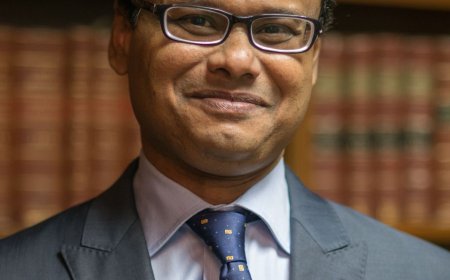
Lita Samad is a published poet, occasional short story writer, and essayist at large.