






















![A Ledger of the Soul: Navigating the Allah-Bhagavant Nexus in a 19th-Century Puruṣākāra Jñāna Caupara [Gyan Chauper]](https://counterpointbd.com/uploads/images/202608/image_430x256_6a93baa3b09a7.jpg)



















An Evening with Calcutta Kebabs and Christmas Cake
The Calcutta of this book was plural in the way that daily life is plural, messily, in the way that a grandmother bakes a Christmas cake for her Muslim neighbour's grandchildren because they are downstairs and they love cake.
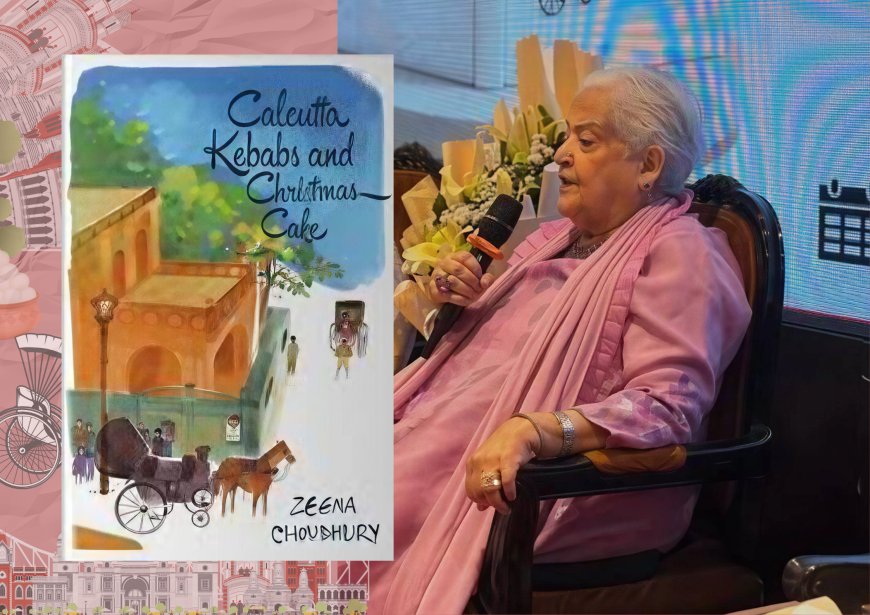
Zeena Choudhury is 87 years old and she wrote a six-hundred-page book about a world she first encountered as a seven-year-old child, left at 7 Park Lane, Calcutta, in the care of her maternal grandmother while her parents went to study in the United States.
She rewrote the book seven times, which is either an act of devotion or a kind of beautiful stubbornness, and I suspect it is both. The book is Calcutta Kebabs and Christmas Cake, and it was launched last week at Gulshan Club to a room full of friends and well-wishers.
I will admit that I came to the launch with a chip on my shoulder, which is the most honest way to say it.
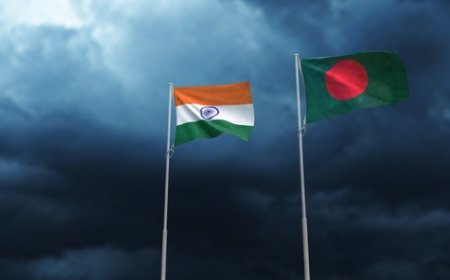
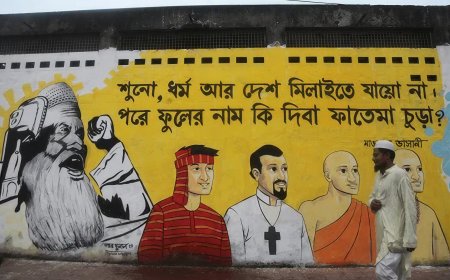
Because the Calcutta this book describes, cosmopolitan, pluralist, where the conch shell from a Hindu household, the azaan from a mosque, and the church bells on Sunday morning arrived in the same air without anyone filing a complaint, is a Calcutta used by politicians now -- to make arguments about what was and what has been lost, weaponized in the rhetoric flying between West Bengal and Bangladesh, invoked in news cycles full of communal violence and electoral calculation.
And I was curious what it would mean to encounter that city through the eyes of a seven-year-old girl who simply lived in it, without knowing she was supposed to record it for posterity.
What the book does, and what the evening's discussants kept circling back to is that the book is an account of a world that did not see itself as remarkable.
Young Zeenie, the book's narrator and the author's childhood self, moves between her Muslim grandmother Nanna upstairs and Maggie, her Anglo-Indian grandmother downstairs, between Christmas midnight mass and Hindu pooja rituals, between Ravi Shankar concerts and the Dover Lane Music Festival, and she does not register any of it as co-existence in the political sense. She registers it as home.
The political meaning arrives only when you read it now, from outside the text, with the knowledge of what has since been made of these communities and their relationships.
Moderator and daughter Farzana Ahmed gave the evening its shape and its warmth. She made a point that stayed with me: The child narrator, young Zeenie, does not carry the adult's grief. When her parents leave for years, the little girl focuses on the aerograms she will receive and the puzzle of locating Connecticut on a map. The adult reader, watching from outside the prose, carries the weight of what the child cannot yet see. That dual vision is what gives the book its particular texture.
Raana Haider, author of India: Beyond the Taj and the Raj, traced the memoir's emotional core through the two grandmothers, whose quiet coexistence across two floors of 7 Park Lane makes more of an argument for pluralism than any political speech could.
She also drew attention to Master Moshai, Zeenie's beloved intellectual companion, a man who debated history, poetry, and Tagore's folk paintings with a child, and took her seriously while doing it.
Lita Samad traced the city's history with the authority of someone who grew up in it, from Job Charnock acquiring three marshy villages in 1690 to the building of Fort William and the clearing of swampland that became the Maidan, and she pointed to something the book does very quietly: It shows Calcutta surviving.
The famine of 1943, the communal violence of 1946 that Zeena's own introduction describes with unsparing clarity, bodies at every corner, thousands of policemen deployed and unable to do anything, these are the conditions surrounding 7 Park Lane. And yet 7 Park Lane persists. That is either a tribute to human resilience or a document of how ordinary life absorbs catastrophe, and probably it is both.
Nusrat Huq, senior English teacher at Sunbeams, focused on the book's encyclopedic texture, its more than a hundred food items, its Armenians who fled Ottoman persecution and left their mark on Calcutta's newspapers and grand hotels, its Chinese community who built Chinatown and brought their shoemaking, its 150,000 American soldiers who arrived with jazz and Coca-Cola and, as she wryly noted, possibly replaced Indian street food with fried chicken in ways we are still reckoning with.
Ambassador Iftekhar Chowdhury argued that Choudhury uses food as a literary device, excessively and to real effect, and that the bhadralok class she documents, that cultured, leisured, endlessly debating class at the races and in the clubs, was a class defined not by what it produced but by the quality of its afternoon.
The evening was a good one. It deserves to be said plainly. But I will say, as my own observation and no one else's: The table had no young voice.
Every discussant brought expertise, memory, and genuine feeling, and the discussion was richer for all of them. What it did not have was someone who came to the book without personal stakes in the city, a young critic or writer who might have asked what the book is doing formally, what it costs to write a childhood at this distance, what we do with a document of pluralism that arrives in 2026 when pluralism is under pressure in exactly the places the book so lovingly describes.
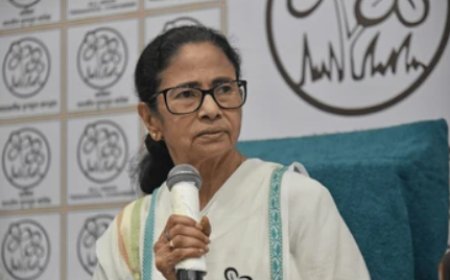
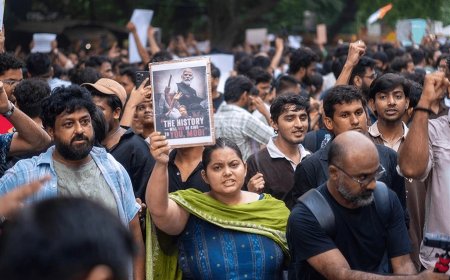
Because the question this book raises is what it means to document a cosmopolitan world in a moment when that world is being claimed by competing political narratives. West Bengal's communal tensions of recent years, the Waqf protests that turned violent in Murshidabad in 2025, the BJP's electoral use of Bengal as a site of Hindu anxiety: All of it is, in some sense, an argument about the city this book inhabits.
The Calcutta of this book was plural in the way that daily life is plural, messily, in the way that a grandmother bakes a Christmas cake for her Muslim neighbour's grandchildren because they are downstairs and they love cake.
That is harder to weaponize. And maybe that is the point.
Thank you to Bookworm for bringing this book into rooms where it can be argued about, and to Amina Rahman, for continuing to insist that Bangladeshi literary culture deserves celebrations equal to the writing it produces.
The kebabs and the cake are both still warm. The city they point toward is not gone. It is just contested. What happened to it is a question the book never asks, because in 1946, nobody thought they needed to.
Azeema Anhar is an English Language Instructor at ULAB and member of the editorial team at the weekly Counterpoint.