




































































How Abuse is Normalized
We owe our daughters, sons and every future generation something better than inherited shame. We owe them safety. We owe them dignity. Let silence end where abuse begins, on our screens and in our streets; through words that challenge, actions that protect, and a resolve that no longer looks away.

CNN’s recent exposé of the “online rape academy” -- a site teaching and showing actual rape that has even drawn 62 million visits -- should force us into a moment of reckoning. It lays bare a rupture in our collective moral complacency, stripping away any claim to ignorance.
In its aftermath, we really ought to pause and engage in a thorough reflection. While it is easy to dismiss this depravity as a distant anomaly or to treat it as a ‘product of the Western world’, a closer look at Bangladesh’s own reality suggests that such violent sexualization of women and even children is neither foreign nor uncommon, but deeply embedded within our own society.
In Bangladesh, sexualizing tendencies are concealed in normality, subtly legitimized under religious pretext, and nowadays increasingly encroaching upon our public and online spaces.
According to Ain o Salish Kendra, in just the past 14 months there have been over 800 reported instances of sexual violence against children. Incidents such as the Sitakunda murder in March, where a seven-year-old girl was raped and left to walk with her throat slit open, are supposed to stir our collective conscience.
These are not mere acts of criminality but matters of profound national shame. And they demand more than just fleeting outrage or hollow condolences; they demand a moral scrutiny. However, these inhumanities constitute just a part of the problem; they represent only the direct crimes that can be legally prosecuted.
But before they visibly manifest as crimes, they exist as a collection of vicious thoughts cultivated and rationalized long before culminating in action. They develop as a silent incubation of beliefs that normalize turpitude, justify abuse, and erode ethical boundaries.
Society reactively condemns the crime once committed but it pays far less attention to the ideological and psychosocial groundwork that precedes it. Psychology tells us that even criminals who commit the most heinous acts are not devoid of conscience. Rather, they learn to override it through belief systems, ideological distortions, or collective reinforcement.
Moral disengagement allows individuals to reinterpret wrongdoing as acceptable, even virtuous. Often this process is not solitary; it is reinforced within communities that provide validation, drawing selectively from religion, bending interpretation until it serves them, and pulling ideas out of context to construct a facade of legitimacy. Therefore, it is essential not only to address them but also to confront them intellectually.
Harmful ideologies and beliefs must be exposed, dissected, and dismantled through reason, evidence, and ethical clarity.
We see acts of sexual violence as they occur, but we do not see the underlying systemic sexualization that sets the stage for them -- the radical beliefs, flawed thought patterns, and collective reinforcement that spur and fan their flames. These forces are more indirect, implicit, and largely inconspicuous.
They escape legal definitions and cannot be brought into the light of a courtroom, thereby passing off as regular conduct. More unsettling still, they are often promoted and even glorified within certain fanatical segments of society.
The online sphere is a clear illustration of that. A recent report by BNNRC shows that 89% of female social media users in Bangladesh face online abuse and derogatory sexualization. It is quite common to scroll through comments under a post about any girl being sexually assaulted and see a familiar chorus rise: “What was she doing?” “Who was she out with?” “Her clothing is improper”.
This reflexive victim-blaming shifts the gaze from the predator to the victim, as if a scrap of fabric could excuse barbarity or a teenager’s youthfulness could justify predation. It establishes the idea that girls must police their own existence to avoid male entitlement while the real culprits slip away unscathed, instead emboldened by the very society that should condemn them.
One reflection of this mindset is seen in attitudes toward child marriage. A few weeks ago, the marriage of a 16 year old child artist -- Simrin Lubaba, sparked widespread debate on social media. Opinions poured in both in favour of and against child marriage.
Although marriage under 18 is prohibited in Bangladesh, it continues to be disregarded in practice. Debate over such an issue is not inherently problematic, as the legal age of marriage varies across cultures and nations.
What is alarming, however, is the nature of the arguments presented in defense of child marriage. They reveal deeply twisted patterns of reasoning and expose disturbing perceptions about women. A common justification frequently invoked to defend child marriage is that it prevents moral decay.
It is argued that if children are not married off early, they will inevitably engage in “free mixing,” premarital “sinful” activities, and lose their morality.
This logic assumes that the only way to prevent “immorality” is to grant a minor access to sex within marriage. Moral conduct cannot be secured by transferring a minor into a lifelong arrangement they are not equipped to consent to. And even if adolescents engage in the conduct alleged by regressive hardliners, it remains a matter of personal autonomy and private life.
Faith and sin are matters of individual accountability, not a license to surveil and regulate others' behaviour. Religion does not grant anyone the power to coerce others into conformity, neither does it appoint anyone the custodian of others' morality.
This is not the preemption of immorality; it is the replacement of a hypothetical private choice labelled as sin according to the subjective moral standards of certain fanatical segments with forced conformity. It is the endorsement of a system where a child’s autonomy, education, and future are subordinated to adult anxieties about sex.
And the assumption itself is flawed. Refraining from child marriage does not automatically lead to premarital relationships. Yet every ordinary activity of a girl -- her clothing, attending college, socializing, or simply appearing in public -- is reduced to that single possibility. This is where the pattern becomes clear. The same mindset that justifies child marriage also reduces girls to objects of constant sexual scrutiny.
A photo of a girl without hijab and the labels come instantly: “characterless,” “shahbagi,” (a term used as an insult to label anyone with non-radical views) or worse, "beisshya"(slut). The issue is no longer about morality; it is about using morality as an excuse to see women primarily through a sexual lens, and then using that lens to control them.
This mentality extends into a broader pattern of misogyny and male sexual entitlement. In their eyes, women and even adolescent girls are objects of morally corrupting temptations who lead men astray. If girls do not dress in a certain way prescribed by mullahs, they are deemed acceptable targets for sexualization, and at times even harassment or sexual assault is tacitly justified.
For men, it is often framed as natural, in fact “a biological result of testosterone,” to develop sexual thoughts about any girl or woman who does not follow prescribed dress codes.
Consider how absurd that sounds. A man looks at a young girl and feels lust. Instead of asking the man to control himself, the blame is shifted onto the girl. Cover them, confine them, silence them. Marry them off early, or they will draw society into sin. Because apparently the problem is not men or their inability to restrain themselves, the problem is the existence of girls.
What kind of logic is that? Religious hardliners cite verses from scriptures when asserting the obligation of women to observe purdah, but the same interpretive standard is not applied to men when it comes to lowering their gaze. This form of selective piety is not piety, rather a convenient hypocrisy.
No man with a minimum sense of decency looks at a passing woman and becomes sexually aroused solely on the basis of her attire, experiencing an urge so uncontrollable that he might lose self-restraint and inflict harm. No sane man in his right mind does this and no one with even a shred of conscience would ever defend such behaviour or place the blame on the girl.
Women are held accountable for the thoughts and actions of men. The burden of morality is placed entirely upon them while men absolve themselves of responsibility.
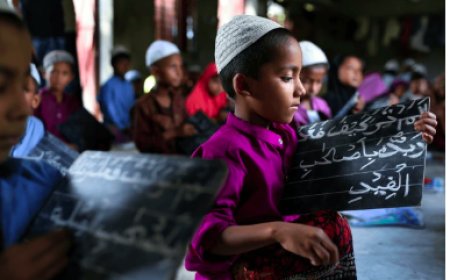
Such thinking dehumanizes women, reducing them to objects rather than recognising them as individuals with dignity. Small girls, even boys are not spared from this. The high prevalence of child molestation in madrasas is testimony to that. Despite homosexuality being a grave transgression in Islam, there is rarely any criticism from the extremists against molester madrasa teachers.
Because it is not about preventing sin, it is about rationalizing perversion and shifting responsibility. This is where paedophilia, misogyny, and sexualization begin to overlap, augmenting one another, resulting in a toxic unsafe community where abuse is allowed. Today it is words, tomorrow it becomes action.
These subtler manifestations -- victim-blaming, online normalization of harassment, and religious sanctification of exploitation, together prove far more dangerous than isolated atrocities because they embed themselves in the everyday. They shape attitudes, influence beliefs, and create a permissive atmosphere where direct crimes become thinkable.
This paradigm often begins as fringe rhetoric by extremist factions but enters the mainstream, where regressive views are amplified and accepted among large segments of the general population.
The growing visibility and influence of the radicals, particularly in digital spaces, renders them a significant social concern. When harmful perspectives gain traction, they contribute to an oppressive environment where paedophilia, misogyny, and gender-based violence can be normalised or excused. We have already witnessed mob attacks, public assaults on women framed as moral policing. If these ideas are allowed to settle, they will not remain ideas for long.
They will induce action. They will shape the next generation. Addressing this issue requires more than legal enforcement. Laws can punish actions, but they cannot dismantle ideologies.
What is needed is a sustained effort at intellectual and cultural intervention -- education that fosters critical thinking, religious literacy that resists manipulation, and public discourse that challenges harmful narratives rather than accommodating them.
Real change begins with deliberate action. Existing laws on cyberbullying remain vague, weakly enforced, and often ineffective, while the Child Marriage Restraint Act still contains loopholes that invite misuse.
The first step is to amend these frameworks with absolute clarity and zero tolerance for religious or cultural exemptions. Social media platforms operating in Bangladesh must be brought under firm regulatory oversight and held accountable, algorithms that amplify hate or endanger children should incur substantial penalties.
Verified, independent fact-checking bodies should be mandated to respond swiftly to curb the spread of religious misinformation. At the same time, online and offline forms of sexual harassment, public assault, and the defamation of women must be clearly defined within legal jurisdiction, with specific, enforceable punishments attached. Beyond legislation, tolerant religious scholars and moderate voices must speak, challenging harmful interpretations and reclaiming ethical clarity.
None of this is easy. It demands courage from families, vigilance from the state and relentless pressure from civil society. But the alternative, a society that sexualizes children and dehumanizes women, is already here and it is rotting us from within.
Indifference becomes complicity. We owe our daughters, sons and every future generation something better than inherited shame. We owe them safety.
We owe them dignity. Let silence end where abuse begins, on our screens and in our streets; through words that challenge, actions that protect, and a resolve that no longer looks away.
Md. Abrar Galib is a student of Economics at the University of Chittagong. His writing interests include politics, governance, economic affairs, and human rights. He can be reached at [email protected].