



























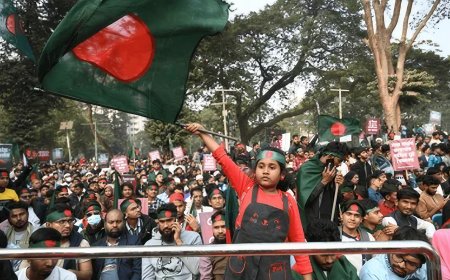








































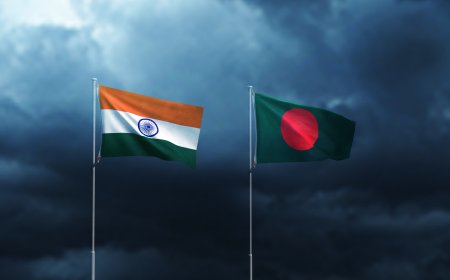
An already weakened Bengali Nationalism is going to be almost moribund. At the core of Bengali Nationalism is a common social and cultural heritage of the Bengali speaking people in both sides of the border.

All things considered, Mr. Rahman receives a “meets expectations” grade. The BNP government, as a team, receives a “needs improvement” grade, but not a failing one.
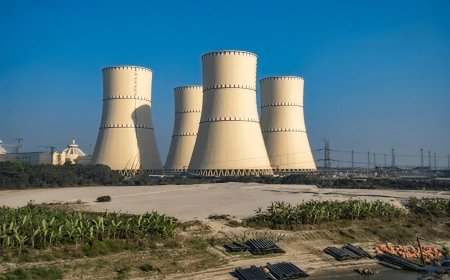
After the 2024 uprising, there was a genuine window to order a forensic audit of Rooppur's finances. That window was not used. The interim government moved on. The contracting architecture remained intact.
The compact’s energy architecture amplifies rather than mitigates geopolitical shock exposure. A rational energy-security doctrine would diversify suppliers, transit routes, and contract structures; this agreement funnels us toward a single, unbuilt source over which we possess zero strategic control.

As the crisis in Rakhine worsens, Dhaka should consider drawing on that combat experience. This is not to pursue meaningless adventurism, but to formulate an internationally credible response to ensure safety, stability and humanitarian access in Arakan.

Gen Z or Alpha loves beauty and boldness, not beast, humility with harshness when necessary, eloquence, not quiet. The leaders who hide behind humility or show arrogance from the pulpit to conceal the purpose of rule are obsolete.

This economic progress is worth celebrating, but it is arriving with a metabolic cost that the nation’s healthcare system is not equipped to handle yet

The real problem is not device ownership. It is device access. And how you design that difference determines whether a policy quietly succeeds or loudly fails

In the debut episode of Counterpoint with Zafar Sobhan, Editor Zafar Sobhan sits down with Shafiqul Alam, Journalist and former Press Secretary to the Chief Adviser of Bangladesh to discuss the Indian election and its implications for regional politics, democracy, and South Asia’s future.

In Episode 07 of J&J Fireside, Jyoti Rahman and Rubaiyat Sarwar discuss the tension between election promises and economic realities. The conversation explores fiscal constraints, inflationary pressures, subsidies, and the difficult policy choices governments face when balancing political commitments with economic sustainability.

For Bangladesh and other maritime-dependent nations, the lesson is clear. Security can no longer be conceived in predominantly territorial terms. It must be understood as a function of connectivity, resilience, and access -- all of which are fundamentally maritime.

I remember waking up before dawn to help my mother bathe. I remember feeding her before leaving for my exams. I remember studying beside hospital beds while chemotherapy slowly hollowed out the strongest person I knew. Even then, she continued worrying more about my future than her own survival.

This was hauntology made personal -- the past haunting the present -- but my ghosts were .mp3s, glitching in the digital afterlife.

The question is whether Bangladesh has the courage to apply the same scrutiny to every class of collaborators past and present, left and right, secular and religious and to build a republic where proximity to power is no longer the country's most valuable currency.

It feels unjust to see a human life reduced to a symbol of negativity, especially when that reduction is driven by forces beyond the individual’s control. Yet the reaction itself cannot be dismissed as irrational. It is the product of a pattern that has become too consistent to ignore.