



























































Our Moral Compass in Ruins
It should be the topmost priority of any government to ensure that our education system is running independently with the most competent and scholarly educators.


"Education is the influence exercised by adult generations on those not yet ready for social life. Its object is to arouse and develop a certain number of physical, intellectual, and moral states."
-- Emile Durkheim, French Philosopher
Without the moral component above, education is nothing but vocational training in life and survival skills. That is, unfortunately, the state of our education system today. And with this template-driven education, we are falling behind world standards every year. This is neither something that happened suddenly, nor does it exist in a vacuum isolated from the rest of the intricately woven social and political fabric of our society.
The decay and abandonment of morality as a core component of our education happened both explicitly and implicitly over many years. At the core of it lies a dearth of role models among our teachers. Generation after generation of students graduate from our institutions without having anyone to look up to and without an education that also develops moral and ethical faculties.
Of course, there are many exceptions, and this might seem like an overly simplified inference drawn from a rather complicated downward trajectory of our educational system.
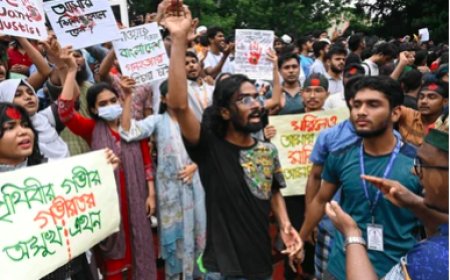
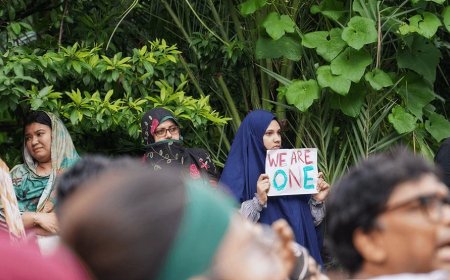
After the July Uprising of 2024, there was and still is a general hope and aspiration of building a better Bangladesh without corruption and discrimination. Reform commissions were formed. People debated about the roots of corruption in Bangladesh. But the discussions became circular and where to begin with reforms to get the most impact seemed like an unsolvable riddle.
Some believed the political system is to blame, some blamed the bureaucracy, some blamed the financial and banking systems, some talked about the judiciary and law enforcement. Corruption in education, health, and other sectors was widely discussed. After the elections, the old system of governance took the helm again and not much has changed.
Honestly, not much is expected to change anytime soon either.
Still the doctors will say the police are corrupt, the police will say the politicians, politicians will point fingers at administrative cadres, and they’ll blame the bankers and so on.
Is there really any sector that is significantly less corrupt? Are most people not vulnerable to the allure of corruption and materialistic gains through moral compromises? Do we have a nation of people grounded mostly in honesty and morality who can stand against the widespread corruption and demand substantial change in the systems? Or are we all cogs in the wheel, having become part of the system willingly or unwillingly? How did we end up with a nation with such fragile moral character?
I, myself, have bent to circumstances and bribed people to get things done multiple times instead of protesting it. Sociologists and other experts can come up with many explanations, but to me the root cause is that we lack mentors with strong moral character.
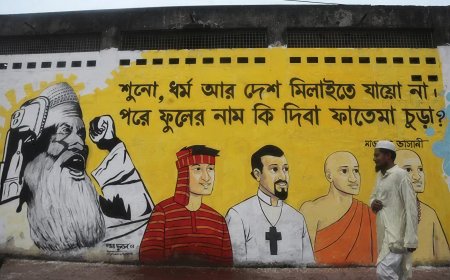
The very people with the responsibility to teach impressionable young minds the importance of ethics -- and to serve as their role models -- succumb to the lure of a path less dignified and honorable. In many cases, those we learn from exemplify corruption and moral decay as much as anyone else. What kind of students will they produce? As the writer Ahmed Sofa once asked: Can a blacksmith make gold jewelry? Our crisis of corruption is a crisis of good mentorship.
Imagine a student, full of hope, entering the university only to find that the teacher who will teach them is not qualified enough but is there because of nepotism; the proctor who is supposed to be the guardian of all the students is a partisan hack deeply involved in seat politics; the department chair is someone with a dubious thesis and a sketchy academic track record; the VC is a direct political appointee supported by government-aligned partisan teachers occupying important positions with or without proper qualifications.
Do not get me wrong, there are still many scholarly teachers trying their best to bring quality education to students, but from outside, it seems that their numbers are dwindling, their voices submerged in the clamor, and their impact not palpable enough. Similar conditions prevail in colleges, schools, and even primary schools.
Through school committees and various other means, political influence is becoming the controlling factor of every educational institution; corruption is rampant in hiring teachers, construction, procurement, everywhere.
It is not uncommon to see teachers colluding with outside parties or even students to further fuel the corruption. How can a student look up to such teachers? What will they learn from them? What about moral guidance from teachers -- does that even feature in all this?
During my days of undergraduate education, I became involved in student politics and was subsequently elected to the students’ union representing the government party. Our principal would sometimes attend our meetings, and what made me uncomfortable was that he would refer to the party we belonged to as ‘our party’ to signify that he was also a member of the party.
He had been appointed over a few more eligible candidates to become the principal. Up close, he did not act like a principal of an institution meant for all students equally. It was obvious he would favor some over others. In one instance, there was much tension between two rival student parties, and I was in the middle of it trying to defuse the tension.
The principal’s intervention could end it all and so I, along with some other student leaders, went to the principal’s office. But he had no interest in defusing the situation and instead, indirectly encouraged us to beat up our fellow students and classmates belonging to the opposition since we were the government-backed party and much stronger than them. It took me a few minutes to digest what he was suggesting, and I asked myself, what have I gotten myself into.
From that day on, I could no longer grant unconditional respect to principals, VCs, pro-VCs, proctors and so forth. The first question that now comes to my mind is which party this person belongs to and how much they had to compromise to get to the position.
A few years later, I saw my principal getting manhandled by a group of students. I did not feel bad. Many years ago, in that same office, a student leader took out a gun and shouted: "Who is the principal? I am the principal." The principal, a similar party-installed beneficiary, was silent and had no moral strength to oppose. That student leader was not condemned but was hailed as a hero for many years to come and that story became a legend. Such has become the culture and the norm in our institutions.
First and foremost, due to over-politicization of educational institutes, widespread nepotism, corruption in the form of bribery during recruitment or promotion, or quid pro quo, we are getting less qualified, less competent teachers at almost all levels of our education system.
According to the World Bank, inefficiencies and corruption in the education system cost us over $1 billion annually. This is a governance failure that undermines the quality and trust in the system and continues to eliminate meritocracy from this sector.
Second, favoritism, grades for sale, coerced tutoring outside of school, a transactional relationship and overall atmosphere of exploitation in the classroom also produce less qualified and less competent students who perpetuate these systemic unhealthy practices. How else will these students act when they enter their professional life?
The educational eco-system gets caught in a vicious cycle of corruption and dishonesty. In this sense, teachers have become the products, enforcers, and enablers of a corrupt system -- not unlike other professions. But teachers are not the same as other professionals. They are not just delivering a service to the students. They are supposed to be the conscience of the nation, the primary moral role model for students outside of the family.
Instead of receiving a moral education that teaches them to stand up against corruption, injustice, and systemic irregularities, students learn to normalize widespread corruption and moral decay and are taught to accept this as the way of life, a way of survival and as a path to prosperity. They learn to value social connections, political power, and money more than competence, hard work, and integrity.
It should be the topmost priority of any government to ensure that our education system is running independently with the most competent and scholarly educators. Government should depoliticize teacher appointments or promotions. For that, teacher politics must be banned. School or college committees should be completely apolitical, and their roles should be evaluated and curbed as necessary.
Government should also appoint independent watchdogs for auditing institutional recruitments and expenditure. Student and employee politics contribute to the overall systemic corruption. Those, too, need to be restricted to focus only on student and employee wellbeing.
Educational policy and curricula should be evaluated and teacher salary structure revamped. Teacher training, and evaluation process should be standardized as well. Most importantly, teachers should be protected by policies from influence and coercion, so that they can educate freely and independently within a safe space.
We must find a way to provide our youth with good mentorship. Without great mentors, we cannot expect to have a nation that is honest, moral, or just. Nelson Mandela once said: "A nation’s future is written in its classrooms."
It might take us a few generations to write our future, so let us start now.
Shahed Iqbal is a citizen activist and physician-scientist by profession.