













































![A Ledger of the Soul: Navigating the Allah-Bhagavant Nexus in a 19th-Century Puruṣākāra Jñāna Caupara [Gyan Chauper]](https://counterpointbd.com/uploads/images/202608/image_430x256_6a93baa3b09a7.jpg)




















The One Percent Imperative
Why Bangladesh's failure is architectural, and what its remedy actually requires


Bangladesh stands at a crossroads where public anger meets historical opportunity. But to move forward, we must confront a truth that few international tutors in governance are willing to admit: No nation is doomed by its geography, religion, or colonial history. Our suffering is not a cultural curse.
It is the predictable output of a parasitic institutional architecture that any society would suffer under if left unguarded.
The corruption that drowns Bangladesh and the corruption that buys influence in Washington are the same disease, operating at different altitudes. What redeems any nation is not the perfection of its majority but the critical mass of its honest minority. This essay advances that single, unfashionable argument and follows it to its practical conclusion.
The remedy for Bangladesh is neither revolution nor foreign aid. It is a functional critical mass of roughly one percent of the population: Technically competent, morally serious, institutionally loyal people who hold the institutional ground long enough for professional norms to take root. They already exist within our civil service, our universities, our newsrooms, and our diaspora.
The task is to make them visible to each other and place them at the core of a deliberate national architecture for transformation.
The Great Lie of Exceptionalism
This argument does not speak only to Bangladesh, or to Pakistan, or to Nigeria, or to any single nation burdened by poverty and parasitic governance. It speaks to all of humanity, because the pathology it describes is not the exclusive affliction of poor nations.
Corruption, extraction, the absence of integrity, the betrayal of fairness, and the mockery of justice: These are the universal default conditions of human institutions left unguarded by people of genuine character.
The most dangerous idea in global political discourse is that corruption, injustice, and extractive governance are problems belonging solely to poor countries. This lie has two catastrophic effects. It permits the wealthy world to position itself as the solution to a problem it is, in fact, a structural partner in perpetuating.
And it causes citizens of poor nations to internalize their condition as something uniquely wrong with their culture, their religion, or their people.
The truth is simpler and more uncomfortable. Every human institution, left without genuine accountability, tends toward extraction. Power without consequence produces corruption.
Governance without integrity produces predation. These are not cultural specifics. They are human universals. The question is never whether human beings will tend toward self-serving behavior. They will. The question is what institutional and cultural architecture effectively constrains that tendency.
Altitude
The most important insight about corruption is not its quantity but its altitude. Where corruption sits within a system determines whether citizens experience a functional state or a predatory one. The difference between a corrupt senator in Washington and a corrupt minister in Dhaka is not a matter of morality. It is architectural.
In Bangladesh, a farmer must bribe a clerk to register his land title. A mother must pay to obtain her child's birth certificate. A patient must slip something extra to receive basic hospital care. Corruption is the operating system at ground level, extracting a tax on existence from every citizen at every turn.
In the United States, a citizen can renew a driver's license, register a birth, and receive basic government services without paying a bribe. The corruption operates at altitude: Defense contractors write procurement specifications, pharmaceutical companies fund the regulators who approve their drugs, and financial institutions fund the politicians who deregulate them. It lives in the stratosphere of policy and finance, largely invisible to the ordinary citizen's daily life.
The two are the same disease, but altitude matters enormously to the lived experience of the citizen. This architectural distinction also helps explain a paradox that has long confounded development economists: Why some countries score well on corruption metrics yet still serve the powerful at the expense of the many.
Standard metrics measure corruption at ground level, the only kind visible to ordinary citizens, while remaining blind to grand structural corruption laundered through tax codes, regulatory capture, and financial engineering.
The Scale of the Hemorrhage
Before any vision of transformation can be credible, we must state the scale of the destruction plainly. The White Paper on the State of the Bangladesh Economy, prepared by the committee led by economist Debapriya Bhattacharya and submitted to the interim government in December 2024, estimated that 234 billion US dollars were illicitly siphoned out of Bangladesh between 2009 and 2023, roughly 16 billion dollars a year, routed through trade misinvoicing, hundi networks, and property markets from Dubai to London.
Note carefully what this number proves. A single regime extracted nearly a quarter of a trillion dollars before anything stopped it. That is not evidence that one set of people was uniquely venal. It is evidence that the architecture permitted it: No institution in the country had the independence, capacity, or protection to interrupt the extraction while it was underway. The thieves change. The open vault remains.
Transparency International's Corruption Perceptions Index tells the same story from a different angle. Bangladesh scored 24 out of 100 in 2023, its lowest score since the index adopted its current methodology in 2012. These are not mere statistics. They represent childhoods stolen, hospitals never built, teachers never trained, and engineers, doctors, professors, and scientists who emigrated because their country offered them no honest future.
The Engines of Extraction
The mechanisms that perpetuate extractive governance are identifiable, predictable, and, critically, not inevitable. Administrative cultures inherited from authoritarian colonial masters valued compliance over competence, and institutions were designed to drain wealth outward rather than build it inward.
The poverty trap is itself a political tool: A person consumed by finding tomorrow's meal cannot easily sustain systemic reform. And when citizens are led to believe their primary enemy is a neighboring religious or ethnic group, the actual enemy, the extractive elite above them, remains invisible and untouchable.
Perhaps most insidiously, the brain drain functions as a civilizational hemorrhage. Every brilliant engineer, doctor, scientist, or economist who emigrates represents a double loss for the country of origin and a double gain for the destination.
The international architecture enabling all of this is extensive. Western banks, London real estate, Gulf banking secrecy, and shell company jurisdictions from Panama to Delaware serve as indispensable infrastructure for the transfer of illicitly acquired wealth. And the money rarely comes home.
The Stolen Asset Recovery Initiative of the World Bank and the UN Office on Drugs and Crime has documented for years that only a small fraction of stolen assets is ever repatriated. The proceeds of corruption ultimately flow into and benefit the financial systems of the very nations that profess to champion good governance.
The Warning Mirror
Here is the mirror the wealthy world must hold up honestly: The systematic dismantling of a functional, guarded technocracy is not unique to poor countries. It is the precise pathology the United States has been pursuing for decades.
From 1981 onward, an ideological campaign against the administrative state recast career civil servants as parasites rather than as a functional technocracy. In recent years, the same campaign has been rebranded as a war on the so-called deep state. Deregulation hollowed out agency capacity.
The Savings and Loan crisis of the 1980s, the dot-com collapse of 2000, and the global financial crisis of 2008 were each, in significant part, the predictable results of regulatory capture and the erosion of supervisory institutions; the official Financial Crisis Inquiry Commission essentially reached that conclusion about 2008. The decline registers in the same index that measures Bangladesh.
The United States peaked at 76 on the Corruption Perceptions Index in 2015, fell to 69 by 2023, and dropped to 65 in 2024, one of the steeper declines among established democracies.
The West is, in real time, converting itself from a system in which corruption operates at altitude into one in which it migrates downward toward the citizen's daily experience. No nation can credibly instruct Bangladesh on governance while its lawyers and bankers are concealing Bangladesh's stolen wealth.
From Diagnosis to Blueprint
Diagnosing the hemorrhage does not stop the bleeding. And history is not as merciless as despair would suggest. Nations have transformed: Not easily, not quickly, but genuinely, measurably, and within a single generation. South Korea and Taiwan went from war-ravaged poverty in the 1950s to first-world competitiveness by the 1990s.
Singapore built a functional, clean, globally competitive city-state from an impoverished colonial outpost in fewer than forty years.
These transformations are not miracles. They are what happens when a sufficient critical mass achieves durable institutional control and holds it long enough for professional norms to settle into the institutional culture.
The standard textbook answer to why societies function -- separation of powers, rule of law, an independent judiciary -- is merely the map, not the territory. These formal structures exist in the constitutions of the most comprehensively failed states on earth. Bangladesh has a constitution. Pakistan has courts. Nigeria holds elections. The skeleton is necessary but not sufficient. Something else provides the flesh and blood.
That something else is a functional critical mass of people, roughly one percent of the population, who are technically competent, institutionally loyal, morally serious, and oriented toward function rather than extraction. Sociological thought has long circled this hidden variable.
A century ago, Vilfredo Pareto observed that regime change does not occur when rulers are overthrown from below but when one elite replaces another.
His theory of elite circulation leaves open the question that decides everything: Whether the incoming elite is competent and oriented toward the collective good or closed and parasitic. Every functioning society runs on a small, capable group anchored in a shared set of national values. The question for our regeneration is whether that group serves the nation or merely extracts from it.
This critical mass is not a monolithic group. It spans the engineers and civil servants who keep the lights on and the monetary system stable; the judges and career bureaucrats who carry institutional memory across political cycles; the journalists, academics, and public intellectuals who expose failure and generate ideas; and the civil society leaders who translate citizen anger into organized pressure. Each layer is indispensable.
Remove any one and the system becomes brittle.
The Wrong One Percent
The absence of this functional minority in struggling nations is not accidental. It is actively produced. Corruption expels the competent: An honest professional faces a structural choice between co-optation, emigration, or marginalization. When political loyalty determines advancement, the managerial class that emerges is selected for survival rather than excellence.
The one percent exists. It is simply the wrong one percent. And every time a developing country begins building a functional technocratic class, political leaders eventually perceive its growing autonomy as a threat and dismantle it. We have seen this play out repeatedly in our own history.
The 10x Mind
To resist these engines of extraction, the individual members of the one percent cannot merely possess advanced degrees. They must possess a distinct internal architecture, what we call the 10x mind.
At its core, the 10x mind rests on four qualities that are less fashionable than they sound: The disciplined capacity to think clearly and honor truth over convenience; the civic discipline to build institutions without tribalism or ego; the private integrity to remain decent when decency is costly, and no one is watching; and the commitment to serve something beyond narrow self-interest.
None of these is exotic. All of them are rare.
The history of failed reforms is a history of leaders who passed the public test and failed the private one. Formal competence without internal architecture produces a more sophisticated form of extraction, not transformation.
The Path of Practical Transformation
To give the one percent the institutional cover they need to operate, three prerequisites are non-negotiable.
An independent judiciary, with fixed-term appointments insulated from executive removal and salaries that eliminate susceptibility to financial pressure, is the single most critical institution. Without it, every other reform remains theatrical. A free and courageous press must be protected to name, document, and publicize extraction.
And radical financial transparency, meaning mandatory asset declarations before and after public service, criminal consequences for unexplained wealth, and the systematic closure of foreign banking and shell company secrecy, must dismantle the corridors that make extraction profitable.
Beyond institutions, transformation can leverage demographic realities. A substantial body of research links greater female political participation with lower corruption and improved public service delivery. The causal arrows remain debated, but the association is sufficiently consistent across countries and contexts to warrant deliberate policy.
Women must be primary agents of this transformation, not afterthoughts. And the diaspora must function as a civilizational bridge, sending home not just remittances but clean institutional expectations and sustained professional engagement.
The Task
We are not uniquely cursed, nor inherently inferior. We are not condemned by our history, our religion, or our geography. We suffer from what is, in historical terms, a temporary condition: The absence of a sufficient, organized critical mass of people who choose integrity over extraction, function over performance, and service over self-enrichment.
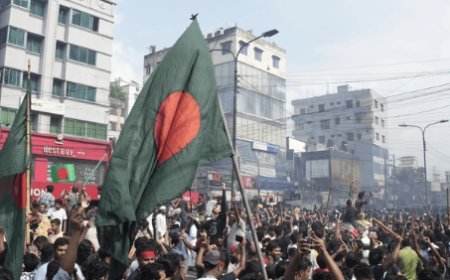
The mass mobilization of our youth provided a powerful proof of concept. The appetite for clean governance and systemic dignity is alive and potent. But matching the institutional depth of Singapore or South Korea requires moving past temporary emotional sparks. It requires sedimenting permanent professional norms and building a deliberate, purposeful architecture for transformation.
The people who can do such work already exist, in our civil service, our legal chambers, our newsrooms, our universities, and our diaspora. They are not waiting for a political savior or for foreign aid. They are waiting to see one another, to organize, and to hold institutional ground long enough to transform the nation from within. History belongs to the generations that can produce, organize, and sustain this critical mass.
Whether ours is one of them is an open question, but it is answerable.
Shah Yunus and Zunaid Kazi are Founding Council members of MillionX Bangladesh, a think tank advancing AI adoption, institutional reform, and a 10X vision for Bangladesh's economy.