






























































What Did the Jagannath University Student Union Election Tell Us?
The Jagannath University election, therefore, is not merely a matter of victory or defeat. It raises a deeper question -- what lessons will political parties draw from the changing realities of student politics? That, more than the numbers themselves, is the most critical issue going forward.
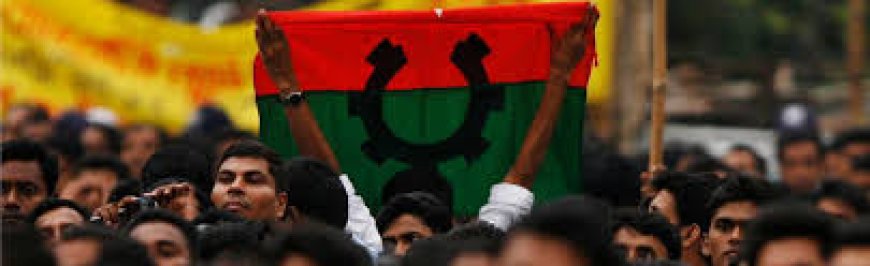
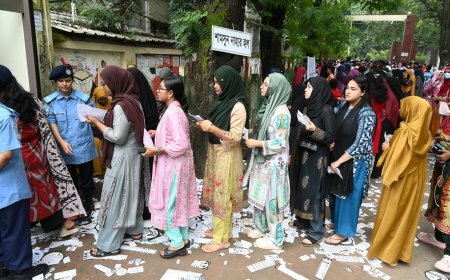
Over the past three months, student union elections have been held in five major public universities in Bangladesh -- from the University of Dhaka to the most recent one at Jagannath University.
A defining feature of these elections has been the rise of Islamic Chhatra Shibir, alongside growing scrutiny and debate over the performance of Jatiyatabadi Chhatra Dal (JCD). For many observers, this has hardened into a simple narrative: Chhatra Dal is losing ground, while Shibir is advancing.
However, the recent election at Jagannath University challenges this simplistic reading. The voting patterns there compel us to think more carefully about what is actually happening in campus politics.
In the Jagannath University Central Student Union election, Chhatra Dal candidates secured approximately 43% of the vote for Vice President (VP), 21% for General Secretary (GS), and 37% for Assistant General Secretary (AGS).
At first glance, these figures may not appear particularly impressive. Yet when compared with recent outcomes at DUCSU, JUCSU, or RUCSU, it becomes clear that this performance is far from negligible. On the contrary, it suggests that even in an adverse political environment, Chhatra Dal is showing signs of regaining its footing.
Does this mean that the sweeping conclusions drawn after the fall of fascism on August 5, 2024 -- about a dramatic ideological shift among Generation Z voters in student union elections -- are now being contradicted? In my view, the explanation lies less in a generational shift and more in a set of structural and social realities shaping campus politics.
First, historically, hall-based politics has been relatively weak at Jagannath University. In campuses such as Dhaka, Jahangirnagar, or Rajshahi University, decades of hall-centric political control and organized campaigning have created powerful mechanisms of influence.
Such opportunities are far more limited at Jagannath University. As a result, the organized, hall-centered expansion that Shibir managed -- either through strategic camouflage before August 5 or openly afterward -- on other campuses could not be fully replicated here. This has kept the electoral field at Jagannath University comparatively competitive.
Second, although comprehensive data is lacking, conversations with several public university teachers suggest that the socio-economic profile of public university students has changed significantly over the past two decades.
A large segment of students from upper and upper-middle-class families now opt for private universities or pursue undergraduate education abroad. Consequently, public universities increasingly draw students from lower and lower-middle-income backgrounds, many of whom primarily aspire to secure stable government employment. This reality shapes political behavior as well.
Alongside ideology, students make calculated assessments -- choosing the path that appears to involve less risk and greater future security.
In addition, another segment of public university students -- those preparing to go abroad for postgraduate studies -- largely remains disengaged from voting. As a result, voter turnout increasingly reflects the preferences of a narrower socio-economic group.
Within this context, Shibir’s long-term strategic planning has also played a role. Even in schools where formal student politics does not exist, Chhatra Shibir has quietly maintained underground organizational activities. Through carefully planned outreach -- often without parental knowledge -- targeting young students with promises tied to education, material success, and spiritual reward, Shibir has steadily built ideological loyalty.
Initiatives such as Retina Coaching, Focus Coaching, and hostel support in Dhaka are all part of this long-term network-building strategy. The dividends of this investment are now visible at the university level.
Third, since August 5, students have developed a clear perception regarding the role of university administrations. Many believe that Jamaat-leaning individuals now exert greater influence in VC and proctorial positions across campuses.
Students are acutely aware of the importance of the proctorial office in job verification and administrative clearance for government employment. This perception has given Shibir a certain advantage, influencing voting behavior in subtle but significant ways.
Fouth, there is a long-standing social tendency in Bangladesh whereby a section of the public gravitates toward those perceived to be close to power, in hopes of practical benefits. This is not a matter of ideology but of lived reality. Campus politics reflects the same pattern.
Students do not approach student union elections with the same long-term ideological considerations as national elections. Instead, many simply assess which group is better organized and closer to power -- believing that aligning with such a group will allow them to complete university life with fewer complications and ultimately secure a job.
Yet even amid these structural disadvantages, there is an important positive sign for Chhatra Dal. Only a few months ago, the organization appeared fragmented and organizationally weak across many campuses.
Recently, however, changes in leadership and political messaging have begun to restore morale among activists and rebuild confidence among supporters. The Jagannath University result appears to be a partial reflection of this shift.
It is also worth recalling that during the 2001–2006 Jamaat–BNP coalition government, tensions between Chhatra Dal and Chhatra Shibir were common at the institutional level, despite their alliance at the national level. Many BNP supporters frequently complained that Jamaat, with its disciplined and tightly interconnected organizational structure, was capturing disproportionate advantages.
After August 5, this pseudo-alliance has effectively collapsed. Jamaat and BNP are now forced to operate independently, making it increasingly clear who is genuinely aligned with BNP and who is merely opportunistic.
In this context, Chhatra Dal’s greatest challenge is to rebuild its organizational strength and pursue issue-based cooperation with other progressive and democratic student groups -- placing student welfare and rights at the center of campus politics.
Finally, the variation in vote shares for VP, GS, and AGS demonstrates that students did not vote along rigid panel lines; rather, they made post-specific judgments. This serves both as a warning sign for Chhatra Dal and as an opportunity for learning and strategic recalibration.
The Jagannath University election, therefore, is not merely a matter of victory or defeat. It raises a deeper question -- what lessons will political parties draw from the changing realities of student politics? That, more than the numbers themselves, is the most critical issue going forward.

Dr. Faysal Kabir Shuvo is an Australia-based urban planner and a member of the Bangladesh Institute of Planners.