















































![A Ledger of the Soul: Navigating the Allah-Bhagavant Nexus in a 19th-Century Puruṣākāra Jñāna Caupara [Gyan Chauper]](https://counterpointbd.com/uploads/images/202608/image_430x256_6a93baa3b09a7.jpg)


















When Directors Become Gods
I would like young directors to understand that leadership does not require worship. I would like film sets where collaboration replaces hierarchy, where respect replaces fear, and where women are encouraged not only to appear in front of the camera but also to shape what happens behind it.

A few days ago, while scrolling through Facebook, I came across an interview with a young Bangladeshi actress whose recent film is receiving rave reviews. When asked about her process of working with directors, she described the director as a kind of divine figure in her life. She used words such as probhu (lord) and srishtikorta (creator) to describe the male director she worked with. She spoke about devotion, surrender, and complete trust.
Many viewers probably found this beautiful. I found it deeply troubling. Not because I doubt her sincerity. Not because directors are unimportant. And certainly not because filmmaking is not a collaborative act that requires trust. Rather, I found it troubling because of what such language reveals about the power structures that continue to shape cinema, especially for women.
When a female actor describes a male director as a lord, a creator, a figure to whom she devotes herself, we are no longer talking merely about artistic collaboration. We are talking about hierarchy. We are talking about power. We are talking about a historical structure in which women are positioned as subjects to be shaped, while men are positioned as the ones who do the shaping.
Historically, women have occupied a very complicated position within cinema. The medium depends heavily on women’s bodies, women’s beauty, women’s sexuality, and women’s emotional labor. Films have always relied on women to attract audiences. Yet cinema has simultaneously denied women agency over how they are represented.
Women have often been placed in front of the camera rather than behind it. They have been asked to perform rather than decide. To embody rather than author. In South Asia, the history is even more revealing. The first films made in our region reportedly recruited actresses from brothels because respectable women were not allowed to appear on screen.
Cinema was considered a public profession unsuitable for women of “good” families. From its earliest days, therefore, the actress occupied an ambiguous position: essential to the medium, yet denied respectability.
This legacy has never entirely disappeared.
The female performer continues to carry the burden of being looked at. Her body remains central to the economics of cinema. Her image is marketed, circulated, consumed, and discussed. Yet the authority to define that image has historically remained in male hands.
Film theorists such as Laura Mulvey have written extensively about what she called the “male gaze” -- the tendency of cinema to position women as objects of visual pleasure while men occupy the position of active lookers, decision-makers, and agents. This is not unique to Bangladesh. It exists in Hollywood, European art cinema, Bollywood, and virtually every major film industry in the world.
But that is precisely why I find the language of devotion so troubling. When a female actor says that the male director is her lord or creator, she is unconsciously reinforcing a structure that has existed for over a century. A structure in which her own artistic subjectivity dissolves into his authorship. The irony is that actors are artists.
A great actor is not a puppet. A great actor interprets. Challenges. Invents. Contributes. A great performance emerges not because an actor blindly obeys a director, but because the actor brings her own intelligence, emotional life, imagination, and experience into the work. An actor chooses to join a project because she believes in the vision.
She then helps shape that vision into something richer and more complex. She is not merely receiving instructions from above. She is creating. So why do we continue to celebrate a language of surrender? Part of the answer lies in how we imagine directors.
The film industry has long cultivated the myth of the director as a genius. The director as an all-seeing, all-knowing figure. The director as an artistic god. To be fair, directing is an extraordinarily demanding profession. A director carries enormous responsibility.
Hundreds of people may be working toward the realization of a single creative vision. Decisions are made constantly. Leadership is required. But leadership is not divinity. Authority is not holiness. Power is not wisdom.
In fact, I would argue the opposite. The more power a director possesses, the more humility that director should practice. A film set is filled with talented people: cinematographers, actors, costume designers, editors, production designers, sound recordists, assistant directors, production assistants, and countless others.
All of them have gathered to contribute their expertise to a shared project. The director’s responsibility is not to dominate them. The director’s responsibility is to honor their contribution.
Yet in Bangladesh, I have often observed a different culture. I have seen male directors celebrated for their anger. I have seen cruelty mistaken for strength. I have seen shouting interpreted as authority. I have seen abusive behavior excused as artistic temperament.
Sometimes a director humiliates a junior crew member or actor and people call him powerful.
Sometimes a director creates an atmosphere of fear and people call him brilliant. Sometimes actresses are encouraged to believe that devotion is a professional virtue. I find this culture deeply unhealthy. It is unhealthy for women. It is unhealthy for men. And it is unhealthy for cinema itself.
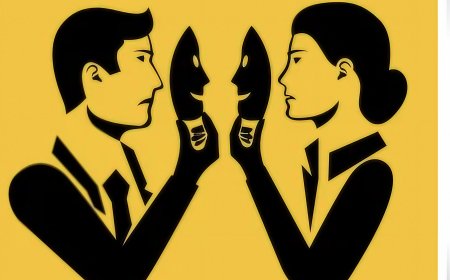
The language of worship creates the conditions for exploitation because worship discourages questioning. If someone is a god, how do you challenge him? If someone is a creator, how do you disagree with him? If someone occupies a sacred position, how do you establish boundaries? The healthiest artistic collaborations are built not on devotion but on mutual respect.
The actor respects the director. The director respects the actor. The cinematographer respects the production designer. The production designer respects the editor. Everyone recognizes the value of everyone else’s labor. No one needs to be a god.
As a woman director, I am especially sensitive to these dynamics because I know how rare female leadership remains in cinema. Around the world, women continue to be underrepresented as directors, cinematographers, editors, producers, and studio executives.
In Bangladesh, the situation is even more pronounced. We still have very few women consistently directing films for theatrical release. This is why language matters.
The stories we tell about artistic authority matter.
When young actresses publicly describe male directors as lords and creators, they are not merely expressing admiration. They are also teaching the next generation how power should function in the film industry.
I would like us to teach something different. I would like young actresses to understand that they are artists. I would like young directors to understand that leadership does not require worship. I would like film sets where collaboration replaces hierarchy, where respect replaces fear, and where women are encouraged not only to appear in front of the camera but also to shape what happens behind it.
Cinema does not need more gods. It needs more artists who recognize the humanity of one another.
Rubaiyat Hossain is a film mentor, screenwriter, producer and director. She is a visiting faculty at Smith College where she teaches Gender, Film and South Asia Studies.