

































































Welcome to the Post-Rules World
A field guide for Bangladesh to navigate the New World Order

At last, America has done the world a tremendous favour. After decades of preaching the gospel of multi-lateralism and human rights, while occasionally bombing here and there, Washington has finally dropped the pretence.
The executive order signed last week -- withdrawing the United States from international organizations deemed “contrary to American interests” -- is not a betrayal of the liberal international order. It is its mea culpa, offered with refreshing candour.
I actually admire the honesty. For decades, we had to listen to tedious lectures on “rules-based order” while watching those rules bend like banana trees in a storm whenever great powers found them inconvenient. Russia annexed Crimea, or its violent love for Ukraine. China built islands in the South China Sea. Europeans circumvented sanctions when their gas bills arrived, or perhaps their history with Africa. Now America has simply codified the de facto reality by installing an invisible notice at the gate of the multi-lateral offices -- international law is merely a suggestion box. And, to whom it may concern, the suggestions are optional.
The White House’s November 2025 National Security Strategy already televised this pivot toward what I call “transactional multipolarity” -- a world where handshakes would come with a bill. The executive order merely formalizes the exit arrangements for institutions that have been on a pendulum swing since the Security Council turned into a big boys’ veto club.
This always gave me an eerie feeling of the ghost of the League of Nations returning. The ghost wants its irrelevance back, trust me. For those who remember a fair bit of history -- not the WhatsApp history -- the League of Nations collapsed not with a big bang but with a continuum of poetic withdrawals. Japan left in 1933. Germany followed. Italy shrugged. By 1939, the elite colonial experiment with collective security had turned into a grand collective delusion.
I think we are observing something similar, only with better optical values. The Trump administration’s systematic backstepping from the WHO, UNESCO, UNFCCC, and the Human Rights Council (again) is not what one would call isolationism; rather, it is selective engagement, hamburger-style. The burger toppings will be something you would choose to your taste. Meaning? The US will remain in institutions that serve its interests and leave those that seek to criticize or contain it.
Venezuela will be a terminal test case for 2026. If the UN bodies pass a resolution that the Trump Administration dislikes, I guess the UN headquarters will become quite an exotic and expensive piece of Manhattan real estate.
For Bangladesh, this presents an existential question wrapped in a political puzzle. What happens to a country that built its economic and foreign policy frameworks on multi-lateralism when the whole idea of multi-lateralism itself turns into an expensive real estate project?
Let us be honest with ourselves for a second. Bangladesh has relied on international institutions not out of a sheer sense of high moral idealism but out of necessity. We are neither a permanent member of the Security Council nor a member of the nuclear toys club. We are a net importer of energy at that level. Apart from our WhatsApp and Facebook gladiators, Bangladesh cannot impose sanctions or rewrite global institutions. Our leverage has always been our strategic location, our demographic dividend, and our ability to navigate between great powers while appealing to international norms when convenient.
That playbook is now obsolete.
The Official Development Assistance that flows from Western or Eastern capitals is increasingly drying up -- not because donor countries have other things to do, but because they have become more transactional. The World Bank’s concessional windows are narrowing, too. The International Monetary Fund’s prescriptions come with conditions that assume international norms are upheld and that a stable international trading system exists. Both norms and systems are weakening. And bilateral assistance? It now arrives with geo-political strings thicker than mushroom soup.
Let’s think about the calculus of our predicament. Bangladesh graduates from Least Developed Country status in November 2026 with a success story by every metric, except the timing is terribly wrong. It’s like winning Miss Universe just as the judges have fled the stage and the pageant is cancelled due to bankruptcy. Anyways, economists would say that we will lose preferential market access, and the political scientists would say it’s happening precisely when protectionism is becoming fashionable.
We will enter the ranks of developing countries just as the development paradigm itself is being dismantled. A new Orwellian world system! That means the geo-political chessboard is being rearranged, and Bangladesh, along with its four neighbors, China, India, Pakistan, and Myanmar, finds itself hosting other people’s gambits.
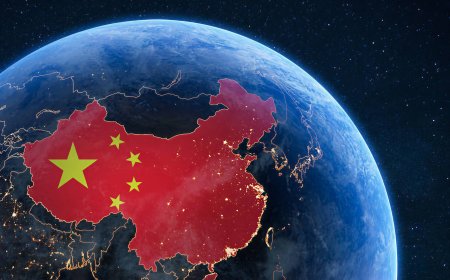
China, bruised by tariffs and encirclement, may breathe more fire as Mandarin Dragon precisely because the new order is deliberately being designed to push it to the corner. That will prompt Beijing to transform the Belt and Road from infrastructure diplomacy into a strategic necessity. Logically, we should expect more deals, more loan offers, more de-dollarization, more alternative institutions, and more “win-win cooperation” with increasingly non-negotiable terms.
Understandably, Washington will now face what Fareed Zakaria would call permanent structural “mistrust” from New Delhi. No amount of Howdy Modi spectacles can paper over the Russia anxiety, though. New Delhi wants American technology, a thriving Indian diaspora in the US, and access to Chinese markets -- all while sticking to Russian arms and energy supplies. Despite the challenges, New Delhi’s impressive pursuit of preserving strategic autonomy is a great case study for politicians in Dhaka and beyond.
But it’s a challenging diplomatic trapeze act that becomes precarious when major powers demand exclusive commitment, not franchise arrangements. I hope Bollywood is already scripting From Russia with Lipstick on the Collar as a fitting sequel to From Russia with Love, featuring less romance, more intimacy that has curdled spectacularly, and excruciatingly awkward silences at G20 dinners.
Pakistan, meanwhile, has quietly reassembled its relevance. Islamabad holds an interesting trident made with a functional Saudi defence pact, deep ties to Beijing, and the keys to Afghan stability (or instability, depending on who is asking). The White House knows that the road to Kabul runs through Rawalpindi, as it always has.
Myanmar, what I often consider a crisis nobody wants to own, captures the bitter irony of Bangladesh following international rules -- offering open borders, hosting fact-finding missions, appealing to sustain channels for funding for the Rohingya (a refugee crisis that Bangladesh did not create, rather a case that belongs to Southeast Asia) -- only to watch those very mechanisms increasingly defunded and delegitimized.
And then, of course, America’s retreat is likely being framed as a temporary strategic relief to Naypyidaw, validating the Burmese military’s long-held belief that international pressure would remain optical rather than consequential. The junta’s promised elections will become perfectly theatrical when the institutions that would have scrutinized standards are weakened.
And Bangladesh? We watch from the periphery of geo-economics, hoping the elephant remembers to look down before it dances.
Let us focus on the uncomfortable prescription. Bangladesh cannot change the international system or resurrect the UN Charter. We cannot push great powers to comply with norms, values, or moral grounds they habitually reject. What we can do -- what we must do -- is recognize that the only reliable variable in this equation is ourselves.
I must not forget to tell you that the US’s delinking from the UNFCCC or IUCN will put us in a more vulnerable position in the context of climate security. The UNFCCC remains Bangladesh’s key multi-lateral stage for transforming climate vulnerabilities into normative leverage, institutionalizing the loss-and-damage discourse that positions the country as both a moral claimant and a strategic voice in global climate governance. And sadly, the weakening of the WHO and WFP creates vulnerability to Bangladesh’s health and food security that no bilateral arrangement can solve.
This means that for the next government in Bangladesh, the mantra should be -- indeed must be -- “governance that actually governs.” Not governance as spectacle or press release, but the boring, unglamorous work of institutions that function, courts that adjudicate with accountability and public confidence, and bureaucracy that serves to meet the national challenges looming on the horizon.
Neither foreign investors nor our own care about our historical grievances or political anxieties. They care about whether contracts will be honoured, banks are reliable, justice is duly delivered, law and order are guaranteed, traffic is bearable, and electricity will flow.
This means infrastructure, institutions, education, and skills development that prepare our population for an economy where artificial intelligence will eliminate jobs faster than we can create them. The labour-intensive garment sector that built our middle class will not sustain the next generation. The remittance economy that balances our current account depends on Gulf states with their own demographic, technological, and geo-political transitions.
This means strategic autonomy, not as fashionable speech, but as practice. Flexible realism, I won’t mind borrowing it from the US National Security Strategy, which extracts maximum benefit from every relationship without becoming hostage to a singular party.
The Americans will want us to choose, so do the Chinese. Our task is to remain relevant to all without becoming dependent on one. Imagine the colossal task ahead, and an unprecedented degree of strategic coordination required across the government machinery and the private sector. And we must redefine our understanding of regional and multi-lateral cooperation.
I must remind you that the world is reverting to something older than Westphalia -- to a system where power dictates, and law listens. What replaces the liberal international order is not anarchy but hierarchy -- unquestionably formalized and sequentially enforced. Power blocs will solidify to bring alliance politics back to its vintage magnitude. And smaller nations will discover that sovereignty, like everything else, has a price.
The good news, beyond my Machiavellian mind, is that Bangladesh has indeed navigated worse. We have survived cyclones and floods on a gigantic scale, a series of coups and counter-coups, catastrophic levels of corruption, a pandemic called COVID-19, and the perils of the Cold War.
Bangladesh was born during the Cold War. We have built an economy from ruins and a fractured, imperfect, but a form of democracy from dictatorship and authoritarianism, at least for now. The survival skills exist. The Malthusian resilience still exists -- honed by decades of overpopulation, mismanagement, and practice of navigating traffic, bureaucracy, and the periodic climate disasters.
The choice is with us, not with others. Thankfully, the current NGO-led government’s masterclass in governance by workshop and media theatrics will mercifully end by February 2026, fingers crossed, proving once again that running a country requires political thinking more than PowerPoint presentations, donor-funded seminars, and a rich legacy of useless stakeholder consultations for reforms.
The country awaits actual governance and awaits the arrival of a new government, hoping it will have no choice but to perform better. Again, fingers crossed. Hope, after all, is a renewable resource for the Bangladeshi public.
The world for the new government will be fundamentally different, and the international community will not save us unless we choose our blocs and improve our strategic thinking. The question is whether we are prepared to think strategically and willing to take the painful path of unpopular reforms.
The answer, as always, is under construction.
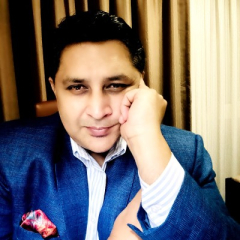
Professor Shahab Enam Khan is the Executive Director of the Bangladesh Center for Indo-Pacific Affairs and teaches International Relations at the Bangladesh University of Professionals.