





































































A Very Partial Mid-Year List of Horribles
History is filled with lessons of how not to escalate wars and perhaps even avoid them; we have now known for decades what we need to do to limit and perhaps even reverse anthropogenic climate change; and the supernova of AI can be regulated to fit and work for human dignity and agency

“This is the beginning of the end.” – Charles-Maurice de Talleyrand
At the beginning of this year a relative of mine (I will call him Hasan for this essay) went into his annual performance evaluation meeting with his supervisor at the investment bank that he had worked for over two decades.
In my experience, in most professional settings under normal conditions this annual rite of corporate kabuki, where praise/suggestions for improvement are given/sought by the supervisor/supervisee, is a case where both parties are desperately hoping for a speedy conclusion to the hour.
Given his high level of performance over the last and previous years and tenure at the highly profitable bank, Hasan surely expected that this will be no different than in prior years.
Except it was: This time his supervisor told him that the bank has decided to replace his highly specialized labour -- financial analysis of corporate mergers and acquisition -- with Artificial Intelligence (AI).
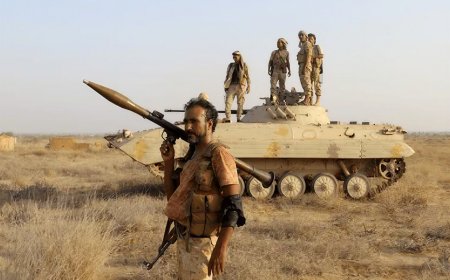
On the last day of February, the US and Israel launched a war on Iran, soon expanded it to Lebanon, and as expected the Iranian response naturally extended it directly across the Gulf Arab states, with the subsequent blockade and closure of the Strait of Hormuz bringing the war’s economic drag to the rest of the world.
An entirely voluntary and totally unnecessary war of aggression by the US-Israeli axis has created a worldwide energy crisis, shortages of fertilizers and other essentials that are likely to have negative implications for food security for billions in the medium-term, besides the direct losses of lives and property and ecological damage in the Middle East.
With still about a month to go I have just spent the hottest summer on record in Rome, Italy. Oh, and the previous four years, were among the five hottest years over the last quarter century.
According to Copernicus Climate Change Service (C3S) -- C3S is part of the EU’s flagship Copernicus Program providing climate metrics, and has rapidly become the global standard given the cuts to climate research in the US instituted by the Trump administration.
2026 already ranks first in highest Average Temperature, Average Minimum Temperature, dramatic increase in days over 35 °C and nights over 25 °C -- not that I needed C3S to tell me so. And Rome hasn’t even had the worst of it in Europe, nor will Europe bear the harshest toll from climate change.
The ones that are and will continue to suffer the most are the poor and developing countries in Africa and Asia.
There are surely many other events, bad and good, natural and man-made, that have occurred to date in 2026 that are notable and salient to our readers.
My very partial and entirely personal list of horribles above is concerned with three mostly man-made, eminently forecastable disasters, that highlight for me the sense of futility and quiet desperation with which we are bearing witness to these phenomena in seeming slow-motion.
AI and Human Agency
I received the news from Hasan about his severance from the bank in early February. About five weeks earlier, I had published an essay in this journal on human capital and social mobility.
In that essay I was lamenting the end of a century-long era of wide social mobility through higher education that had brought about levels of economic and political equality in societies throughout the world that were unseen prior to the 20th century.
Starting in the 1980s, however, increasing automation, globalization, and deregulation (labour, financial, antitrust) resulted in the gains of economic productivity going to a narrower, capital-owning (real and financial) class, steadily reversing the income share acquired by the professional classes on the basis of their acquired human capital.
Only at the very end of that essay, I discussed the emerging signs in 2025 about decreased hiring due to AI, and how that might erode the gains and power of the non-capital owning classes even more.
In between, in January of this year, I came across a couple of essays on the promise and dangers of “powerful AI” by Dario Amodei, the founder and CEO of Anthropic, one of the leading AI companies.
On the essay on dangers, Amodei discusses different types of risks -- e.g. AI going rogue, or being used by bad actors, or a country acquiring overwhelming power, as well as potential controls and hedges to protect against each category of risk.
Economic disruption -- diminishment and elimination of jobs leading to concentration of wealth, and the consequent societal destabilization is the category where he is the least optimistic about a long-term solution.
If AI progresses at the rate it has over the past three years (note, this August, we have had reports of AI going rogue in an unprecedented manner), Amodei wrote in January of this year, in just a few years it could be better “than humans at essentially everything.”
Unlike other technological revolutions where machines got better than humans at particular activities, AI can potentially compete with human intelligence as a general-purpose economic input.
Thus, whereas in the past when technological change did away with jobs in some sectors, but at the same time or subsequently jobs were created in entirely new sectors that required human skills, since AI can potentially be better at all human cognitive skills, we may enter a new era where AI is “a general labour substitute for humans.”
Demand for human labour becomes scarce, and ordinary people lose one of their key economic leverage, namely, the value of their human capital.
Amodei’s prognosis may have the flavor of an AI pioneer and leading AI capitalist’s hyperbole, intentional or not, but when I first read his essay, I found his arguments on the economic disruption of AI to be compelling. Many prominent economists (e.g., Nobel Laureate Daron Acemoglu, his MIT colleague David Autor) have argued that AI will not cause mass unemployment (among Amodei’s prediction is “50% of entry level white color jobs being disrupted” in 1-5 years) any time soon.
But even Messrs. Acemoglu and Autor consider that job quality and wage equality is threatened by AI, and, upon continued study and reflection, I find Amodei’s central point -- danger posed by AI to the economic leverage of human capital and labour -- still holds. However, back in February, I hadn’t quite yet expected to hear about someone like Hasan’s experience. Why?
Well, as a professor of finance, I quickly apprehended that generative AI systems could already do some of the tasks of entry-level financial analysts.
And by 2025, I could see that many of my students had intimated the same as well. During 2025, we started to get news reports of significant reduction of hiring of entry-level employees in the finance, computer programming, and data analysis sectors.
However, mid- and upper-level positions seemed likely to have augmented productivity through use of AI, similar in some fashion to how I found AI to be a very useful tool for my own research.
Thus, my relative, Hasan, a first-class graduate from a leading university with two decades of experience and a track-record of valuable production for a profitable multi-national investment bank, should have seen his economic value rise, and probably did so in the three years since ChatGPT came on to the world.
As noted above, Amodei’s essay was mainly expressing the concern about entry-level hiring being disrupted in the next 1-5 years, and how that would be removing the ramp to become valued, mid-career professionals -- exactly ones such as Hasan -- that firms would continue to depend on.
Hasan’s severance by his bank seemed to portend that the end of value of human expertise is a lot nearer than I had imagined merely five weeks earlier.
It seems AI systems are ready to displace human work even as firms continue to increase their output; i.e. the capital-labor balance shifts even more markedly to capital’s favor in the economy.
I think most of us are beginning to come to terms that, increasingly, professional jobs will disappear and/or quality (and remuneration) of jobs will decline if AI continues (or is allowed to continue) to develop at its current trajectory and manner.
The country -- both because of its technological lead and relative lack of regulation and employment protection -- that is feeling its effect first is the US. Despite an overall growing economy, the job market there has been the weakest since the Great Recession, and not just for entry-level positions.
No wonder that Americans are the least positive about the impact of AI and express greater concern about government’s failure to regulate it. Anthropic, I should add, has made itself known for its consideration of ethics, and is one of the AI leaders that have actively called for regulation,
Thomas Piketty had already noted that by the end of the last century the rate of return on capital again exceeded the growth rate of the economy (just as in the 19th century), leading once again to concentration of economic power in the hands of a narrow capitalist class.
Much of the improvement in economic and political equality achieved by the professional classes in the 20th century had steadily been eroded even prior to AI’s ubiquity.
Absent policy response, the logic of AI development and adoption takes us, in Amodei’s words, to “a level of wealth concentration that will break society.” The diminishment of economic leverage will lead to loss of human agency comparable to feudal times.
In Bangladesh, given the structure of our employment -- 35% in agriculture, 21% in industry, 44% in services -- the immediate impact of AI is likely to be attenuated. As an example, we can look at this graphic that Anthropic prepared for an article on labour market impacts of AI in March of 2026.

In the near term, AI’s ability to displace (in blue) are mainly in sectors in which cognitive skills and education are preeminent. (Note that the observed coverage (in red) across sectors are still quite low, as of the earlier part of this year.)
Agriculture, industrial sector coverage are unlikely to be impacted any time soon, and most of the informal service sector -- which, unfortunately, represents the majority of the service sector employment in Bangladesh -- are probably at a similar vantage point.
Thus, near-term I don’t expect to see significant cutbacks and layoffs on account of AI.
However, this doesn’t necessarily mean that we are off the hook. The path to sustained socio-political stability with access to a legitimate and available ladder for social mobility -- i.e, education, leading to professional employment, leading to economic leverage -- Which is the dream and aspiration of so much of our youth, could be snuffed out by AI before it even finds a toehold in Bangladesh; a social mobility ladder that was available to the citizens in the West and the Far East in the 20th century is being removed even before the average Bangladeshi can put their foot on the first rung.
I am literally seeing this play out in real time for two young adults that are the children of our household staff.
And that dear reader, with our vast and unfulfilled population of young people, will be a social tinderbox, even without the aggravating effects of war and climate change.
World War in Pieces
It has been twelve years since the late Pope Francis coined the phrase Piecemeal World War III, referring to a series of interconnected local wars that add up to a global crisis of instability.
I looked back at a news report from 2014, which notes that he was calling for an end to conflicts in Iraq, Syria, Gaza, and parts of Africa. Well twelve years later in 2026, we have pretty much all the same conflicts and more, with the intensity, killing and destruction at an exponential level to that when he first gave it a name.
The US and Israeli attack on Iran this year represents a significant escalation of this era of war. A global and regional superpower initiates a war of choice on a regional middle power country of 90 million people, blending millenarian fantasies, religious zealotry, naked power demonstration, and, given Iran’s oil, one could probably even put resource-grabbing into their febrile, macho mix of motives.
As if dislocations from AI and climate change wasn’t enough, initiating a war at a central node of global commerce and energy, is the man-made aggravating factor par excellence that is pushing many parts of the world -- mainly the poorer parts, but not exclusively -- to the brink, with repercussions in terms of food, energy, and income security that will last long past the (even hoped for) end to this particular war.
One can no longer escape the proposition that the US has now become a rogue actor in the global stage. The world had always sat uncomfortably with US interventions around the world -- in former US President Jimmy Carter’s words, “the most warlike nation in the history of the world” -- but the last three years is an elevation of quality even for it.
Financing and arming the genocide in Gaza, the 12-day war on Iran in 2025, trade wars with everyone, regime change and abduction in Venezuela, and, of course, the usual, continuing meddling and intervention in the polity of countries far and wide.
The message from America is that we have the power to do whatever we want, and the world be damned.
This war has put Bangladesh’s energy supply at a crisis level (as if the disruptions resulting from the other pieces of the current world war weren’t enough). Households, industry, transportation, agriculture all are critically impacted.
The disruption of fertilizer supply and energy for irrigation is leading to crop failure and gaps that will extend food insecurity for years.
Energy crisis driven reduction in RMG output and reduction in remittances from the Middle East if the war continues at a time of skyrocketing energy import bills is likely to eventually create a foreign exchange crisis.
Early estimates were already pointing to a 0.7% reduction in real GDP growth directly attributed to the war. This piecemeal world war, now with direct participation of the global hegemon, is already taking a disproportionate toll in the well-being and prospects of the poorest countries that are a long way from and have little to do with the conflicts.
Climate Change Cumulates
“So how did you go bankrupt?” Bill asked. "Two ways," Mike said. “Gradually, and then suddenly.” – The Sun Also Rises, Ernest Hemingway
Scientists have been considering the possibility of man-made, or anthropogenic, climate change due to fossil-fuel combustion for over a century. The science became more established in the 1950s (“Keeling Curve” -- the year-by-year increase in atmospheric CO2) and the early computer models were developed in the 1960s and 1970s.
The general public probably first paid attention when NASA climate scientist James Hansen testified to the U.S. Congress in 1988 that observed warming signal could already be detected in the atmosphere. The same year the UN and the World Meteorological Organization established the Intergovernmental Panel on Climate Change (IPCC).
Starting with the Rio Earth Summit (1992), the Kyoto Protocol (1997), the Copenhagen Framework, or COP15 (2009), and the Paris Agreement (2015), scientific consensus is that global warming is primarily attributable to anthropogenic greenhouse-gas (GHG) emissions, with global surface temperature having increased in 2015 by 1.1°C from the pre-industrial baseline; 0.5°C of it was added in just the fifteen years between the Rio Earth Summit and COP 15.
I include this briefest of backgrounds to highlight that we have known this for a long time, are watching it getting worse in slow-motion, and routinely crossing thresholds at a faster rate than that predicted. Consider the following chart prepared by C3S:

Since the Paris Agreement established a goal of limiting warming to 1.5°C, there has been an increase of 0.4°C in 11 years, with current trends indicating crossing the threshold in less than three years.
It was small island states and particularly vulnerable countries to climate change such as Bangladesh that had worked to establish the 1.5°C goal, which we will now likely exceed in early 2029.
When the next generation asks us how did you end up burning the planet, will their elders respond, first gradually, then suddenly?
Continuing with its black-hatted rogue actor role, the Trump administration withdrew from the Paris Agreement on its first day in office, and separately reversed several domestic policies that were aimed at limiting GHG emissions to protect against climate change.
Americans are among the largest current emitters (exceeded only by Saudi Arabians, Australians, Canadians, and Russians) and the largest historical cumulative emitter.
An average American produces 14 times the GHG per year than the average Bangladeshi. And if one looks at consumption-based emission (instead of from production where some of the emission occurs elsewhere), the U.S.’s footprint is even more alarming: twice China’s, 8-9 times India’s and more that 20 times Bangladesh’s.
For the first half of 2026, I suggest, this very partial list of horribles encapsulates a worsening of the most concerning and enduring and, sad to say, avoidable man-made risks facing the world.
Some like climate change has been slowly brewing for decades in plain sight; others like this piecemeal world war crept up over the past decade, but now with the direct warfare of the global hegemon represents a significant escalation; while the too fast development and adoption of AI without guardrails is truly novel, but moving at a speed that society can’t quite fathom yet.
My very Gen Alpha daughter has been going to Earth Day celebrations and other climate consciousness raising events since she was a toddler, peace marches since she was eight, and became exposed to AI, indirectly through media, and directly through her school in the past year.
She is now at the age where she is taking greater stock of the state of the world, and her first impressions of it are decidedly not rosy.
I suppose that could just be a function of being a daughter of dour academics, but I suspect that the news and events of the world that she and her peers catch in passing are the true determinants. How do we assure them that this is not the beginning of the end?
The solutions are there: History is filled with lessons of how not to escalate wars and perhaps even avoid them; we have now known for decades what we need to do to limit and perhaps even reverse anthropogenic climate change; and the supernova of AI can be regulated to fit and work for human dignity and agency.
It may seem that private citizens have been rendered helpless observers, as the owners of technology firms, arms dealers and manufacturers, energy and chemical giants, etc., use their resources to manipulate markets and governments to further enrich themselves while the planet self-destructs.
In fact, we may call the average citizen in the West -- since the destruction is first and foremost a function of actions by Western firms and governments -- an NPC, a non-player character in the background of a video game controlled by the computer.
The NPC-ness of the citizenry can even be seen reflected in general political apathy and specific decline in voter participation in elections across the West. What can a private citizen do but throw up his hands and play video games or doom-scroll endlessly on social media?
For Bangladesh the NPC-ness is even more real, as the decisions that harms it are being carried out in the West, where it has no direct (and very little indirect) influence.
just like the citizens in Western nations can get out of their NPC-stupor by voting and protesting and organizing (one can maybe detect some faint notions of this at the epicenter), Bangladesh can also make better choices of alliance, support, and reliance.
Consider that at this moment in history we live in a two-power world, America and China (Europe, though wealthy, has shown itself to be a political midget, bowing to America’s dictates).
In the three matters that I discuss here, one nation has allowed AI firms (and technology firms in general) to more-or-less do whatever they want, while the other has kept them subject to governmental guidance and regulation; one nation is carrying out wars and conflicts around the world.
While the other has not been in a war for a long time (and few outside of its immediate border throughout history), and has been promoting trade and investment relations; and one nation is engaged in climate change denial and actively enabling further GHG emissions.
While the other nation has made the most dramatic advances in using renewable energy and movement away from fossil-fuels in the last decade, and is making them available to the wider world.
Is it any wonder that Pew Research Center’s Global Attitudes Survey shows that in 30 out of 36 countries, China is viewed more favourably than the U.S.? There are choices to make. It need not be the beginning of the end.
Manzur Rahman is Professor Emeritus of Finance at the University of San Diego.