













































![A Ledger of the Soul: Navigating the Allah-Bhagavant Nexus in a 19th-Century Puruṣākāra Jñāna Caupara [Gyan Chauper]](https://counterpointbd.com/uploads/images/202608/image_430x256_6a93baa3b09a7.jpg)




















A 20th Century Family
AI has and may usher in many wonderful opportunities and possibilities. But, at the same time, AI may be the last nail in the coffin of that glorious era where a broad-based social mobility achieved through higher education brought about greater economic and political equality.

My maternal grandfather was born in a small village in central Bangladesh in the very first years of the 20th century and lived almost through its entirety, passing on in 1996. In the predominantly Muslim eastern part of the Bengal Presidency (while it was still the seat of economic and administrative power in colonial India) -- the British Raj partitioned Bengal into Eastern and Western provinces (largely along religious lines) and then reversed it just in his first decade of life -- being born into a family of a semi-literate shopkeeper, largely circumscribed one’s economic trajectory to a life of relatively meager income, if not poverty, with all its attendant ramifications for health, education, income security and generational stasis.
At the time of his death, his four children, each with graduate degrees, had fulfilling careers at the highest levels of education, commerce and civil service sectors, and his grandchildren were academics at universities in the Western world. Furthermore, from an essentially capital-bereft origin, the family members had by then all acquired the capital assets -- real and financial -- of the upper-middle classes of the modern world.
Higher education, entry into and membership in the professional classes underpinned his and his progenies’ economic and social status throughout the century.
I relate this not to highlight my grandfather’s personal brilliance and drive -- there is that -- but rather how the change in his and his family’s socio-economic circumstances paralleled the rise of the professional classes over the last century. As economic historians have shown, capital/rentier income (dividends, interests, rents, capital gains) have long dominated labor income (wages and salaries) across the world, naturally so in feudal times, but also through the first century after the industrial revolution. However, around the middle of the 20th century one begins to see the share of income from salaries rivaling those from capital, as economic growth relied more and more on the contributions of the educated professional classes -- i.e., doctors, lawyers, engineers, academics, and financial and non-financial managers.
For example, in the top one percent of earnings in the US, UK, and France, the share of income from capital was closer to 70% pre-1950, whereas the share from salaries rose to 60-85% post-1950.To a greater or lesser degree a similar pattern -- i.e., return on education leading to higher earnings and greater status of the professional classes -- could be seen in much of the world. We have literally lived it through three generations of my family.
My great-grandfather did not believe that there would be any value to further education -- probably with sound empirical basis for his time and place -- and wanted my grandfather to follow him in his store after his primary schooling was completed. Among the Muslim population there was a general bias against western style schooling, such that higher education, and consequently, the British colonial civil service in Bengal was dominated by the Hindus.
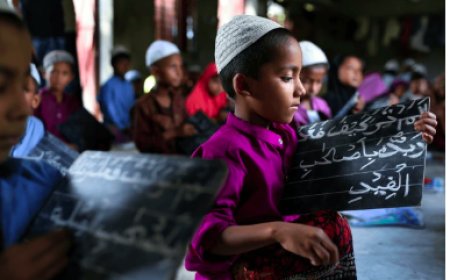
In fact, my grandfather was initially schooled in a maktab, a traditional religious school -- often attached to a mosque -- where children were taught reading, writing, grammar, and rote memorization and recitation of the Quran. Having excelled there, he was allowed (reluctantly by his father) to continue on to secondary schooling under the Islamic education system.
He went on to come out first in the entire province of Bengal in the system’s secondary school certificate exams, and enrolled into the newly formed University of Dhaka -- thanks to it being legislated into existence during the brief interval of the East Bengal Provincial Administration (1905-11) -- receiving BA and MA degrees in Islamic Studies during the 1920s, and another master’s degree in Persian literature, and graduate diplomas from the University of Leeds and the University of Illinois in education in the 1930s.
I need add that all his education from the secondary level onwards was made possible entirely due to academic scholarships from various sources. He began his professional career as a college lecturer, but soon moved on to educational administration first for the Indian Education Service in British India, moving on to the Board of Public Education of Pakistan following the Partition of India, and retiring as the Director of Public Education in East Pakistan in the mid-1960s. He later served as Honorary Treasurer and interim Vice-Chancellor of the University of Dhaka. In his mid-seventies, he was appointed the Director General of the Islamic Foundation of Bangladesh, and later led the editorial board of a 25-volume Islamic Encyclopedia project up to the last days of his life.
He also authored and translated many books in his retirement.
I provide this brief synopsis of my grandfather’s educational and professional life -- the entirety of his life is probably worthy of a biographer’s pen -- because it captures so perfectly the returns from investment in education, which then served as entry to the professional classes, and which in turn led to accumulation of assets (homes, stocks, bonds, annuities, etc.) that in prior times was mainly the reserve of the upper classes. By no means do I intend to intimate that this is unique, as, indeed, I myself have another first-person experience of dramatic social mobility within my own family.
While mine, my brother and my mother and her siblings’ experiences growing up were obviously quite different, about thirty years later into the century, my father was born in a humble family in yet another village in central Bangladesh, pursued higher education in the provincial capital and abroad -- again, aided with academic scholarships -- and had professional careers at the highest echelons of corporations, government, multilateral organizations, and, in the final chapter of his professional life, created his own private firm. Perhaps notable at the level of one family, but not unlike the experiences of many others around the world during this period.
My own educational and professional journey, while clearly less remarkable in terms of social mobility, allowed me to obtain a terminal degree in my chosen field and teach and conduct research at a university. A minor, but socially relevant aside: because it spanned greater geographical and temporal space, my education was also only made possible by academic scholarships. (Three generations of academic scholarships -- taking the liberty to substitute for imbeciles -- is enough, I imagine the ghost of Oliver Wendell Holmes intone.)
Public and private scholarships were an important accelerator of productivity gains throughout the century, but we are beginning to see higher education again being a privilege of the wealthy. The period that I began my academic career, the late 1980s and early 1990s, was probably the apogee of salary vs. rentier income ratio, and even an academic salary allowed for the typical appurtenances of upper-middle class life: health, income security, asset accumulation, social status.
Beginning with my grandfather, our careers allowed for individual agency and avoided the commodification of work and personhood which has always defined most people that were not of the elite classes during most times.
And, not surprisingly, for the second half of the 20th century, along with the general reduction in income inequality, the professional classes had a voice in the body politic rather than it being only subject to the interests of the economic elite. Unfortunately, the indications are that we may be reaching the end of this golden era.
The Great Reversal
For most of my four decades in higher education, the return on advanced education followed by entry into a professional career continued to seem like a surefire formula to ensure economic well-being and individual agency that had been, and looks again in the future to be, primarily available to the upper classes. Even though globalization and automation began to hit the non-professional classes hard in most of the Western world by the 1980s, the apparent difficulty of automating most professional work, and the alluring possibility of capturing an even greater value of intellectual work across more markets aided by globalization, seemed like adequate protection against the precarity faced by the working classes. In the US, where I worked, the Clinton and Obama administrations (with perhaps the exception of the Bush junior administration) appeared to perfectly encapsulate the rise, influence and centrality of the professional classes. Enthusiasm and demand for higher education reached across ever greater percentage of the population.
Though income inequality was growing, it seemed like the professional classes could surf the changing economic waves and come out, if not ahead, then even. But cracks were already appearing under the surface.
A series of financial deregulation (alongside dismantling of antitrust enforcement, and labor protections) that started in the 1980s led to increasingly greater return on financial capital, even if at the price of greater volatility. In the US, the financial sector had doubled its weight in the economy from below 10% prior to the 1980s to 20% of GDP by the 2000s. While the salary to renter income ratio remained in salary’s favor, much of it was concentrated in a few sectors like finance and technology. For example, the compensation share of finance employees as a percentage of all employees was around 3-4% for most of the middle decades of the 20th century, then started to rise rapidly in the 1980s, going past 8% in the 2000s. And, of course, the information and communication technology (ICT) sector, whose share of GDP was below 1-2% prior to the 1980s, had risen to 5-8% by the 2010s. Yes, investment in higher education paid off, but increasingly restricted to employment in a few sectors.
As Thomas Piketty and his many collaborators have documented over the last quarter century, the reduction in income inequality seen in much of the West during the post-WWII period, also began to revert beginning in the 1980s. This is, most famously, evidenced by the meteoric rise of the CEO-average employee salary ratio from around 10-20 times from the 1930s to the 1980s, rising to 60 times in the 1990s, and 200-300 times in the 21st century in the US. While not quite the spectacular 10-fold increase from the pre-1980s ratio observed in the US, in most of the rest of the G-7 countries, there has been a 2-fold increase of the same ratio.
Using the Gini coefficient as a proxy (higher means more unequal with a theoretical maximum of 1), in the US it improved from an estimated 0.53 in the 1850s (including slavery) to a low of 0.40 in the 1960s, reflecting the development of a broad-based professional sector with income rivaling those of the renter class. However, in recent decades the coefficient has been rising steadily with the US Census Bureau reporting 0.49 in 2023, i.e., to levels not seen since the abolition of slavery. Note, the most recent figures are just shy of those of Brazil (0.50) which historically had some of the highest income inequality in the world.
Most of the other G-7 countries (with the exception of France) also saw a (slighter) increase in inequality since the 1980s. While finding consistent data for many developing countries is difficult, among the more populous countries China and India saw a clear increase in inequality in the 2000s, reflecting the outsized gains from globalization received by the upper classes as these countries moved towards a more capitalist economy; surprisingly, Brazil actually experienced a decline in inequality, aided by social transfer policies and improvements in education and labor market access.
Deregulation (financial, antitrust, labor) and globalization have surely increased economic growth worldwide over the last four decades, but the gains in the most recent couple of decades are being captured by a narrow class at the very top. Over those same four decades, I have primarily taught at universities in the US and Italy. Beginning just after the global Financial Crisis of 2008, I started to notice a subtle change in the confidence that my students had in the value of their degrees/education. As the associate dean for graduate programs during that period, I had a front-row view of the decline in demand for graduate business degrees; this was not isolated, as even more drastic drops were seen in the humanities and law.
Younger millennials and the Gen Z cohorts have often been criticized for their seeming lack of direction and/or ambition. Perhaps it may simply be the case that they had intuited that the rules of the game -- study well, enter a profession, and you will get your fair share of the economic (and social) pie -- that my grandfather, my father and those of my generation played by and benefitted from were no longer valid.
This brings me, finally, to consideration of the impact of generative artificial intelligence (I will use “AI” as a shorthand) on education, employment, and, social mobility. Scores have been written and will be written on the effect of AI on teaching by my academic brethren, mostly expressing concern, although, some signs of optimism do exist. As I no longer teach full-time, I shall leave that discussion to others, except to note that in the three years that I taught after OpenAI’s unveiling of ChatGPT, I did find some deterioration in the classroom experience, and a further decrease in interest among my students. But these are the early years and my fellow professors will surely adjust and adapt to this new learning environment.
Wishing them luck, I turn to AI’s impact on professional employment and social mobility. In 2025, we saw many news reports of employers, particularly, in finance and technology, stating intentions of dramatically reducing the recruitment of entry-level analysts and programmers. This is not surprising as the rapidly improving capabilities of AI technology, is making, and will continue to make many hitherto complex tasks, simpler, quicker, more efficient -- i.e., less labor need be employed.
As an example, I can state that the time and effort for gathering together the factual and analytical information I consulted to write this essay was an order of magnitude less than what I would have required in the pre-AI world -- all of three years ago!
Has it enhanced my abilities to do what I do? Absolutely, as it surely will for many professionals. What I fear, and the early reports so suggest, is that there will be a smaller pool of people that will benefit, and a larger pool of potential workers who will have a diminished value or even be excluded.
The stock market valuations of many companies are already including a premium for the expected reduction in labor cost, as was the case with non-professional labor expenses in the decades surrounding the turn of the millennium, when the cost-savings of automation and deregulation/globalization started to be more widely realized by businesses.
Piketty makes the case that by the late 1990s the rate of return on capital again exceeded the growth rate of the economy just as in the 19th century, tilting the capital-income inequality back to capital’s favor. AI has and may usher in many wonderful opportunities and possibilities. But, at the same time, AI may be the last nail in the coffin of that glorious era where a broad-based social mobility achieved through higher education brought about greater economic and political equality.
A great and sad reversal has commenced in the 21st century.
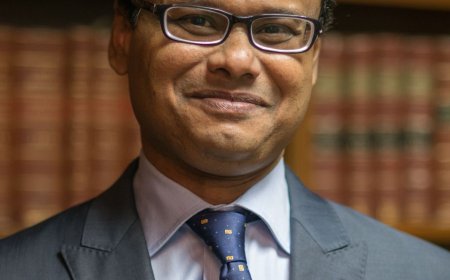
Manzur Rahman is Professor Emeritus of Finance at the University of San Diego.