



























![A Ledger of the Soul: Navigating the Allah-Bhagavant Nexus in a 19th-Century Puruṣākāra Jñāna Caupara [Gyan Chauper]](https://counterpointbd.com/uploads/images/202608/image_430x256_6a93baa3b09a7.jpg)


















An Open Letter to the Afghan Leadership
Under the Prophet’s leadership women’s contribution was embedded in the building blocks of the new Islamic era of Madinah al Munawwara.

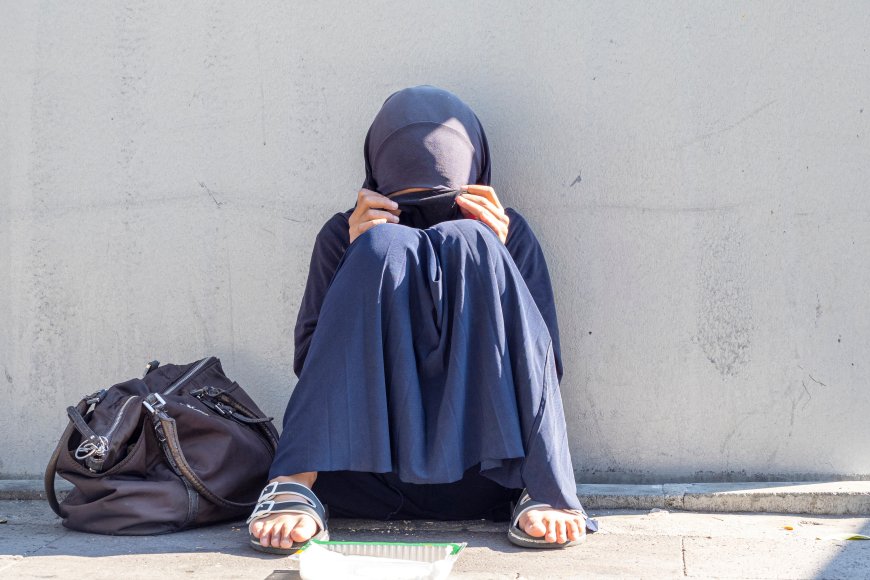
With the Fall of Kabul on August 15, 2021, there were concerns raised in the world media as to how the country would be governed. Women activists, and those who have been involved directly with development projects for Afghan women were anxious for their welfare. Afghan women themselves were especially nervous about their future.
But while the capture of Kabul was being greeted with apprehension by many, within and outside your country, for me, a country belongs to its citizens and not to invaders and so I withheld negative thoughts.
I genuinely believed that in due time we would witness women being treated with the honour, respect and privilege they deserve. It is understandable that after 20 years of political rupture, uncertainty and social fragmentation, affairs of the nation will not run as smooth as they may. In responding to post-invasion challenges, women’s needs in isolation may be neglected, but once state management has been stabilised, women will be accorded respectful roles and positions within your society.
Hopeful expectations were raised when one of your spokesmen assuaged any misgivings by announcing that women will not be barred from mainstream life.
But soon after the announcement, the image of a potential fair governance was shattered by the prohibition of girls and young women from educational institutions. More recently The Guardian reported that your ‘Ministry for the propagation of virtue’ has issued a decree for women to stay indoors 24/7, and if they have to step out of the house for any reason, then they must do so fully veiled so their faces are always concealed.
The terms of the decree extend to Taliban fighters and other men who are deemed to be the guardians of women. These are in the form of fines, jail sentences and loss of jobs if they fail to ensure obedience to the ban by their female family members.
Such an absurd and cruel prohibition cannot be justified under any circumstances, and makes a complete mockery of everything connected to ‘fitrah’, the natural way of existing. I am an emancipated woman and a practising Muslim. Although my very supportive parents brought me up with strict Islamic guidance, they did not deny me from following my aspirations.
They instilled in me from childhood the notion of studying and working hard, having an enquiring mind, and being an achiever. In my own life and from my Islamic faith, I have never known Islamic values to be at variance with women’s choices and progression.
Any enlightened and reputable scholar will support that interpretation of the Islamic faith. I would like to share with you some Islamic guidance and examples from Islamic history in the trust that you will share them with your comrades in arms, who may not be so well informed.
The Qur’an equally ascribes men and women with the propagation of the human race, and commands understanding and cooperation between them, and between different racial and ethnic groups: “People, We created you all from a single man and a single woman, and made you into races and tribes so that you should recognize one another. In God’s eyes, the most honoured of you are the ones most mindful of Him.” Such understanding and cooperation can only be possible with the education of both genders.
Alongside fulfilling the important roles of wife and mother, women need to have the freedom to choose a meaningful occupation for themselves. Girls should have access to schools and educational institutions, not as a favour endowed upon them, but because education is their birth right.
Girls should have access to science, humanities, Islamic studies and language courses and be given the opportunity to progress towards their chosen field. How are widows and divorcees to look after themselves and their children if they do not have education and the right provision to do so? How will a single woman look after herself, her siblings and her elderly parents in the absence of a male guardian? Or if the male guardian is unable to provide for them due to sickness or other circumstance?
If they are unable to seek paid work women will suffer either the tyranny of poverty or of exploitation. To prepare women for all eventuality, Islam has made mandatory on them to acquire knowledge of commerce, like trade and transaction, along with knowledge of salah, sawm, zakah and hajj.
Let us now turn to instances from Islamic history for guidance. Who was the very first person in Islamic history to accept Islam at the hands of Rasul-Allah -- the Prophet of Islam
That person was none other than a woman. The unique honour belongs to his wife Lady Khadija bint Khuwaylid, honoured as a Mother of Believers. She was the first person to believe in the prophet-hood of her beloved husband and accept Islam at his hands.
We know that she was a successful business merchant who had hired the Prophet to look after her trade even before marriage between them was a probability.
Her example shows that women can have a profession, appoint male employees and be in a position of authority. She was also his closest confidante, counsel and staunch supporter during their 25 years of monogamous marriage until her death.
The Noble Prophet’s loving relationship with his wife, and trust in her counsel and wisdom should serve as a lesson for all Muslim men. In the historic ‘Last Pilgrimage Sermon’ the Noble Prophet stated: “Do treat your women well and be kind to them for they are your partners and committed helpers.”
Our Noble Prophet’s widow Lady Ayesha who was accepted as a religiously knowledgeable person in an ancient patriarchal society is famed to have transmitted the largest volume of Hadith (teachings of the Prophet) to the notable Arab men and statesmen of her time.
Those teachings found its way to Islamic scholarship and duly preserved in the voluminous body of Hadith that exists today. Had it not been for Lady Ayesha’s attentiveness to and interpretive ability of his lifestyle (known to Muslims as the Sunnah), there would have been a dearth of knowledge of Prophet’s teachings and daily practices.
The substantial role of historic women in such instances are essential points for reflection on the status of women in the Muslim community.
There is nothing in Islamic theology to deny women access to the place of worship. During the Noble Prophet’s lifetime, men and women prayed in masjid (mosque) in the same congregation.
In different parts of the world today, including Saudi Arabia, women pray in congregation in Masjid.
In his role as a Master Educator of the newly emerging Muslim community, the Noble Prophet not only taught men but women too. In the battlefield, women were no exception. Women then were visible in the daily life of the community and not hidden away as subordinate domestic chattels.
In fact, a verse from The Qur’an clarifies the doubt whether Islam requires women to be invisible as some men tend to propagate and women in some societies are made to believe. The Qur’an states: “Prophet, tell your wives, your daughters, and women believers to make their outer garments hang low over them so, as to be recognized and not insulted.”
The above verse has a historical context where women needed to be seen and identified to safeguard their honour. Taken out of context, while the above verse issues a clear commandment to women believers of all times to put on modest clothing in order to cover their awra in public, it implies that in real life situations, women will be travelling alone and not always with a male guardian. It is only in the absence of a male companion that a woman is likely to be pestered or harassed.
But her modest garment is likely to shroud her awra and hence her physical charm and thus serve as a deterrent of personal protection from harassment or humiliation.
Afghan women are covered more than required by Islamic teaching, hence, the denial of their freedom is even more preposterous. I appreciate that many communities and neighbourhoods in your society are unsafe, especially for women and girls who can suffer objectification and harassment, and therefore understand the need for segregation in some areas but this should not be to the detriment of women.
However, we know that the segregation rule does not apply in a public place and therefore females should not be intimidated or physically assaulted by your so called religious police. If they are truly religious police, then they should ensure that women are not mistreated by those who are misinformed.
For women’s safety, you might want to consider putting in place a stern policy against sexual harassment and hold violators accountable. Another safeguarding measure would be to make martial arts or self-defence classes widely available for the female population, so they can protect themselves from male attackers from within their own community.
You must be aware of Umm’ Amaara Nusaybah, a wife and mother of two notable martyrs, and the first Muslim woman warrior who fought heroically in several battles.
After converting to Islam and pledging direct allegiance to the Prophet she dedicated her life to defending the newly established religion. Initially, she came to the battle of Uhud as a water-bearer and helper for the soldiers but at a critical time during the battle, she had the presence of mind to take up arms and fight alongside the Prophet for his personal protection, seeing he was left unguarded.
While herself on foot, she fought with sword and bow-and-arrow to thwart attack from warriors on horseback. There are lessons for men to learn from this battle. Muslim soldiers had an upper hand during the early phase of the battle. But they were unnerved when they heard, and believed, the deliberately raised false alarm by their opponents that their beloved Prophet had been killed.
Disobeying the Prophet’s given orders, they dispersed, ultimately retreated and seriously compromised the Prophet’s personal safety. Had it not been for Nusaybah, the Prophet’s life would have been endangered.
She did not undergo any soldierly training but she had a natural aptitude in warfare.
Her bravery, combat-skills and acumen earned her respect from the Noble Prophet and he considered her mightier than the men she fought alongside. She sustained several injuries including to her neck which took an entire year to heal. She fought in other battles too and subsequently lost an arm from multiple wounds. Islamic history would not be witness to her merit and excellence if the Noble Prophet had prevented her from following her calling.
Nusaybah was also a teacher like another notable woman Umm Shareek Dosiah. They both gave Islamic guidance to the women of Al Madinah.
Juwairiah bint Al-Harith, Asma bint Abu Bakr, Safiyyah bint Abdul Muttalib, Umm Salim, Umm Abban, Umm Hakeem, Umm Haram, Umm Atiyah, Khawlah, and Hind were also recognised for their valour. Another instance of military participation is the battle of Khyber. About 20 women took part in it, and in those early stages of Islamic history.
The non-combatant women carried drinking water for the thirsty soldiers, attended to the injured, guarded the camp, prepared food for the soldiers, and stood alongside them in the battleground handing over weapons. They were also responsible for bringing the corpses back home.
Some of the recorded names in authentic sources are Prophet’s youngest wife Ayesha bint Abu Bakr, Umm Salim, Umm Salit, Layla al Ghifariyyah, Um Sinan Al Aslamiyyah, Rubayyi bint Mu’awwidh, Umm Atiyya al-Ansariyyah, Mu’adha al Ghifariyyah and Ku’ayba bint Da’ud al-Aslamiyyah who performed different non military roles.
Many amongst you have probably performed the Hajj or Umrah or both. It is always good not to blindly perform a ritual but reflect on its underlying meaning.
You know that an important Hajj and Umrah ritual is the sayee where pilgrims walk seven times between the hills of Safa and Marwa in Makkah. Disabled pilgrims in wheelchair are assisted to perform sayee too. Therefore, the ritual is compulsory for all who are performing Hajj or Umrah.
Let us pause and reflect why we have to perform the sayee. Who was the historical person to whom we attribute the sayee? The honoured person is a woman.
She is Hajera, the youngest of the two wives of Prophet Ibrahim (pbuh). The sayee is undertaken to commemorate the frantic search for drinking water of a mother for her seriously parched infant at a time when no other help was at hand.
Pilgrims from all over the world undertaking the Umrah and Hajj pay homage to this woman -- a mother -- by re-enacting her journey. And by doing so, a pilgrim must appreciate the hardship the mother endured in the barren desert sand under the scorching heat.
In the West, Mother’s Day is celebrated once a year but Islam has raised a monument to motherhood by making the remembrance of a mother’s hardship a ritual of worship.
A particular Hajj & Umrah ritual -- a religious worship of such eminence -- that is devoted to the remembrance of a woman should speak directly to the perceptive mind.
Under the Prophet’s leadership women’s contribution was embedded in the building blocks of the new Islamic era of Madinah al Munawwara. Regrettably, tragically, and preposterously reality for girls and women in your country is so different now. It is in your power to prove to the world that the return of your land to Afghan control is beneficial to all its citizens -- women, men, boys, and girls at all levels of society.
Wallahu min warael qasd. I seek Allah's pleasure from what I have written.
The article was originally published in Issue 45 of 'Faith Initiative:Embracing Diversity' magazine in June 2022 from the UK.