



























































When a War Thousands of Miles Away Reaches the Kitchen Table
Bangladesh cannot end the war in the Middle East. Nor can it prevent the next pandemic, commodity shock or geo-political disruption. What it can do is decide how exposed its citizens will be when the next shock arrives.

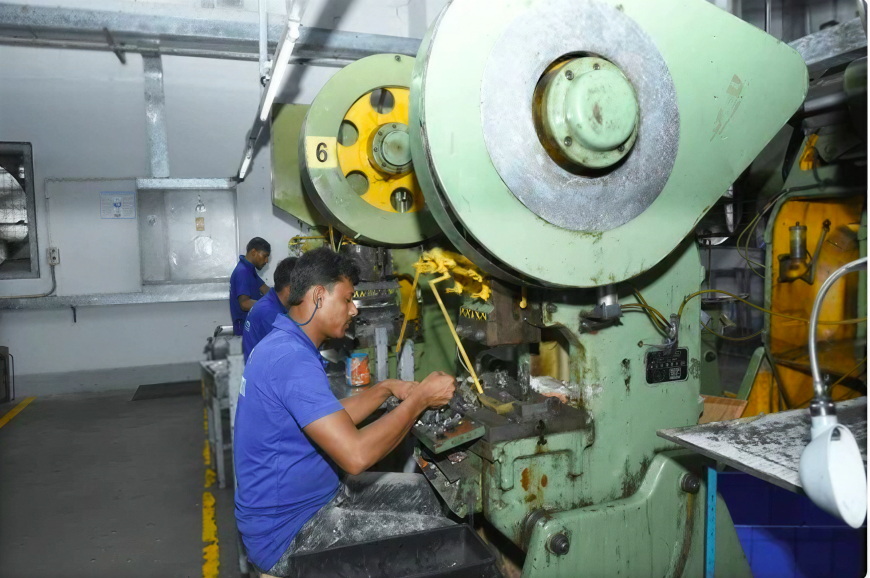
A war in the Middle East does not share a border with Bangladesh. Yet its bill can arrive remarkably quickly in a factory in Gazipur, on a farmer’s field in Bogura, in a Dhaka bus fare, in a hospital generator and, eventually, on the kitchen table of an ordinary family.
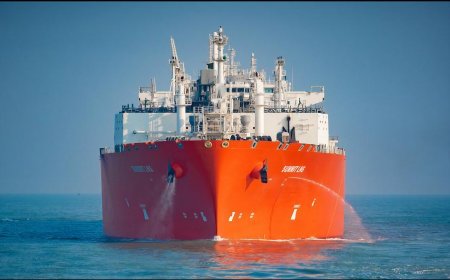
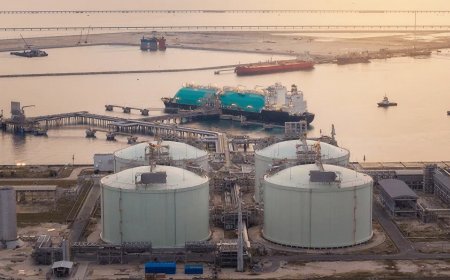
A disruption to liquefied natural gas supply raises import costs.
A factory then receives less gas or pays more for energy. Production slows, overtime disappears, shifts are reduced, recruitment is frozen and, at the end of that chain, a worker may lose a job. Geopolitics rarely remains on the map. Sooner or later, it becomes household economics.
This is the context in which the recent warning that around 600,000 jobs in Bangladesh could be at risk should be read. The number is alarming, but interpreting it simply as “the Middle East war may cost Bangladesh 600,000 jobs” misses the more important economic argument.
The conflict did not create Bangladesh’s structural weaknesses. It is exposing and magnifying them. A storm may strike everyone, but which roof collapses depends partly on how strong the house was before the storm arrived.
The distinction between an external shock and domestic vulnerability is therefore essential. Bangladesh did not cause the conflict, and it cannot determine international oil or LNG prices.
The degree to which an international supply shock can destabilise domestic employment, food production, inflation and public finances is not entirely determined abroad.
That is where questions of economic governance, energy strategy, fiscal capacity and institutional resilience begin.
The statistics already point to an economy with limited shock absorbing capacity. The World Bank reported in April that inflation remained at 8.5% in FY2026 and that wages of low income workers had failed to keep pace with prices.
The national poverty rate increased from 18.7% in 2022 to 21.4% in 2025, with an estimated 1.4 million additional people becoming poor in 2025 alone.
Before the Middle East conflict, about 1.7M people had been expected to move out of poverty in 2026. The revised estimate is only around 500,000. Meanwhile, the nonperforming loan ratio in the banking sector stood at 30.6% at the end of 2025 and had risen to 32.6% by March 2026, compared with a South Asian banking average of 7.9%.
These figures matter because the current crisis is not a single variable problem. It is better understood as the interaction of geopolitical shock and structural vulnerability. In development economics, this distinction is crucial. Shocks are often unavoidable. Vulnerability is partly produced by policy choices, institutional capacity and the structure of an economy.
Consider energy. Bangladesh is highly exposed to imported fuel, while domestic gas production has declined from its earlier peak. The Asian Infrastructure Investment Bank estimates that sustained high LNG prices could add between USD 2 billion and USD 4 Bn annually to Bangladesh’s import costs, despite expanded energy subsidies of about USD 2 Bn.
It also estimates the fiscal and external deficits at around 4.3% of GDP in FY2026 and identifies approximately 600,000 jobs as being at risk from the combined effects of the Middle East conflict.
The transmission mechanism is not difficult to see. A conflict disrupts energy supply. LNG and oil become more expensive. Bangladesh’s import bill rises. Foreign exchange comes under pressure. Gas availability for industry deteriorates. Factory capacity utilization falls while production costs rise. Export competitiveness weakens.
Employers first cut overtime, then shifts and recruitment, and eventually employment itself. A geopolitical confrontation near the Strait of Hormuz can therefore reappear weeks later in the wage packet of a garment worker in Gazipur.
This is why energy security should not be treated merely as an issue for the power and energy ministries. Energy security is also employment security, industrial security, food security and ultimately national economic security.
If a substantial part of industrial production depends on an imported energy system whose price and supply Bangladesh cannot control, every major geopolitical disruption effectively imposes a new tax on the domestic economy.
The relevant policy debate is therefore not simply whether Bangladesh can buy more LNG. A resilient energy system asks different questions. How diversified are supply sources? What realistic opportunities exist for domestic gas exploration?
How much storage capacity is available? How quickly can renewable generation and energy efficiency reduce exposure?
How should scarce gas be allocated during a crisis among electricity generation, fertilizer production, export industries and households? Increasing import infrastructure may improve the capacity to receive fuel, but it does not automatically create energy sovereignty.
Agriculture demonstrates the same vulnerability through another chain of transmission. Bangladesh uses about 391.9 kilograms of fertilizer per hectare of arable land, an unusually high level by international standards.
The current crisis has already disrupted domestic urea production because fertilizer factories require reliable gas supplies. If domestic production falls, imports must rise precisely when international fertilizer prices and freight costs are under pressure.
The sequence is straightforward: Gas shortages reduce domestic fertilizer production, imports increase, subsidies rise, farmers face higher input costs, food production becomes more expensive and retail food prices rise.
The war may be in the Middle East, but one of its economic casualties can therefore be a small farmer in Rangpur who has never left Bangladesh.
This is why food security cannot be reduced to the amount of cultivable land a country possesses. It also depends on whether the energy, fertilizer, transport and financing required to cultivate that land remain available and affordable during an international crisis.
Yet the figure of 600,000 jobs is not, in my view, the most troubling statistic. The World Bank’s 2025 Poverty and Equity Assessment estimated that nearly 62M Bangladeshis, roughly one third of the population, were vulnerable to falling back into poverty following an illness, natural disaster or other unexpected shock.
Vulnerability stood at about 36% in 2022. Employment fell by nearly 2M between 2023 and 2024, with a further decline of around 800,000 expected in 2025. Women and young people were particularly affected.
Half of Bangladeshis aged 15 to 29 were working in low paying jobs, while one in four educated young women was without employment.
This takes us to an important academic debate about poverty. Poverty and vulnerability are not synonymous. Poverty tells us where a household is located today relative to a statistical threshold. Vulnerability asks how easily that household could cross the threshold tomorrow.
A family earning Tk 45,000 a month may not officially be poor. But if its principal earner loses a job while rent, food and medicine costs rise simultaneously, the household’s economic position can unravel long before a poverty survey records the change. Savings disappear first. Protein consumption may fall next. Medical treatment is postponed. Private tuition is cancelled. Debt follows.
Economists and development scholars describe many of these responses as coping strategies. But the phrase can sound deceptively benign.
Poor and lower middle income households often absorb shocks by sacrificing things whose future value is much greater than the money saved today. A child receives poorer nutrition.
A daughter leaves education. A chronic illness goes untreated. A productive asset is sold. A family takes an expensive informal loan. These decisions may solve this month’s cash shortage while damaging human capital for years.
An LNG shock in 2026 can therefore contribute to intergenerational poverty long after international energy prices have normalized.
The same distributional problem applies to inflation. An inflation rate of 8.5 or 9% does not mean that every household experiences the same economic pain. A household that spends most of its income on food, rent, electricity and transport has far less room to substitute away from rising prices than a wealthy household.
An affluent family can postpone a holiday or reduce restaurant visits. A low income family may reduce protein, postpone healthcare or withdraw a child from paid tuition. Inflation is therefore not merely a monetary phenomenon. It is a distributional phenomenon.
This also complicates Bangladesh’s celebrated growth narrative. The World Bank’s Poverty and Equity Assessment found that Bangladesh lifted millions of people from poverty between 2010 and 2022, a major development achievement. Yet progress slowed after 2016 and growth became less inclusive.
Income inequality, measured by the Gini coefficient, increased from 51 to 54 points. Manufacturing job creation stagnated and employment shifted towards less productive sectors.
The important question is no longer simply how fast GDP grows, but what kind of growth is being produced, who receives its gains and whether growth generates sufficiently productive and secure employment.
This is the familiar debate over job rich growth versus growth that looks impressive in national accounts but produces inadequate labour market transformation. GDP can increase while a graduate remains unemployed, a woman leaves the labour force, or a factory worker moves into precarious informal work.
If economic growth does not generate productive employment and rising real wages, households remain highly vulnerable even during periods of respectable headline growth. A major external shock then reveals the fragility hidden beneath aggregate statistics.
Social protection presents another uncomfortable set of numbers. In 2022, according to the World Bank, half of the poorest families received no social assistance, while 35% of the richest families received some form of social protection benefit.
Subsidies for electricity, fuel and fertiliser have also disproportionately benefited better off households.
This is not merely an administrative problem. It raises a central question in welfare economics: When fiscal space is limited, should governments subsidise prices broadly or target income support towards households most exposed to the shock?
Imagine that the government subsidises electricity or fuel for everyone. A poor household benefits, but so does a wealthy household with several air conditioners, multiple cars and much higher energy consumption.
The relevant question is therefore not simply whether a subsidy exists. It is how much of every taka spent actually reaches the people whose consumption, nutrition or livelihood is at risk.
In a country with severe revenue constraints, the opportunity cost of poorly targeted spending is particularly high. Money absorbed by broad subsidies cannot simultaneously fund hospitals, schools, cash transfers, agricultural support or employment programmes.
Budget policy is therefore more than accounting. It reveals who the state chooses to protect first.
The government faces a genuine fiscal dilemma. Passing higher international fuel prices directly to consumers risks further inflation. Absorbing them through subsidies protects consumers temporarily but increases fiscal pressure. If the additional subsidy bill then crowds out health, education or social protection, one form of protection may create vulnerability elsewhere.
The policy response should therefore distinguish among vulnerable households, small farmers, small and medium enterprises and strategically important productive sectors rather than treating every consumer of subsidised energy as equally vulnerable.
There are also positive developments that deserve recognition. Bangladesh has secured emergency international financing to protect food security, livelihoods and energy supply, and reforms have begun to address weaknesses in the banking system.
The World Bank approved USD 450M in June 2026 to strengthen financial sector stability, deposit protection, bank resolution capacity and supervision. Such measures are necessary during a period of severe stress.
But emergency financing is a fire extinguisher. It is not a fire safety policy.
If every international crisis requires Bangladesh to borrow more money to purchase LNG, import fertilizer, expand subsidies and wait for global conditions to improve, the country is not necessarily building resilience.
It may simply be financing vulnerability. Borrowing during an emergency can be entirely rational. Repeated dependence on emergency borrowing without reducing the underlying exposure is a different matter.
This brings us to the politics of responsibility. The present government can reasonably argue that many of the structural weaknesses it confronts were inherited. Problems in energy planning, banking governance, revenue mobilisation and investment did not emerge in a single year.
Inheritance is a diagnosis, not a governing strategy. Once a government assumes office, inherited problems become part of its policy responsibility.
The opposite political argument can be equally misleading. It would be intellectually dishonest for opposition politics to treat every price increase, factory closure or job loss as proof of government failure while ignoring a genuine global energy and geopolitical shock. Any Bangladeshi government would have felt the effects of a major disruption in the Middle East.
The serious question is therefore not simply, “Whose fault is this?” It is: how much of the damage is an unavoidable external shock, and how much reflects avoidable domestic vulnerability? Blaming the government for the first is populism. Blaming the world for the second is an evasion of accountability.
That distinction should shape the national policy debate. Bangladesh needs more than crisis management.
It needs an economic resilience doctrine: Diversified energy sources, a credible assessment of domestic gas exploration, faster investment in renewable energy and efficiency, genuine banking reform, stronger revenue mobilisation, export diversification, greater protection for productive small and medium enterprises, investment in skills and productivity, and a social protection system capable of identifying vulnerable households before a crisis rather than after livelihoods have collapsed.
The country should also ask more difficult questions about the development model itself. Do we want GDP growth, or job rich growth?
Do we want greater fuel import capacity, or genuine energy resilience? Do we want larger subsidies, or shock responsive social protection?
Is the objective merely to reduce the number of people currently below the poverty line, or to create enough economic security that an illness, a war or a lost job does not immediately push millions back beneath it?
Six hundred thousand jobs can look like 600,000 data points in an economist’s spreadsheet. In real life, each data point has a name.
Behind it is a rent payment, a child’s school fees, an elderly parent’s medicine, an agricultural loan, a university admission plan and a household calculating whether next month will still be manageable.
Macroeconomic shocks do not remain macroeconomic for long. Eventually, they become microeconomic at someone’s kitchen table.
Bangladesh cannot end the war in the Middle East. Nor can it prevent the next pandemic, commodity shock or geo-political disruption. What it can do is decide how exposed its citizens will be when the next shock arrives. The real measure of economic resilience will not be whether Bangladesh escapes global crises.
No globally connected economy can. It will be whether the next crisis again makes hundreds of thousands of livelihoods and millions of economically vulnerable people its first domestic casualties.
Dr. Lubna Ferdowsi is an academic and researcher based in England.