





























































Iran Was Never the Target
From the Strait of Hormuz to the Bay of Bengal, the United States is fighting a war it has never fully declared -- one waged not against Tehran or Caracas, but against the architecture of a Chinese-led economic order.

From the Strait of Hormuz to the Bay of Bengal, the United States is fighting a war it has never fully declared -- one waged not against Tehran or Caracas, but against the architecture of a Chinese-led economic order.
There is a peculiar ritual in American foreign policy: The announcement of a limited objective, followed by actions of unlimited consequence. In the autumn of 2001, George W. Bush promised a "war on terror" confined to Afghanistan.
By March 2003, American tanks were rolling through the deserts of Mesopotamia. The pattern -- a stated goal serving as the publicly acceptable face of a much larger strategic ambition -- did not end there. It has simply become more refined.
The war now unfolding against Iran, which Washington describes in the familiar vocabulary of deterrence, nuclear non-proliferation, and regional stability, is perhaps the clearest expression yet of that pattern. But one must look beyond the Persian Gulf to understand it.
The real story begins not in Tehran but in Beijing -- and in the quiet accumulation of economic dependencies that China has been engineering across the Global South for two decades. To understand why the United States moved against Iran with military force in early 2026, one must trace a thread that runs from Shandong province's "teapot" refineries to the Bay of Bengal, from the Orinoco Belt of Venezuela to the student-choked streets of Dhaka in the summer of 2024. What emerges is not a Middle Eastern conflict.
It is a campaign against the infrastructure of Chinese survival -- waged at its most vulnerable nodes, and clothed in the moral language of rules-based order.
I. The $400 Billion Architecture
On March 27, 2021, Chinese Foreign Minister Wang Yi and his Iranian counterpart Mohammad Javad Zarif signed a 25-year Comprehensive Strategic Partnership in Tehran. The document, whose full text has never been officially released, was reported by The New York Times to commit China to investing up to $400 billion across Iran's energy, banking, telecommunications, and transportation sectors over a quarter-century -- in exchange for a steady, heavily discounted supply of Iranian crude.
The dollar figure was almost certainly aspirational; Chinese cumulative investment in Iran over the preceding 15 years had totaled approximately $27 billion. But the aspiration was itself the message. Iran and China were formalizing what had already, through necessity and mutual interest, become a structural relationship.
The roots of that relationship lie in 2018. When the Trump administration withdrew from the Joint Comprehensive Plan of Action in May of that year and reimposed sweeping secondary sanctions on Iran, the country's formal oil export market collapsed. Iranian crude exports had peaked at roughly 2.5 million barrels per day in 2017 under the JCPOA.
Within two years of renewed sanctions, official exports fell to under 400,000 barrels per day. Iran's economy contracted by 6% in 2018 and a further 6.8% in 2019. The rial lost more than 60% of its value. The country was hemorrhaging.
Into that vacuum stepped China. Not through formal channels -- Beijing's major state-owned refineries, wary of American secondary sanctions, had already stepped back from Iranian purchases after 2018. The mechanism was subtler: A cluster of small, independent refineries concentrated in Shandong province, known colloquially as "teapots" for their modest scale, began absorbing Iranian crude at steeply discounted rates.
China had only begun issuing import licenses to these facilities in 2015, when it broke the state monopoly on oil purchasing. By 2025, they accounted for an estimated 90% of Iran's oil exports to China. The largest among them, Qingdao-based Lawen Namu Petroleum Trading, received at least 29 separate shipments of Iranian crude -- oil branded, variously, as "Oman Crude," "Iraqi Crude," "Malaysian Blend," and "Bitumen Blend." The taxonomy of disguise was itself a kind of art form.
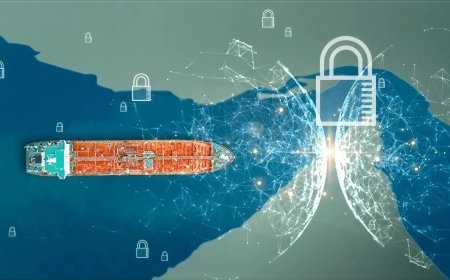
The logistics of concealment had grown correspondingly sophisticated. Iranian crude traveled the world's oceans on what investigators now call the "shadow fleet" -- a flotilla of aging tankers operating under obscure flags of convenience, with Automatic Identification System transponders switched off or geo-spoofed, executing ship-to-ship transfers in open water to obscure origin.
A U.S. House committee report released in early 2026 found that China had used this shadow infrastructure -- spanning Iran, Russia, and Venezuela -- to assemble a strategic petroleum reserve of approximately 1.2 billion barrels by early 2026, equivalent to roughly 109 days of seaborne import cover, acquired at significantly below-market cost.
By end-2025, China was importing approximately 1.4 million barrels per day of Iranian crude -- roughly 13% of its total crude imports and up to 90% of all Iranian oil exports. Iran earned an estimated $35.76 billion from oil exports in 2024, with China accounting for over $32.5 billion of that total, at a discount of $8–10 per barrel below Brent benchmark prices.
What Washington described as an Iranian sanctions regime was, in functional terms, a system that China had learned to inhabit -- and eventually to architect around. The teapot refineries, nominally private, were in practice deeply connected to Chinese state structures through joint ventures, partnerships with state-owned enterprises, and government-linked financing.
The shadow fleet was not merely an Iranian workaround; it was a shared ecosystem, one that allowed China to access discounted energy, bypass Western financial infrastructure, and reduce dependency on dollar-denominated transactions -- all while maintaining, publicly, a posture of studied neutrality.
II. Targeting the Lifeline
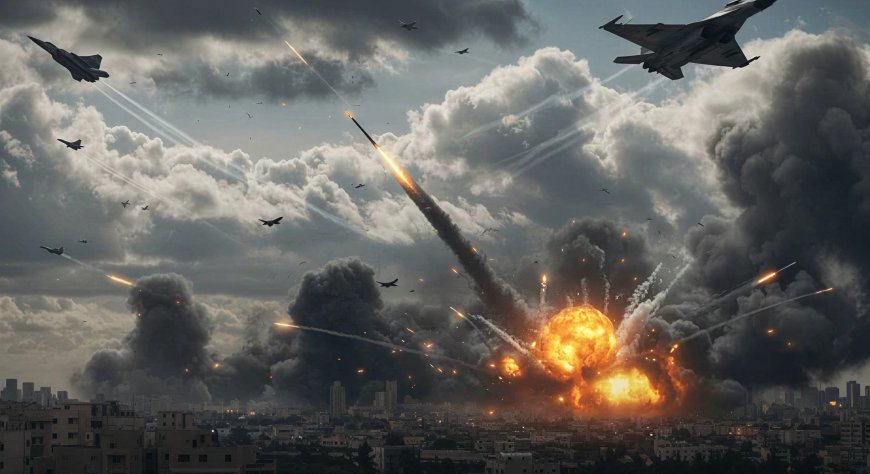
On February 28, 2026, the United States and Israel launched coordinated strikes against Iranian nuclear and military infrastructure, including the Fordow fuel enrichment plant buried deep in a mountain near Qom -- a facility that had been the subject of American and Israeli contingency planning for years.
The stated justification was the familiar one: Iranian nuclear progress, regional proxy aggression, the October 7, 2023 Hamas attacks on Israel, and the subsequent escalation cycle that had drawn Iran into increasingly direct confrontation with American forces in the region. All of this was real. The proximate causes were genuine. But the proximate is rarely the explanatory.
Since the U.S.-Israel strikes began, Iranian oil production and exports have collapsed. The immediate shortfall to China -- estimated at between 1 million and 1.4 million barrels per day -- arrived at the worst possible moment. Chinese oil imports from the Gulf, passing through the Strait of Hormuz, account for roughly 5.4 million barrels per day, making the Strait perhaps the single most consequential maritime chokepoint for Chinese economic security.
With Iranian exports disrupted and Hormuz effectively closed to normal traffic, China banned domestic fuel exports and raised retail prices. Russia increased exports to China by approximately 300,000 barrels per day in January and February 2026 -- far short of covering the gap.
Standard economic modeling suggests that a 25% increase in oil prices translates to a 0.5% reduction in Chinese GDP. In a domestic environment already under pressure from a property sector crisis, reduced export demand, and demographic contraction, this is not an abstraction. It is, for Beijing's economic planners, a structural emergency.
China had foreseen it: In the first two months of 2026, anticipating escalation, Chinese oil imports surged 16% for stockpiling purposes. The reserve mattered. But reserves, by definition, are finite.
One need not impute conspiratorial genius to Washington to observe the structural logic. By targeting Iranian oil infrastructure, shadow fleet shipping networks, and the financial mechanisms enabling sanctions evasion, the United States was not only constraining a regional adversary.
It was applying simultaneous pressure on at least three of China's most strategically sensitive inputs: Discounted energy supply, an alternative financial architecture, and the precedent of successful defiance of Western sanctions. The compression of all three at once was not accidental. It was, in the language of grand strategy, a convergence of effects.
III. The Venezuelan Operation
Before the first American bombs fell on Fordow, the Trump administration had already executed a more dramatic operation in the Western Hemisphere. In the early hours of January 3, 2026, American forces descended on Caracas, extracted Venezuelan President Nicolás Maduro and his wife Cilia Flores from their residence, and transported them to New York for arraignment on charges of narco-terrorism and drug trafficking.
The operation involved more than 150 aircraft and drones. It was, in scope and audacity, without peacetime precedent in the modern era.
The official justification -- drug trafficking, democratic accountability, the suffering of the Venezuelan people -- was not without foundation. Maduro's Venezuela was a narco-state by any meaningful definition, and the humanitarian catastrophe under his rule had driven more than seven million people from their country, the largest refugee crisis in the Western Hemisphere's modern history.
But to understand the operation solely in those terms is to miss what Time magazine's editorial board, writing in the immediate aftermath, bluntly acknowledged: The U.S. would seem to be on the verge of taking control of a major energy supplier to China.
The energy dimension was stark. Venezuela holds the world's largest proven oil reserves -- approximately 303 billion barrels, or 17% of global totals. Under Maduro, production had collapsed from a peak of nearly 3.5 million barrels per day in the late 1990s to roughly 1 million barrels per day by 2026.
But even at diminished levels, roughly 85% of Venezuelan oil exports were flowing to China, much of it through the same shadow fleet infrastructure that moved Iranian crude -- and much of it linked to repayment of the approximately $60 billion in Chinese development bank loans extended to Caracas since 2007.
In December 2025, Venezuelan crude shipments to China averaged over 600,000 barrels per day. China's teapot refiners depended on Venezuelan heavy crude for a significant portion of their feedstock.
Beijing had understood Venezuela as an insurance policy. It was energy supply located entirely outside the maritime chokepoints -- the Strait of Malacca, the Strait of Hormuz -- that American naval power could theoretically control. The China Development Bank's extraordinary commitment to Venezuela, roughly half of all Chinese bank loans to Latin America as of 2023, made geopolitical sense only in that context.
When the Trump administration seized Maduro, it did not merely remove an inconvenient autocrat. It physically occupied the last major energy supplier to China that operated beyond the reach of American strategic pressure. Brookings Institution analysts noted that Beijing now had reasons to be confrontational, not cooperative, on any debt restructuring process -- because the losses had been caused not by Venezuelan policy failures but by American military force.
The simultaneity deserves emphasis. Within sixty days of early 2026, the United States had militarily intervened in Venezuela and launched strikes against Iran. Both countries were nodes in the same Chinese shadow energy architecture. Both were simultaneously disrupted. The odds of this convergence being coincidental are not high.
IV. The Bay of Bengal Front
Geopolitical pressure, when it is serious, operates simultaneously across multiple theaters. The energy disruptions in the Persian Gulf and South America were not the only vectors through which Chinese strategic depth was being compressed in this period. In South Asia, a transformation had already occurred -- quieter in method, contested in its attribution, but no less consequential in its implications.
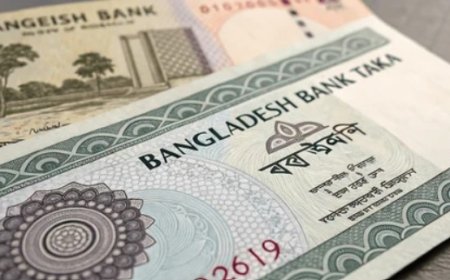
On August 5, 2024, Sheikh Hasina, Bangladesh's Prime Minister of sixteen years, fled Dhaka by helicopter following weeks of student-led protests that had escalated with startling speed into a national uprising. Her government -- which had won elections in January 2024 with an overwhelming parliamentary majority -- had collapsed not through the ballot but through the streets.
An interim government led by Nobel laureate Muhammad Yunus, a Fulbright scholar with longstanding ties to American institutions and the Clinton global network, assumed power. Indian intelligence agencies, which had regarded Hasina as a reliable regional partner, were caught entirely off-guard.
Chinese state media and analysts, within days of the regime change, reached a different conclusion about its origins. Shi Panqi, a prominent commentator at the nationalist outlet Guancha.cn, published a widely circulated analysis titled "Will the Bangladesh Syndrome Spread Across the Belt and Road Countries?"
He argued that the United States had played a decisive role in orchestrating the transition -- through years of National Endowment for Democracy-funded civil society work, diplomatic pressure on the January 2024 elections, and the mobilization of pro-Western opposition networks.
The Chinese Foreign Ministry released a formal report titled "The NED: What It Is and What It Does," specifically citing Bangladesh alongside Ukraine, Hong Kong, and the Arab Spring countries as theaters of American-engineered political transition.
The concrete evidence for direct American orchestration remains, as analysts routinely note, unverified. What is verifiable is the strategic subtext. Bangladesh occupies a geographic position of exceptional sensitivity. It borders the Bay of Bengal -- home to three of the twelve major ports facing that waterway -- and sits at the junction of Chinese maritime ambition and Indian strategic anxiety.
The Matarbari deep-sea port, under Chinese construction and financed through the Belt and Road Initiative, was expected to be operational by 2027, potentially offering Chinese commercial and strategic access to the Bay in a manner that concerned both New Delhi and Washington.
China had pledged approximately $60 billion in trade, investment, and loans to Bangladesh under Hasina's government -- bridges, power plants, special economic zones, and port infrastructure.
More pointedly: Sheikh Hasina had, in the period before her removal, reportedly refused American requests to cede or lease St. Martin's Island -- a small but strategically located island at the mouth of the Naaf River, adjacent to Myanmar -- for the establishment of an American military or intelligence presence.
She stated as much herself, in a speech delivered in India after her exile: "I could have remained in power if I had surrendered the sovereignty of St. Martin's Island." The island's significance was neither economic nor sentimental. It sat astride Myanmar's coastline -- the country through which China's most significant Malacca-bypass infrastructure, the China-Myanmar Economic Corridor, was being built.
A monitoring or military presence on St. Martin's would place American intelligence assets directly adjacent to China's most important land-based alternative to Hormuz.
Nepal, too, has witnessed sustained American diplomatic pressure to reconsider Chinese infrastructure arrangements, particularly projects linked to the Trans-Himalayan connectivity network. The Millennium Challenge Corporation compact, ratified under significant external pressure in 2022, contained provisions that Nepali lawmakers flagged as potentially incompatible with Chinese partnership arrangements.
Nepal is the corridor between China's interior and the subcontinent, and who controls, finances, or aligns with that corridor matters enormously to the logistics of Chinese economic projection.
V. The System Being Contested
Taken together -- the Iran strikes, the Venezuelan operation, the political transitions in Bangladesh and Nepal -- these events begin to describe something that no individual event, reported in isolation, fully reveals. They describe a coherent, if never formally articulated, American strategy to compress China's economic operating space at its most structurally vulnerable points: Discounted energy supply, alternative financial channels, and BRI-linked connectivity in maritime chokepoint regions.
The strategic theorist Kishore Mahbubani, among others, has argued for years that the defining contest of the 21st century is not between Western liberalism and Chinese authoritarianism -- important as that ideological dimension is -- but between an existing order built around American financial and maritime primacy and a rising order built around Chinese-led economic integration. What is new is the pace at which the contest has moved from competitive coexistence to active disruption.
The historian of American foreign policy might observe that this is not entirely without precedent. In 1941, Franklin Roosevelt's administration imposed an oil embargo on Imperial Japan, cutting off 80% of its fuel supply, in response to Japan's expansion into French Indochina.
The Japanese military, facing the prospect of economic strangulation, concluded that war was preferable to managed decline. The Pearl Harbor attack followed within months. The parallel is not perfect -- China is not Imperial Japan, and the current confrontation is not a prelude to declared war -- but the structural logic of resource denial as strategic pressure is recognizable across that historical distance.
Economic strangulation, when applied to a major power, tends to produce responses proportional to the pressure applied.
China has, thus far, responded with characteristic restraint. Xi Jinping has declined to escalate in any form that would give Washington a justification for further pressure. The ancient logic of Sun Tzu -- subduing the enemy without fighting -- remains China's operational doctrine. But restraint has its own costs. Every barrel of Iranian crude that no longer reaches Shandong's refineries must be replaced at market prices.
Every Venezuelan loan now requires renegotiation with a U.S.-aligned Caracas. Every South Asian port that moves toward American alignment reduces the geographic depth of China's economic order. The cumulative arithmetic of these losses is not yet catastrophic. Whether it becomes so depends on how far, and how fast, Washington is willing to press.
The War That Was Never Declared
There is a useful intellectual exercise for making sense of events that resist simple narrative. Rather than asking what a conflict is about, ask who benefits from each of its consequences. The consequences of the U.S.-Iran war -- disrupted Chinese energy supply, collapsed shadow fleet architecture, pressured teapot refineries, a closed Strait of Hormuz -- benefit, structurally, the United States in its competition with China.
The consequences of the Venezuelan operation -- seized Chinese-aligned energy reserves, disrupted oil-for-loans repayment flows, redirected heavy crude toward American refineries -- benefit the United States in the same competition. The consequences of political transitions in Bangladesh and Nepal -- reduced BRI momentum, potential access to maritime and aerial corridors adjacent to Chinese infrastructure -- benefit the United States in the same competition.
None of this requires that American policymakers be cold-blooded chess players executing a master plan. Real geopolitics is messier than that. Domestic politics, bureaucratic inertia, Israeli pressure, and genuine moral conviction about Iranian nuclear programs and Venezuelan authoritarianism all play roles that cannot be reduced to strategic calculation. The point is not that Washington planned every outcome.
The point is that the outcomes, taken in aggregate, constitute a coherent campaign -- whether designed or emergent -- against the architecture of Chinese economic survival in the 21st century.
Iran has always been a partial story. It is a regional power of consequence, a state sponsor of proxy militias, an aspiring nuclear threshold state. All of that is real. But it is also a critical energy node in China's parallel economic order, a shadow fleet anchor, a sanctions-evasion partner, and a defiant precedent for the possibility of economic life outside American-defined rules.
When you bomb Fordow, you are not only targeting centrifuges. You are targeting the argument that defiance of the dollar system is sustainable. That is a message addressed, above all, not to Tehran, but to Beijing.
The war, in the end, was never about Iran. Iran was simply the place where the war was fought.
Muhaimen Siddiquee is a brand and communications professional with a strong interest in culture, politics, and history.