




































































The Collapse of Elderly Care
What is at stake is not only the health of individual patients, but the dignity of an entire ageing generation.

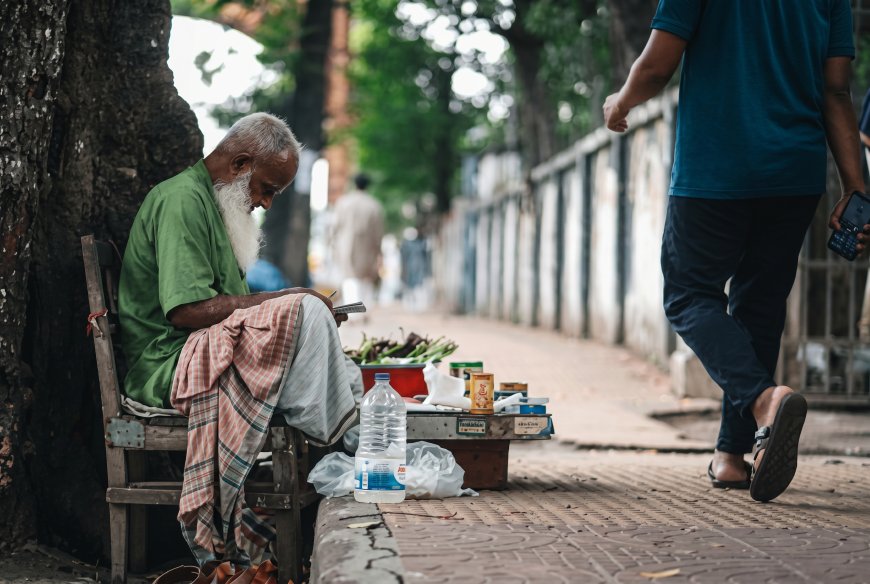
Nure Banu (not a real name), a 70-year-old woman with dementia, sits alone in a dim room, untouched food growing cold beside her. She has forgotten that she is hungry. Unfortunately, no one in her family has remembered to check. This scene happens more often than most people realize. As the elderly population with dementia grows, the nation still lacks proper dementia care services and support systems.
In Bangladesh, dementia affects about 1 in every 12 older adults and is way more prevalent in women than in men (Farhana, et al. 2025). This is a staggering number in a country where, around 15.3 million people were aged 60 or above (Nazmul, et al. 2025). Yet proper facilities remain extremely limited, especially for low-income families. As a result, family members with little or no knowledge and training become the primary caregivers. The consequences of this vacuum fall hardest on nutrition.
Malnutrition among dementia patients is not a passive outcome. It is what usually happens when a neurological condition is left to meet a broken care system. Dementia patients often skipped meals, as they may forget to eat entirely. Also, this disease affects appetite and taste preferences in ways that make food feel unappealing (MAC,2024). Many patients gradually stop eating, often so slowly and quietly that families fail to recognize it as a serious health issue at first.
Research found that in Bangladesh nearly 84% of senior participants showed malnourished older adults were 4 times more likely to suffer from depression than those who were well-nourished (Mohammad, et al. 2021). In other words, malnutrition worsens cognitive decline and daily functioning, making patients harder for untrained caregivers to manage (Kings College London). For a patient in rural Bangladesh who has limited access to specialist care, these complications can quickly become life-threatening.
Bangladesh’s social fabric has long leaned on the assumption that ageing parents will be absorbed into their children's residences and looked after through filial duty. This assumption is crumbling under migration, economic stress, and the sheer complexity of dementia as a condition. Many family caregivers experience moderate to severe psychological burden (Md Rashidur, et al. 2021).
The research gap mirrors the national policy gap. Neither the academic establishment nor the state has treated this as the emergency it is. Geriatric psychiatry remains a neglected entity in Bangladesh. There is no national dementia strategy. The National Institute of Neurosciences in Dhaka receives some of the most severe cases, but the overwhelming majority of dementia patients never reach it.
What is at stake is not only the health of individual patients, but the dignity of an entire ageing generation. Malnutrition in dementia does not present itself precisely. It gradually weakens the body and mind without even being formally introduced. This decline occurs behind closed doors and is mistakenly accepted as normal ageing, when in reality it reflects a deeper systematic failure that can no longer be ignored.
Fahima Hossain Muna is Research Team Head, BSES;Health content writer and Founder, Antioxidant Pathways.