



































































Cheap Labour Is Not a Shield, but Cheap AI Tokens Are Not a Sentence
Bangladesh's workforce is not protected by low wages. It is protected, for now, by the cost of making AI output reliable and accountable, and that margin will narrow as models improve and review gets faster.

“Bangladesh's workers are less exposed on cost than the headlines suggest. The risk is real, though, and it falls on specific kinds of work.”
The common argument runs like this. Bangladesh has some of the world's cheapest labour, so automation has little to gain here. The opposite fear says AI costs almost nothing per word, so nobody's job is safe. The figures in my research file support neither view.
Cheap labour is a weaker defence than it looks
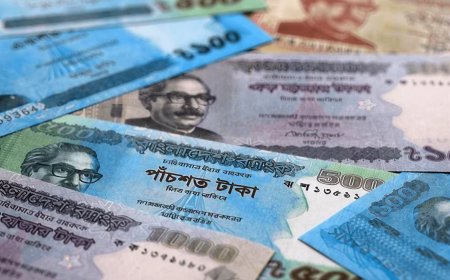
Start with the wage side. The BBS Labour Force Survey 2024 puts average monthly income for salaried employees at BDT 15,554, about $125 at the current rate of BDT 124.35 to the dollar. Industrial daily wages of BDT 350-496 work out to roughly BDT 9,100-12,896 a month.
Now the AI side. For a medium text-heavy workload of 1,000 interactions a month, the direct API bill is about BDT 298 on MiniMax M3.1 Flash and BDT 383 on DeepSeek V4. Western frontier models cost BDT 3,357 (GPT-5.6 Sol) to BDT 4,974 (Gemini 3.1 Pro).
Even the dearest of these is about a third of one average salary. Put another way, one month's wage buys over 40,000 ten-thousand-token interactions on DeepSeek V4.
On token price alone, a low Bangladeshi wage does not protect text-based work. If the job is reading, summarising, classifying or drafting, the machine is already cheaper per unit of output.
The inference bill is the wrong number
Here the picture changes. Inference is cheap, but deploying AI inside an organisation is not. Generic file models a 100-person task pool with 100,000 interactions a month.
It assumes a $60,000 implementation amortised over 24 months, $2,000 a month for orchestration and security, one minute of human review per interaction and a 5% rework rate.
Under those assumptions the incremental monthly cost is about BDT 776,000 for a Chinese hosted model and BDT 1.08 million for a Western API. Against a labour pool of BDT 1.555 million, the AI must add value equal to roughly 50% to 69% of existing task-pool labour cost just to break even.
That is not a headcount calculation. It is explicit that it measures the value the AI must create, not the share of people who can be removed. It also shows the token bill is a minor part of the cost.
Each extra minute of human review per interaction adds about BDT 162,000 a month. Switching from GPT-5.6 Sol to MiniMax changes the monthly inference bill by only about BDT 306,000.
When wages are low, human review time is cheap too. An AI that still needs a person to check every output saves less here than it would in a high-wage economy. That is the real protection for Bangladeshi workers. It rests on the cost of verification and accountability, not on cheap labour as such.
Self-hosting will not change this soon
Some argue that local, privately run models will remove the dependence on foreign APIs and the per-token cost. On current evidence that is not a cost play.
A benchmarked Qwen3.5-27B deployment on one H100 costs roughly $4.27-8.54 per million output tokens at public rental rates. The same model hosted by Together costs $1.00. DeepSeek-class models on eight H100s run $17-43 per million.
A self-hosting at $63-1,250 per million tokens under rougher assumptions. Both figures point the same way, and self-hosting loses on price. Its case rests on privacy, control and resilience. On-premise models under 30B parameters may pay back in under three months.
That holds only against expensive premium APIs, and for organisations with steady, heavy usage.
Who is exposed
The exposure depends on the task, not the sector. Translation, first-pass data entry, simple administrative work, routine drafting and code support are strong automation candidates. Contract review, sales and negotiation, complex analytics and report summarization are better treated as AI-assisted, with a human accountable.
Physical factory and field work is largely outside what language models can do.
For a Bangladeshi Corporate Lawyer such as me, that classification is sobering but not alarming. Drafting a notice or summarizing a judgment is cheap to automate. Advising on a dispute is a different matter, because it carries professional liability. Responsibility cannot be priced per token.
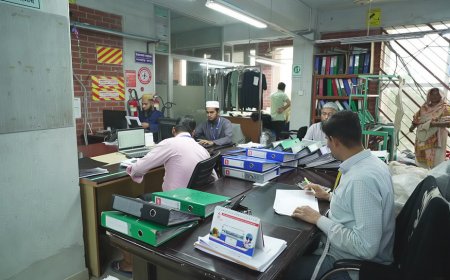
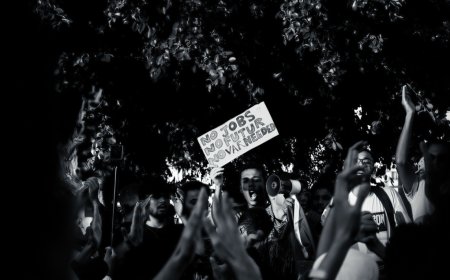
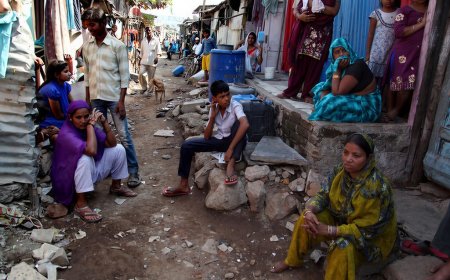
The more exposed groups are probably entry-level clerical and back-office staff, junior translators and routine data processors. They have little bargaining power and do the most standardised text work.
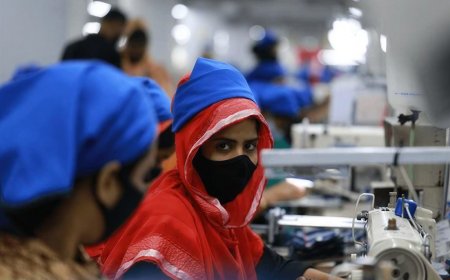
Garment and factory workers are less exposed to language models, though the file's wage data shows a different pressure on them. Industrial wages rose 7.86% in September 2026 while inflation was 8.34%, so their purchasing power is falling for reasons that have nothing to do with AI.
What policy and employers should do
Three things follow.
First, wage-board and labour policy should keep tracking the real cost of living, because that squeeze is happening now.
Second, employers should run pilots that measure review-adjusted unit economics, not token prices, and test Bangla and English separately. The file notes that no independent Bangla enterprise benchmark was found for these models.
Third, training should move early-career workers towards verification, supervision and judgment. Those are the tasks where the cost advantage of AI is weakest.
There are limits to the data used here. The best nationwide earnings figure is from 2024, the wage-index data is an index and not a payroll level, and the model prices come from a partial assessment that its own authors flag as not procurement-ready.
The direction is clear, but the exact numbers should be treated with caution.
The conundrum
Bangladesh's workforce is not protected by low wages, because AI is far cheaper than even the lowest local salary for text work. It is protected, for now, by the cost of making AI output reliable and accountable, and that margin will narrow as models improve and review gets faster.
The practical risk is a gradual erosion of entry-level text-based jobs, not mass replacement. The sensible response is to treat the next few years as a window for building the skills that machines are still poor at pricing.
Shafqat Aziz is a barrister (Lincoln’s Inn) and an accredited Civil-Commercial Mediator (ADR-ODR International).