




























































Why Bangladesh Needs a Layered Approach to Truth, Justice, and Healing
When institutions operate without transparency or accountability, they forfeit their legitimacy and become the very source of the wounds they were meant to heal. For the post-uprising state to heal the nation, it must first heal itself, by dismantling these deeply rooted practices of exception and institutionalized violence.

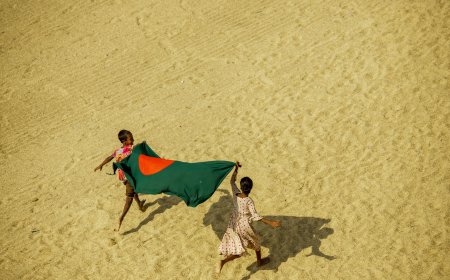
Almost every national day in Bangladesh has become a site of contestation. Rather than serving as moments of collective reflection, these occasions often expose deep divisions -- over what should be remembered, whose narratives should be centered, and who feels included in that memory. Even widely recognized historical milestones are not immune.
The recent controversy surrounding March 7, where commemorative expression itself became grounds for punishment, illustrates how remembrance can turn into a politically charged act.
This fragmentation extends beyond national days to the figures who embody the nation’s history. Individuals revered by one group are rejected or even vilified by another. What emerges is not simply disagreement, but a deeper crisis: The absence of a shared and inclusive national narrative. It reveals a society where history remains unsettled, and where unresolved pasts continue to shape present divisions.
It is within this fractured landscape of memory and meaning that the aftermath of the July 2024 uprising must be understood. The uprising has given way to a complex, often quiet, and sometimes turbulent period of national soul-searching. For the first time in decades, words like "truth," "healing," and "reconciliation" have migrated from the specialized lexicons of human rights lawyers and academics into the center of public discourse.
These concepts are now debated in televised talk shows, analyzed in policy papers, and etched into election manifestos, marking the vocabulary of a nation attempting to find its footing after fifteen years of a singular, increasingly suffocating authoritarian regime.
When we speak of such things, the mind naturally wanders to global benchmarks. We look at the Truth and Reconciliation Commission of South Africa, the community-based Gacaca courts of Rwanda, the post-war reconstruction of Bosnia, or the intricate peace architecture of Colombia. These models offer a seductive promise: That a society can confront its darkest hours, document the facts, and emerge on the other side with a renewed social contract.
Yet we must face a difficult reality. While these international templates are frequently cited as aspirational goals, the structural conditions of Bangladesh are fundamentally different. In South Africa or Bosnia, trauma was anchored in clear racial or ethnic ruptures, with an identifiable "other" against whom violence had been organized. In Bangladesh, the conflict is intra-group, political, and deeply enmeshed in the very institutions meant to provide order.
Any attempt to address national trauma through a single commission, a single event, or a narrow timeframe risks missing the deeper, layered nature of political wounds in this country. To understand what meaningful healing might look like, we must first reckon with an uncomfortable truth: trauma in Bangladesh is not episodic, but cumulative, interconnected, and continuously reproduced.
Bangladesh’s Multilayered Wounds
In the traditional study of transitional justice, trauma is often viewed as a "rupture," a sudden break from the normal order, like a war or a coup. But in Bangladesh, trauma can be better understood as an accumulation. It is not just about the violence of July-August 2024; the roots of our current instability reach back across decades of unresolved grievances.
These wounds began with the foundational moments of the state. The immense trauma of the 1971 Liberation War and the shattering assassinations of 1975 created deep political rifts that were never fully reconciled. Over the years, these foundational wounds were compounded by successive institutional breakdowns.
Every manipulated election, every instance of compromised judiciary, and every normalization of enforced disappearances or extra-judicial killings added a new stratum of distrust to the national psyche. This accumulation has been further fueled by identity conflicts that pit different versions of religious and nationalist belonging against one another.
The danger of an unhealed past is that it refuses to stay buried. Instead, it travels into the present, offering a ready-made moral justification for new cycles of violence. We see this vividly in the trend of mass, indiscriminate case filings that mirror the dark legacy of the previous regime. In a tragic irony, the same state machinery and abusive laws once used to crush dissent are now being turned against the very people who originally wielded them.
Where political dissidents once faced fabricated charges, the coin has simply flipped, with the same ghost cases and practices of exception now deployed against a new set of targets under the guise of accountability. This environment has further emboldened a culture of mob violence, frequently defended as the inevitable outcry of groups suffering from long-term deprivation and systemic exclusion. Every such action is framed as a moral correction of history.
Yet when accountability is driven by revenge rather than due process, it produces only fresh, cumulative trauma. These are not isolated incidents of lawlessness. They are the outward expressions of deep, unresolved wounds being weaponized to legitimize today's excesses.
A key insight we must grapple with is that the very attempt to correct past injustice often produces new forms of harm. Post-uprising actions that reproduce patterns of exclusion or excessive state power are not just political errors; they are the seeds of new trauma. These wounds are not abstract.
They are embedded in the lived relationships between the state, political parties, intelligence agencies, the media, and civil society. Understanding how trauma operates across these actors is essential to identifying where cycles are reproduced and where they might finally be interrupted.
The State and Its Organs
The state in Bangladesh occupies a deeply contradictory position, theoretically serving as the protector of the people while historically acting as a primary producer of trauma. When the bureaucracy, law enforcement, and the judiciary inherit and refine practices of exception, trauma becomes embedded within the architecture of governance itself.
Over successive decades, the police, military, and judiciary have been systematically co-opted to serve successive regimes rather than the public interest. These institutions have not merely executed authoritarian plans but have actively developed new tools of oppression, transforming the legal and security apparatus into a machinery of collective injury.
We see this most clearly in the normalization of extra-judicial killings and the rise of the Rapid Action Battalion (RAB), where the state pioneered the "crossfire" narrative to bypass judicial oversight. This was followed by the chilling sophistication of "Aynaghor" and enforced disappearances, a form of psychological terror that turned the state into a predator capable of making its own citizens vanish without a trace.
The judiciary, in turn, moved beyond passive failure to actively legitimizing the violent actions of other state organs. By providing a veneer of legality to extra-judicial killings, enforced disappearances, and the systematic torture of detainees, the legal system effectively shielded perpetrators from accountability. Cases of kneecapping illustrate how the judiciary can inadvertently enable a culture of torture within the state by imprisoning victims rather than holding perpetrators accountable.
This institutional betrayal is most visible when courts permitted the filing of ghost cases and mass arrests to bankrupt and demoralize political dissidents, ensuring that the law itself became a site of systemic exclusion.
Even the decisions of the apex court have often reflected the political will of the executive rather than the principles of justice. Constitutional amendments were upheld or struck down not on legal merit but depending on whether they served the regime in power. When the highest courts mirror the desires of the executive, they do not merely fail to protect citizens; they institutionalize trauma within the governance structure itself, reinforcing the belief that justice belongs only to those who hold power.
The trauma is further deepened when the state deploys disproportionate force against its own people, as seen in the midnight crackdown at Shapla Chattar or the use of lethal weapons against student protesters during the road safety and quota reform movements. Even the military has not been immune, as the Pilkhana Massacre left deep scars within the security forces and remains a taboo subject that quietly erodes institutional trust.
When institutions operate without transparency or accountability, they forfeit their legitimacy and become the very source of the wounds they were meant to heal. For the post-uprising state to heal the nation, it must first heal itself, by dismantling these deeply rooted practices of exception and institutionalized violence.
Memory, Mobilization, and Moral Narratives
In the arena of politics, trauma is rarely treated as a wound to be healed. It is treated as capital. Parties have mastered the art of selective remembrance, consistently invoking the oppression they suffered under previous regimes while applying those same narratives and tactics against opponents once they seize power.
The traumas of 1971, 1975, and successive periods of state repression are mobilized not to seek justice, but to construct moral narratives that justify current excesses. For example, the legacy of the 1971 Liberation War is frequently utilized to categorize opponents as traitors, while the 2004 grenade attack is invoked to justify the systemic purging of political rivals.
This mobilization depends on rigid moral binaries, an "us vs them" logic that fractures an otherwise culturally cohesive society along purely ideological lines. Through this lens, political narratives systematically dehumanize opponents, framing them not as citizens with rights but as enemies of the state or betrayers of the revolution.
We see this in the pervasive use of labels like "Razakar" or "Fascist" to strip individuals of legal protection, implying that victims somehow deserved their fate. Such framing provides a moral justification for violence, such as the acceptance of mob justice or the execution of top leaders without following due process.
The result is a landscape where trauma is not merely remembered but actively circulated. By keeping the wounds of the past fresh, political actors manufacture sudden escalations in public sentiment to justify exceptional measures. Violence, such as the crackdown at Shapla Chattar or the targeted killings of bloggers, is reframed as historic necessity.
Justice is stripped of its procedural integrity and celebrated as revenge, turning historical pain into a political instrument. These actors ensure that trauma continues to circulate at the national level, fighting today's battles through the ghosts of yesterday.

Non-State Actors
One of the most distinctive aspects of the Bangladeshi context is the resilience of its social fabric. Despite the intense polarization manufactured at the national level, everyday society often acts as a shock absorber for political trauma. In local neighborhoods and villages, people of vastly different political persuasions continue to coexist, maintaining a degree of local stability even when national politics is at its most toxic.
We see this in the quiet persistence of local markets where supporters of rival parties engage in daily commerce or in the shared social rituals of weddings and funerals that transcend party identity. Yet the country's small geographic size and deep cultural homogeneity make it particularly vulnerable to centralized influence. Because society is so similar across the map, a narrative manufactured in the capital can ignite reactions across the entire country almost simultaneously.
This social cohesion, however, remains fragile and subject to episodic disruption. National narratives, amplified by media framing that reinforces binaries, can trigger sudden escalations of mob violence in areas that were calm just moments before. A clear example of this occurred during the 2021 Durga Puja attacks, where a single social media post originating from a specific incident in Comilla sparked a rapid, nationwide wave of communal violence across districts like Chandpur, Noakhali, and Rangpur. Similarly, the 2013 violence following the verdict of Delwar Hossain Sayedee saw peaceful rural pockets transformed into battlegrounds within hours due to centrally circulated rumors and media amplification.
Rather than acting as a neutral arbiter of truth, the media frequently becomes a mirror for the nation's polarization, further entrenching "us vs them" logic across the population. Social cohesion at the grassroots is thus constantly undermined by centrally manufactured conflicts that travel with remarkable speed throughout the country.
Why Conventional Models Fall Short in Bangladesh
This layered reality is why conventional models of truth and healing often fall short when applied to Bangladesh. While the commissions in South Africa and Canada are global benchmarks, they were designed to address single, foundational ruptures rooted in distinct racial or colonial divisions.
In South Africa, the process focused on the systemic crimes of apartheid, while Canada’s inquiry centered specifically on the generational trauma of the Indigenous residential school system. In those contexts, the path to healing was structured around a clear, identifiable divide between oppressor and victim.
In Bangladesh, the challenge is not linear. It is a landscape of multiple, overlapping traumas accumulated over more than fifty years. Our wounds are not defined by a clear racial or colonial "other" but are produced by rotating cycles of political and state violence within a culturally cohesive society. The conventional approach of addressing a single era or a single event is, therefore, structurally insufficient.
Criminal prosecution as the primary mode of transitional justice is exceptionally difficult in this environment. The fundamental problem is that the roles of victim and perpetrator are not fixed. In our cycle of political retribution, the victim of one regime frequently becomes the perpetrator of the next.
With no ethnic or cultural dividing line, the upper hand simply rotates. When one group finally gains the power to seek accountability, it often reaches for the same state machinery to inflict the same injustices it once suffered, framing its actions as a moral correction.
A healing approach built on victim-centered truth-telling is equally fraught, because the trauma is not episodic but cumulative. In a single historical event, an actor may be identified as a perpetrator, only to become a victim of state brutality in the next. This produces a picture without clear binaries, where almost every political group carries both blood on its hands and wounds in its history.
Models focused solely on community reconciliation are similarly misaligned with our reality. The core problem in Bangladesh is not that neighbors cannot live together; grassroots social cohesion often remains intact despite national turmoil. The problem is how trauma is produced, mobilized, and circulated at the national level by state and political actors.
We do not need a process that asks people to forgive their neighbors. We need a layered framework that reforms how the state exercises power and interrupts the institutionalized reproduction of violence.
Toward a Layered and Holistic Approach
To break this cycle, Bangladesh must move toward a layered and strategic approach that prioritizes stabilizing how society processes trauma, justice, and memory over seeking immediate reconciliation. Such an approach must be both retrospective -- engaging with accumulated and unresolved pasts -- and multi-actor, recognizing that trauma is produced, circulated, and reproduced across state institutions, political actors, and society itself.
This framework can be understood as a set of interconnected interventions across key domains.
First, narrative reframing is essential. At the level of political discourse, media, and public debate, efforts must move beyond binary labels that reduce citizens to enemies. This requires exposing and challenging the mechanisms through which political actors construct moral hierarchies and legitimize exclusion and violence.
Second, plural recognition of victimhood must be established. Across political divides, victimhood should be acknowledged as a shared and overlapping reality rather than a competitive claim. This helps prevent the creation of hierarchies of suffering and opens space for a more inclusive understanding of harm.
Third, institutional reform and due-process safeguards are central. State institutions -- including law enforcement, the judiciary, and administrative bodies -- must be reoriented away from practices of exception and political instrumentalization. Safeguards must be put in place to ensure that justice mechanisms are not repurposed for revenge, but remain anchored in due process, transparency, and accountability.
Fourth, documentation and preservation of evidence must be strengthened through independent and credible mechanisms. In periods of volatility, deferred accountability spaces can play a crucial role by systematically collecting, archiving, and protecting evidence for future processes of acknowledgment and justice when political conditions are more stable.
Fifth, victim-centered justice and support systems must be prioritized. This includes not only legal recognition, but also access to medical care, psychosocial support, compensation, and public acknowledgment of suffering. Justice must be experienced in material and human terms, not only as a legal abstraction.
Finally, targeted healing interventions should be developed for communities and groups most affected by state and political violence. Rather than broad, symbolic reconciliation initiatives, these efforts must be context-specific, grounded in lived realities, and responsive to differentiated experiences of harm.
The question facing Bangladesh is not whether we will confront our past, but how. A narrow approach that focuses only on the most recent events risks repeating the cycle by ignoring the deeper layers of our national trauma. We must recognize that trauma is continuous, and that justice -- when stripped of due process -- can itself reproduce violence.
Breaking the cycle of an unhealed society requires the courage to look beyond the immediate moment of political victory. It demands a commitment to building a state where power is exercised with restraint, and where the wounds of the past are acknowledged rather than mobilized.
At its core, this requires confronting our unresolved historical wounds through truth, recognition, and meaningful processes of healing -- so that violence is no longer reproduced in the name of past grievances. In doing so, Bangladesh can begin to construct a more inclusive and shared national narrative -- one that every citizen can inhabit without fear of exclusion or threat. Such a foundation is essential for moving forward, ensuring that history no longer serves as a tool of division or a justification for human rights violations.
If we fail to address the roots of violence -- embedded across society, institutions, and historical memory -- we will continue to produce new victims without preventing the conditions that create them. A layered, context-sensitive, and multi-actor framework offers the possibility -- however difficult -- of interrupting this cycle and moving toward a more just, inclusive, and durable social order.
Only then can national days become moments of shared reflection rather than division, and historical figures be understood as part of a collective past rather than instruments of political exclusion.
Md. Zarif Rahman is a researcher, columnist, and human rights activist. Durdana Chowdhury is a researcher with multidisciplinary interests in law and human rights. Both are affiliated with Sapran, a rights-based think tank.