




































































How Myanmar’s Civil War is Burning Bangladesh’s Borders
Bangladesh can only protect its borders and reduce the damages through quick, opportunistic and well calculated actions. The political map of Rakhine is being forcefully remapped and if Bangladesh is not paying attention to this changing equation, the future generations will be the ones to suffer.

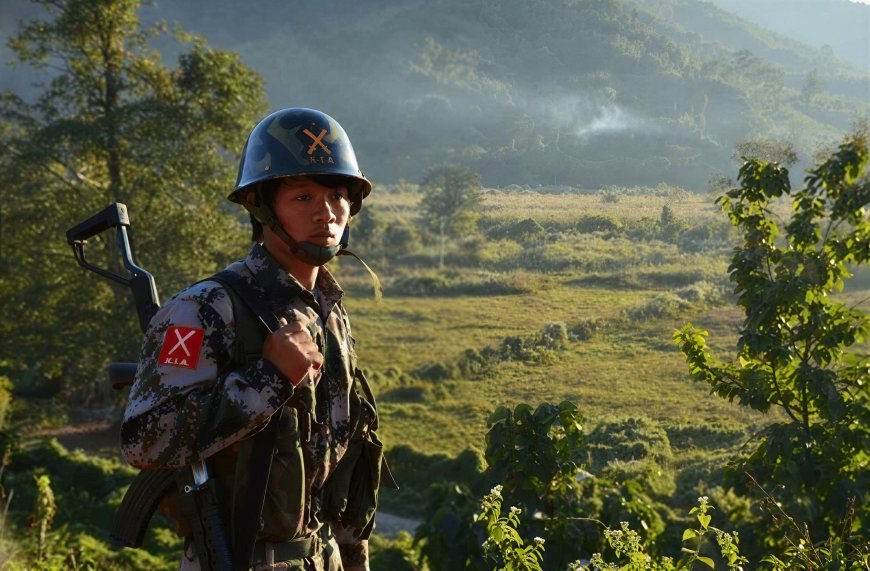
The noise of mortar shells and heavy artillery no longer comes from the distant battlefields of a foreign war, but is a harsh reality on Bangladesh's southeastern border.
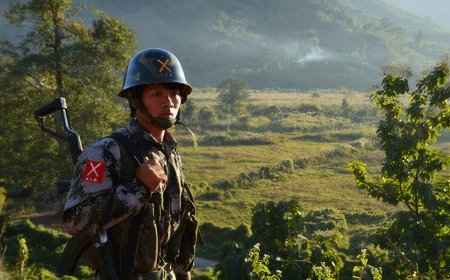
Myanmar has been on a downward spiral of violence since the military junta, also known as Tatmadaw, took control in Naypyidaw in the February 2021 coup. But after the start of "Operation 1027" by the Three Brotherhood Alliance in October 2023, the internal war has reached a new and frightening level.
In Rakhine State, the intense and existential conflicts between the army and the powerful Arakan Army (AA) have become less of a purely domestic issue in Myanmar. This ferocious conflict has become for Bangladesh an unparalleled geostrategic challenge, which poses a serious threat to national security, the stability of Bangladesh's borders and the already moribund Rohingya repatriation process.
The rapidly changing political and military situation in Myanmar is creating a multi-layered crisis for Bangladesh. The direct spillover of the conflict poses a threat to lives and sovereignty along the border, while the junta losing control of territories in Rakhine has made any previous repatriation agreement moot.
Under these circumstances, it is imperative for Bangladesh to urgently overhaul its diplomatic and security calculations.
The Spillover Effect
Now a feeling of panic seems to have permeated through the entire border belt from Ghumdhum and Tumbru of Bandarban to Teknaf of Cox's Bazar.
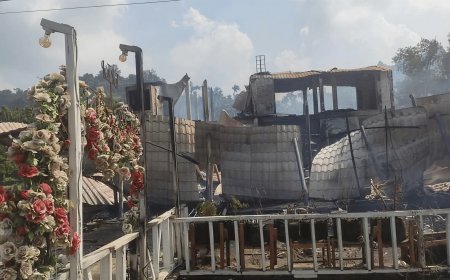
The conflict on land, air and water between the Arakan Army and the junta troops is spilling into Bangladeshi soil. In recent months, stray mortar shells and bullets have been fired on multiple occasions into Bangladesh causing tragic civilian deaths to Bangladeshi nationals and sheltering Rohingya.
Farmers are afraid to harvest, schools on the border have been closed indefinitely and hundreds of families have been evacuated to safer areas. This isn't just a put-down on the way of life; this is a mockery of an independent country's sovereignty.
Adding to the mix: A new surge of border crossings. Hundreds of heavily armed junta personnel have crossed the border to take shelter in the country's territory as rebel groups have systematically taken control of Border Guard Police (BGP) posts and army bases. Dhaka has disarmed and repatriated them according to international law and humanitarian principles, but the surrenders also show how weak the junta's hold is on Rakhine.
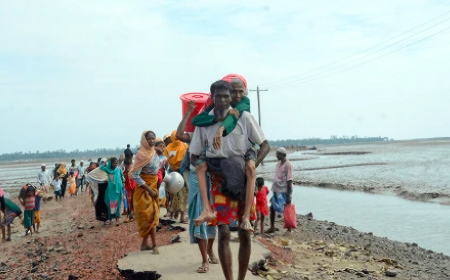
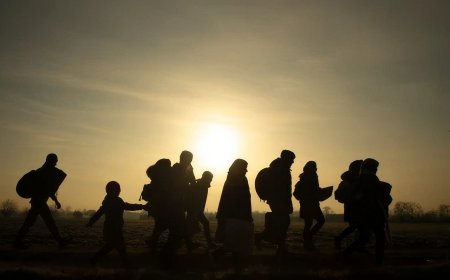
Other ethnic minorities, like the Chakma and Rakhine communities, and the rest of the Rohingya are now seeking risky means to cross the border into Bangladesh, as well, in what is a domino effect of military defeats. The Border Guard Bangladesh (BGB) and Coast Guard are on high alert, but it is impossible to seal each inch of a porous and difficult terrain.
Villainous transnational criminal syndicates are taking full advantage of this administrative void. The drug smuggling, especially for smuggled Yaba and Crystal Meth (Ice) has been alarmingly increasing among the chaos.
Small arms are spreading from the conflict into Rohingya refugee camps in Bangladesh, providing a direct source of fuel for small rival armed groups, such as ARSA and RSO, that are engaged in turf wars, targeted killings and kidnapping. Thus directly incubating militancy and organized crime in Bangladesh the instability in Rakhine is.
Deepening Uncertainty
Dhaka has exhausted bilateral, trilateral and multilateral efforts to find a sustainable solution since more than 750,000 Rohingyas fled a genocidal campaign to seek shelter in Bangladesh in 2017. Several repatriation deals and pilot schemes were brokered with the Naypyidaw military junta, with the help of the Chinese. Those frameworks are virtually useless today, however.
The elephant in the room is that the 70-80% of Rakhine state that the junta claims to control is no longer in their possession and is, in fact, the area to which the Rohingyas are meant to return. Nowadays, the Arakan Army has de facto control over most of the area.
This poses a serious legal and diplomatic quandary -- with whom will Bangladesh negotiate? Dhaka must sign treaties with the recognized state entity in Naypyidaw and is not allowed to do so under international protocols.
However, how can the junta ensure the safety, citizenship and resettlement of the Rohingyas who are returning if it cannot even protect its military posts in Rakhine?
On the other hand, the Arakan Army that controls the territory does not have a clear policy on the Rohingya issue, which is extremely ambiguous. Ethnic Rakhine (Burmese) Buddhists and Rohingya Muslims have longstanding animosity.
The AA has recently shifted its rhetoric from "people of Rakhine" to "Muslim inhabitants of Rakhine" but ground reports continue to cite cases of forced conscription and violence against Rohingyas in the AA controlled areas.
The AA's ultimate objective is an independent/strongly autonomous Arakan. Voluntary repatriation will continue to be a mirage until they make a clear statement on citizenship and return to their homeland. Now the repatriation process is caught up in a geopolitical maze with no apparent way out.
The Geo-political Game
Rakhine is not only a side province of Myanmar, but a geo-strategic pivot on the Bay of Bengal. As a result, regional and international superpowers have a strong presence in the region with significant economic and strategic interests.
In fact, Kyaukphyu deep-sea port and China-Myanmar Economic Corridor (CMEC) through Rakhine are integral to the Belt and Road Initiative (BRI) championed by China. Likewise, the Kaladan Multi-Modal Transit Transport Project, India's attempt to reach its land-locked North East states to the sea, is dependent on the port of Sittwe.
Notably, Beijing and New Delhi are engaged in a measured strategy of "strategic hedging. Both are keeping official contact with the junta and back lines to the Arakan Army to safeguard their billion dollar investment, while both are quietly maintaining official state-level contact with the junta.
China has even used its influence with the Three Brotherhood Alliance to arrange temporary ceasefires, reflecting its pragmatic dealings with those in power on the ground. Superpowers are not so much interested in the outcome of the civil war, but more in their own economic presence.
In the meantime, the Western world, mainly the USA and the European Union, has confined itself to imposing economic and military sanctions against the junta. The international community has turned a blind eye to the Myanmar situation due to the conflicts in Gaza and Ukraine.
The Association of Southeast Asian Nations (ASEAN) and the widely heralded ‘Five-Point Consensus' have turned out to be utterly powerless. In the midst of this hypocrisy of the superpowers and apathy of the region, Bangladesh's burden is being carried alone.
Diplomatic Reassessment and Strategic Imperatives
Bangladesh's historic and traditional wait-and-see policy cannot be continued during this unprecedented crisis. If Dhaka wants to ensure national security and ensure a viable solution to the Rohingya crisis then it needs to take a proactive, bold and multidimensional approach.
First, there needs to be a paradigm shift in diplomatic engagement. However, Bangladesh needs to go beyond traditional diplomatic practices and maintain informal and backchannel contacts with the leadership of the Arakan Army, as the new sovereign power in Rakhine. If they can do so with the AA without formally denying recognition to Naypyidaw, Bangladesh can and should do so to safeguard its interest.
Now, it is not an option, but a need to engage in track-two diplomacy to find out the real AA position on Rohingya and get a working relationship for border stability.
Second, the capabilities of border defense should be strengthened to the maximum deterrence level. The BGB and Coast Guard must be bolstered with more personnel and equipment -- and significantly supported with new technologies such as drone surveillance and intelligence sharing. Bangladesh should have the policy of 'Zero tolerance' in case of any spill over violence.
Air defense systems should be sensitively ready to make sure no Myanmar military aircraft ever dare to breach Bangladeshi air space again. At the same time, law enforcement agencies need to undertake resolute countermeasures to break the militant and smuggling networks within the refugee camps.
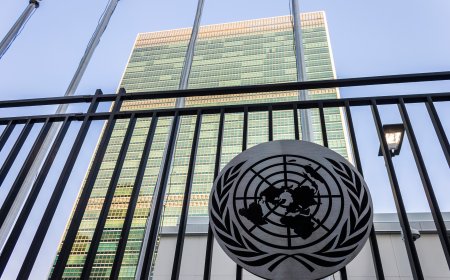
Last and not least, Dhaka needs to work on reviving its multilateral diplomacy in an aggressive way. The United Nations, the OIC and western capitals should be strongly reminded that the civil war in Myanmar is not a mere domestic humanitarian problem but a ticking time bomb for the maritime security of the Indo-Pacific region.
But Bangladesh will need to push harder on the ASEAN region to make it drop the failed consensus and take serious corrective steps against the instigators of this instability.
The need for Bangladesh to prepare for the ultimate stress test is the civil war in Myanmar and the subsequent power vacuum in Rakhine. To navigate this crisis, we need to go beyond emotional appeals, beyond diplomatic protocols.
Bangladesh can only protect its borders and reduce the damages through quick, opportunistic and well calculated actions. The political map of Rakhine is being forcefully remapped and if Bangladesh is not paying attention to this changing equation, the future generations will be the ones to suffer.
Md. Shihab Uddin is a volunteer at UNICEF Bangladesh, an independent researcher, and a student of Folklore and Social Development Studies at the University of Rajshahi. He may be contacted at [email protected].