


























































The Future Is on Trial
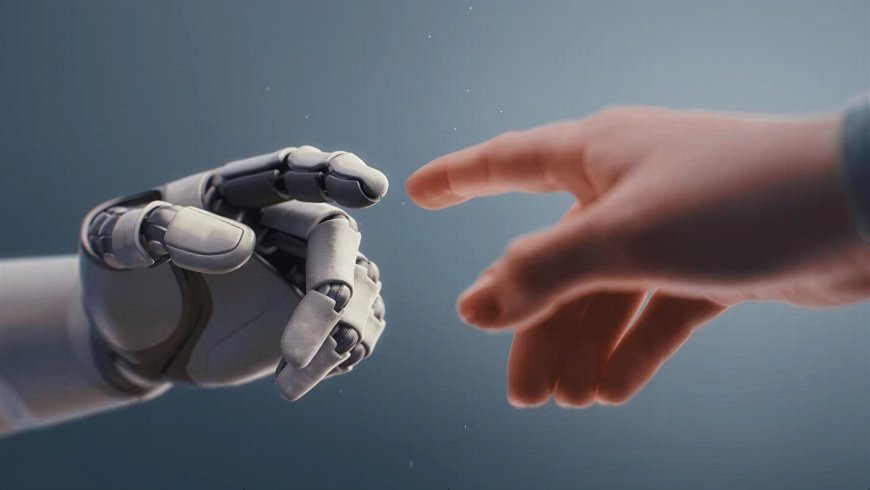
The future is no longer approaching. It is already negotiating with us.
“Our scientific power has outrun our spiritual power. We have guided missiles and misguided men.” Martin Luther King Jr.
Every era is defined not merely by its inventions, but by its questions. Ours is a torrent of technology, migration, ecological disruption, political disillusionment and extraordinary promise, a hinge moment in history where humanity must negotiate unprecedented dilemmas at breakneck speed.
What follows are five debates reshaping the meaning of politics, ethics, work, citizenship and ultimately, what it means to be human. These are not abstractions. They are the tectonic shifts already trembling beneath our feet. I write them as provocations for thinkers, activists, politicians and citizens who refuse to outsource their moral imagination.
Artificial Intelligence: Progress or Predestination?
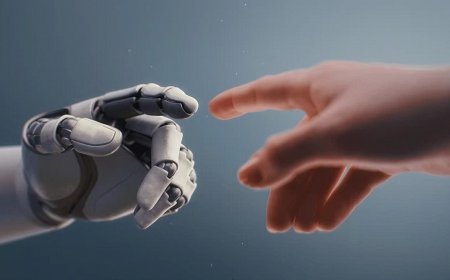
AI has escaped the laboratory. It diagnoses tumours, screens applicants, writes contracts, generates images and influences the information through which elections and public opinion are shaped. The question is no longer whether AI will govern aspects of our systems, but who governs the governors.
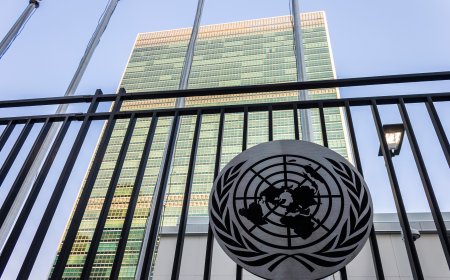
The United Nations has now established an Independent International Scientific Panel on AI, comprising 40 experts, and held its first Global Dialogue on AI Governance in Geneva in July 2026.
The very existence of such an international mechanism is an acknowledgement that AI governance can no longer remain exclusively within the jurisdiction of technology companies or individual states.
Yet the paradox remains. Nations are racing for AI supremacy while simultaneously discussing safeguards against technologies.
Recent developments in autonomous AI agents have renewed concerns about monitoring, control and alignment, while the global regulatory landscape remains fragmented.
Nick Bostrom's "Superintelligence" warned more than a decade ago that if machine intelligence surpasses human general intelligence, humanity could become dependent upon the behaviour of systems far more powerful than itself. His proposition now feels less like distant philosophy and more like a question of institutional preparedness.
Harari's "Nexus" adds another dimension: the danger may not simply be intelligent machines, but information networks capable of reorganizing human societies, beliefs and political realities at a scale no previous medium could achieve.
I once met a young radiologist whose life was saved by an AI scan that detected a tumour early. Six months later, the very same technological logic filtered a pool of jobseekers by zip codes, eliminating an entire district before a CV was even read.
That is AI's double edge: Salvation and silent discrimination encoded in the same machinery.
William Gibson's famous observation that the future is already here, merely unevenly distributed, has acquired an almost unsettling pertinence.
The future is not necessarily a robot standing at our door. It may be an invisible system quietly deciding who receives an opportunity, what information we believe, what risks we perceive and ultimately how much agency remains our own.
Climate Crisis and Geoengineering: Remedy or Ruin?
The planet is rearranging itself. Ice retreats, oceans warm, coastlines erode and weather behaves with an increasingly volatile temperament.
The World Meteorological Organization had already warned that 2026 could potentially dethrone 2024 as the hottest year on record, while 2017-2026 became the tenth hottest year on record. The climate debate has therefore evolved beyond slogans and recycling; it now enters the arena of planetary engineering: solar radiation management, carbon capture and atmospheric manipulation.
Are we entering a scientific renaissance, or ecological hubris? The question is no longer simply whether we can engineer the atmosphere. It is whether we possess the wisdom to govern what we engineer. Can we truly heal the Earth without first healing our economic addictions?
Gene Editing, Space Governance and the Ethics of Rewriting Reality
CRISPR has made the human genome editable, fracturing the boundary between cure and enhancement. The distinction between treatment and augmentation is not merely blurring; it is becoming increasingly difficult to police. Human germline editing has not become the designer-baby reality once imagined by popular futurism. As of 2026, editing human gametes and embryos remains largely experimental and preclinical, constrained by technical, safety, regulatory and ethical barriers.
But the trajectory is unmistakable. CRISPR-based medicine has already crossed from laboratory promise into clinical reality, with the first regulatory approval of a CRISPR-based therapy arriving in 2023 for sickle-cell disease and personalized treatments now demonstrating how rapidly genome editing can move from theoretical possibility toward medicine.
Biohacking represents the next major frontier in science and artificial intelligence, characterized by the extraction and manipulation of data from biological human systems rather than mechanical ones. This paradigm shift corroborates Yuval Noah Harari’s deep trepidations in "Sapiens" and "Homo Deus" regarding data exploitation, algorithmic control, and the rise of a technologically altered human lineage.
By warning of an elite caste of enhanced humans -- whom he characterizes as a new breed distinct from historical "Homo sapiens" -- this underscores a profound threat to the very essence of our biological authenticity.
The future dilemma remains what begins as salvation could, if access becomes unequal, manufacture a biological aristocracy. Hope is sacred, but when untethered from ethics, it can be weaponised. Just because we can, should we? Yet the ethical frontier does not end at the genome.
It is also being drawn above us. Private corporations and states are competing for lunar and extraterrestrial capabilities while the legal architecture governing commercial exploitation of space remains considerably older than the technological ambitions now challenging it. Europe, China, Russia, the United States and private companies are increasingly treating space not merely as a scientific frontier but as strategic infrastructure and economic territory.
The celestial realm is no longer simply a sanctuary. It is becoming real estate. A future of treaties, tensions and technological territorialism awaits.
Work, Inequality and Post-Growth Economics: Are Humans at Risk of Becoming Irrelevant?
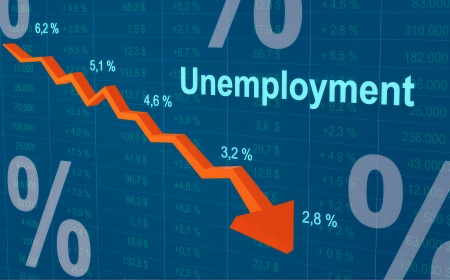
Automation erases professions with the subtlety of a receding tide. AI transcribes law, algorithms translate language, robots organise warehouses and increasingly capable systems perform tasks once considered the preserve of highly educated professionals.
Yet the future of work is proving more complicated than the apocalyptic shorthand of “machines taking all jobs.” The World Economic Forum estimates that by 2030 technological, demographic and economic transformations could create 170 million jobs while displacing 92 million, producing a net increase of 78 million, but with nearly 40% of existing job skills expected to change. Human attributes such as creative thinking, resilience, flexibility and agility are expected to remain critical.
The deeper question therefore survives: What becomes of dignity when labour is no longer essential for human survival?
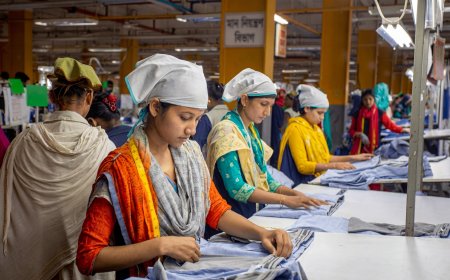
Universal Basic Income may provide fiscal oxygen, but money alone cannot manufacture meaning. Human worth is sustained by significance. A dismissed factory worker once told me, staring at his now-silent sewing machine, “I'm not afraid of hunger. I'm afraid of being unnecessary.” That sentence contains the existential kernel of the coming economy.
We may survive economically while spiritually starving. At the same time, economists confront the planetary limits of perpetual expansion. Degrowth, steady-state models and circular economies are no longer merely intellectual curiosities.
Can we continue demanding infinite GDP growth from a finite biosphere? Can prosperity be distributed justly without devouring the ecological foundations upon which prosperity depends?
A fisherman on a vanishing island once told me that GDP figures had no value to him because his ancestors' graves now sit beneath the tide. His words held no anger. Only quiet indictment. The future will force us to abandon economic autopilot. The next revolution may not be industrial, but introspective.
Democracy Under Surveillance: Can Institutions Outlive Disillusionment?
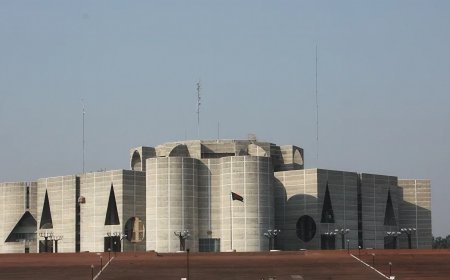
Democracies worldwide tremble under polarisation, mistrust, digital manipulation, surveillance and oligarchic influence. Authoritarianism promises efficiency; democracy often delivers paralysis. Institutions once revered as guardians of stability now suffer erosion. Freedom House reports that Global freedom declined for the twentieth consecutive year in 2025, with 54 countries experiencing a deterioration in political rights and civil liberties while only 35 improved.
Internet freedom has likewise declined for sixteen consecutive years. The threat is no longer simply censorship by the old machinery of the state. AI-generated misinformation, algorithmic manipulation, biometric identification and predictive surveillance can make control subtler, cheaper and more ubiquitous. Freedom House warns that government-backed AI systems, if deployed without human-rights safeguards, could intensify censorship and surveillance, particularly in authoritarian settings.
Courts can restrict presidents. Journalists can unravel billion-dollar frauds. Ordinary citizens can challenge laws. Minorities can mobilise. That remains democracy's quiet genius, but democracy is no longer merely a system, it is a discipline. A mother whose phone data was used in court once told me she felt “protected, but permanently observed.” It is chilling how the environs evidently a selfsame of the dystopian novel The Trial by Kafka, Fahrenheit 451 by Ray Bradbury & 1984 by George Orwell.
The United Nations, IMF, WTO and other global institutions increasingly confront problems that traverse borders faster than national legislation can respond. The future of governance may therefore resemble a patchwork of states, international bodies, technology companies and civil-society coalitions, functional yet uneven, pragmatic yet post-idealistic.
The central question is stark: Can democracy survive disillusionment and datafication simultaneously?
Perhaps the most unnerving thing about these predictions is that Hollywood has been rehearsing them for generations. "Star Trek" romanticized humanity's expansion beyond Earth while imagining new political and ethical frontiers. "Alien" envisioned corporate power, artificial life and commercial exploitation colliding in space. "I, Robot" turned machine intelligence and delegated authority into a question of control.
Science fiction has always oscillated between technological salvation and technological hubris, between the machine as servant and the machine as sovereign. What once appeared fantastical is now becoming eerily proximate.
The newest examples are more chilling precisely because they concern not distant galaxies but intimate human relationships. "SOULM8TE", released in 2026, is about a grieving man acquiring an AI android as a sentient soulmate, only for coded devotion to become obsession and control. The premise sounds cinematic until one considers that AI companions, algorithmic matchmaking and synthetic personalities are already moving into ordinary life.
The disturbing possibility is not necessarily that machines will become human. It is that humans may gradually redesign intimacy, authority and even identity around machines. Kai-Fu Lee and Chen Qiufan's "AI 2041" anticipated precisely this kind of world through ten speculative visions grounded in plausible technological trajectories. The future, then, may be far more paradoxical than either utopia or apocalypse.
AI may cure diseases, climate technology may preserve ecosystems, gene editing may liberate millions from inherited illness, space science may expand the human horizon and automation may free people from drudgery. But every liberation creates a new jurisdiction of responsibility. The five debates may appear separate, technological, ecological, biological, economic and political.
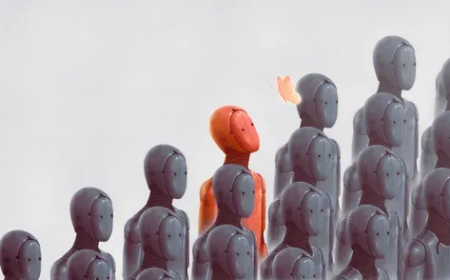
In reality they converge upon one axis: "What is the value of a human life in the 21st century?" Are we data points or citizens? Algorithms or agents? Consumers or creators?
The crises ahead will demand not speed, but depth; not reaction, but reflection; not cleverness, but conscience. To face them, we will need a new architecture of thinking, one that marries hard science with moral philosophy, innovation with humility, and governance with compassion.
Harari asks us to understand the information networks that have always shaped civilization. Bostrom asks whether intelligence itself could outrun our capacity to control it. Lee and Chen ask us to imagine the social worlds AI may create.
The lesson running through all three is almost unnervingly simple: Technological capability is accelerating faster than moral consensus. Civilizations do not fall in a single night. They fall when their questions go unanswered. These debates are the scaffolding of the next century. What we choose to prioritize will script the spiritual biography of our time. The future is not arriving. It is already here, unevenly distributed, increasingly autonomous and waiting for our answer.
Alisha Pradhan is a Bangladeshi social entrepreneur, media personality, and businesswoman. She is also the founding CEO of HerNet TV.