









































































Shattering the Glass Walls of Antalya
The history of tomorrow cannot be authored in air-conditioned boardrooms; it must be hammered out in the blood, sweat, and unyielding resistance of people reclaiming their fundamental right to exist.

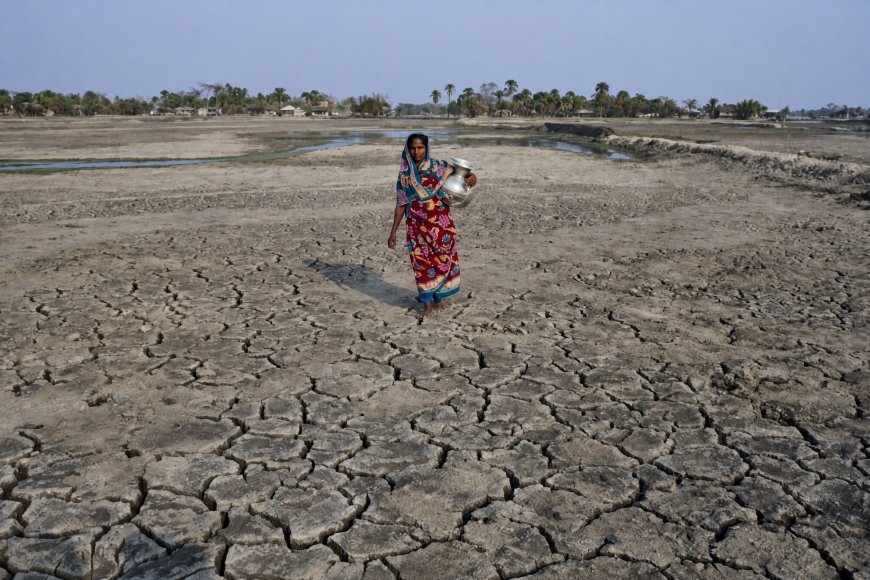
As the 31st Conference of the Parties (COP31) convenes along the historic, sun-drenched Mediterranean coast of Antalya, Türkiye, the global political stage braces itself for yet another revival of a familiar, exhausted theatrical production.
For over three decades, this annual diplomatic pilgrimage -- marked by millions of frequent-flyer miles, cavernous convention halls chilled to glacial temperatures, and frantic late-night negotiations harmonising carbon metrics -- has degenerated into a profound exercise in institutional self-deception.
One is compelled to confront an unsettling, foundational question that haunts policymakers and grassroots activists alike: Why do we continue to assemble in these gilded chambers, and why is our collective absence not ringing out as an earth-shattering moral indictment of a dying international order?
Before the world’s delegates swipe their badges at the gleaming glass doors in Antalya, every conscience-bound citizen across both the Global North and South must pause before the mirror.
If these summits remain nothing more than rhetorical gymnasiums, palliative promises, and catered cocktail lounges for fossil fuel lobbyists, then attendance is nothing short of silent complicity in planetary ecocide.
To break free from this systemic myopia and bureaucratic stasis, we must first recognize that contemporary climate diplomacy is paralyzed by a profound scientific and moral crisis.
The Theatre of Compliance
Recent empirical assessments from the Potsdam Institute for Climate Impact Research and the Stockholm Resilience Centre have laid bare an alarming truth: Humanity has already transgressed safe operating thresholds across multiple planetary boundaries.
The Intergovernmental Panel on Climate Change (IPCC) in its Sixth Assessment Report underscores with stark precision that surpassing the 1.5-degree Celsius warming threshold has supercharged sea-level rise and extreme weather volatility across vulnerable low-lying delta regions.
Yet, because the COP architecture remains tethered entirely to voluntary pledges and non-binding nationally determined contributions (NDCs), apex fossil fuel conglomerates and industrialized states continue their carbon extraction with impunity.
As rigorous long-term analyses by the Oxford Sustainable Finance Programme and the Grantham Research Institute have repeatedly demonstrated, the absence of legally binding punitive mechanisms reduces these global summits to little more than protective shields for multinational corporate cartels and speculative carbon-trading exchanges.
John Donne famously reminded us that "no man is an island, entire of itself; every man is a piece of the continent, a part of the main."
Today, in the crucible of the Anthropocene, nation-states behave as isolated fortresses of self-interest, forgetting that the rising tides lapping at the embankments of the Bengal delta or swallowing Pacific atolls will eventually erode the foundations of every shore on earth.
The Jurisprudence of Ecocide
Escaping this legal and moral vacuum requires an intervention far more radical than piecemeal policy adjustments or incremental financial pledges. It demands nothing less than a revolutionary transformation of international law.
Propelled by landmark advisory opinions from the International Court of Justice (ICJ) and the courageous, unyielding leadership of Pacific island nations like Vanuatu, the global movement to amend the Rome Statute to include "ecocide" -- the mass destruction and systematic damage of ecosystems -- as the fifth core crime under the jurisdiction of the International Criminal Court (ICC) has become the most imperative legal crusade of our era.
Climate change is no longer merely an erratic meteorological aberration or a natural cycle of planetary evolution; it is a calculated, corporate-driven enterprise of mass environmental destruction.
Because current international legal frameworks treat state accountability as entirely voluntary, fossil-fuel titans pillage the biosphere without legal reckoning.
Until this catastrophic vandalism is criminalized as ecocide under international law, every colourful COP declaration will remain what Percy Bysshe Shelley immortalized in Prometheus Unbound: A shadow cast by tyranny, signifying nothing.
Tyrants of capital wear bespoke suits today rather than iron crowns, but their disregard for human survival remains unchanged.
Epistemic Arrogance of the North
Against this backdrop of institutional bankruptcy, a quiet yet irrepressible revolution is unfurling across the marginalized frontiers of the Global South, offering the world an entirely new horizon of hope.
Groundbreaking studies published by the HEC Paris Climate and Earth Center, alongside field evaluations from the UNDP Adaptation Innovation Marketplace, reveal a profound epistemological shift: In climate adaptation, the world is witnessing not the traditional, paternalistic transfer of technology from North to South, but a vibrant reverse innovation flow from South to North.
From the digital crisis-response architecture of Kenya’s Ushahidi platform and artificial intelligence-driven regenerative agriculture in India, to community-managed aquifer recharge systems in water-stressed basins, indigenous grassroots innovations forged in the Global South are being successfully exported to heat-scorched cities across Europe and North America.
The coastal communities of Bangladesh, particularly the resilient populations of the Sundarbans who have spent centuries mastering the subtle choreography of living with shifting tides, hold the survival manual for a warming world.
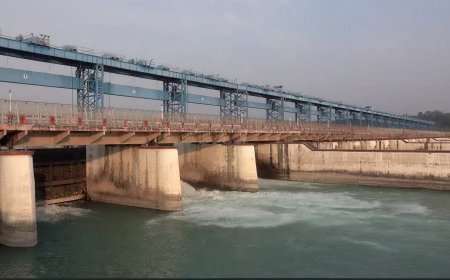
Yet, western aid bureaucracies and northern policymakers remain imprisoned within a neocolonial donor-recipient mindset, stubbornly prioritizing top-down, heavy concrete engineering over the living, breathing ingenuity of local people.
The Cruel Alchemy of Climate Debt
The most grotesque manifestation of this systemic inequality is encoded within the architecture of climate finance -- a cruel alchemy that converts historical ecological debt into a predatory financial trap.
Analyses from the World Resources Institute and international debt justice coalitions reveal a profound betrayal: Funds disbursed by wealthy nations as purported "compensation" for historical carbon emissions are overwhelmingly structured not as unconditional grants, but as high-interest commercial loans.
For climate-vulnerable nations like Bangladesh, saddling frontline states with crushing debt to finance their own survival is not only an egregious assault on the principles of climate justice; it is a sentence of perpetual fiscal enslavement.
To dismantle this cycle of indignity, the global financial architecture must be radically overhauled.
Reparations must be decoupled from commercial lending, anchored instead in historical carbon liability, and delivered directly to grassroots communities without the suffocating intermediation of bureaucratic middlemen, international banking syndicates, or donor-driven consultants.
A Manifesto for the Sinking Margins
When world leaders take the podium in Antalya to utter polished platitudes about ecological stewardship, we must remind them that these summits' moral legitimacy has evaporated.
Policymakers and environmental advocates must confront an uncomfortable truth: Why lend credibility to a pageant where corporate lobbyists drown out the voices of the dispossessed?
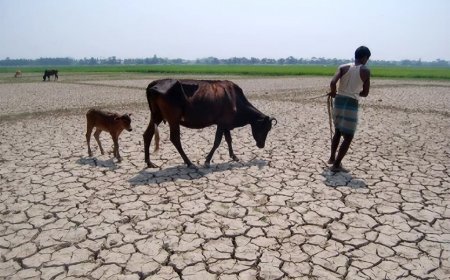
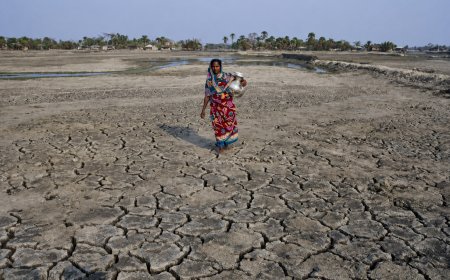
True transformation requires boycotting the bureaucratic pageantry of COPs in favour of forging grassroots transnational solidarity -- placing the fishermen of the Sundarbans, the erosion-displaced farmers of Kurigram, and the defiant youth of sinking island nations at the very apex of global decision-making.
As Harvard’s Salata Institute and leading scientific consortia urgently reiterate, unless legal, financial, and political power is decentralized into the hands of local communities, no amount of geoengineering or venture capital will rescue us from civilizational collapse.
The history of tomorrow cannot be authored in air-conditioned boardrooms; it must be hammered out in the blood, sweat, and unyielding resistance of people reclaiming their fundamental right to exist.
From the shores of the Bay of Bengal to the bruised frontiers of the Global South, our grief is not a beggar's bowl; it is an unyielding declaration of human emancipation.
We must serve notice to state apparatuses and multilateral syndicates alike: the festival of deception is over. Those who profit from planetary ruin must be brought before international tribunals, and every delta community must be restored to full sovereignty over its destiny.
If we must claw our way through the deepest darkness to snatch back the morning sun, let us shatter the glass walls of indifference with our own unyielding resolve -- forging an isthmus of justice where, in the immortal words of Seamus Heaney, "hope and history rhyme."
Fayazuddin Ahmad is a development professional.