





























































Does the NCP have a Woman Problem?
Three high-profile female departures in under two years are no coincidence. They point to a pattern, and the pattern leads to a name the party would rather not hear. The easy answer is patriarchy.
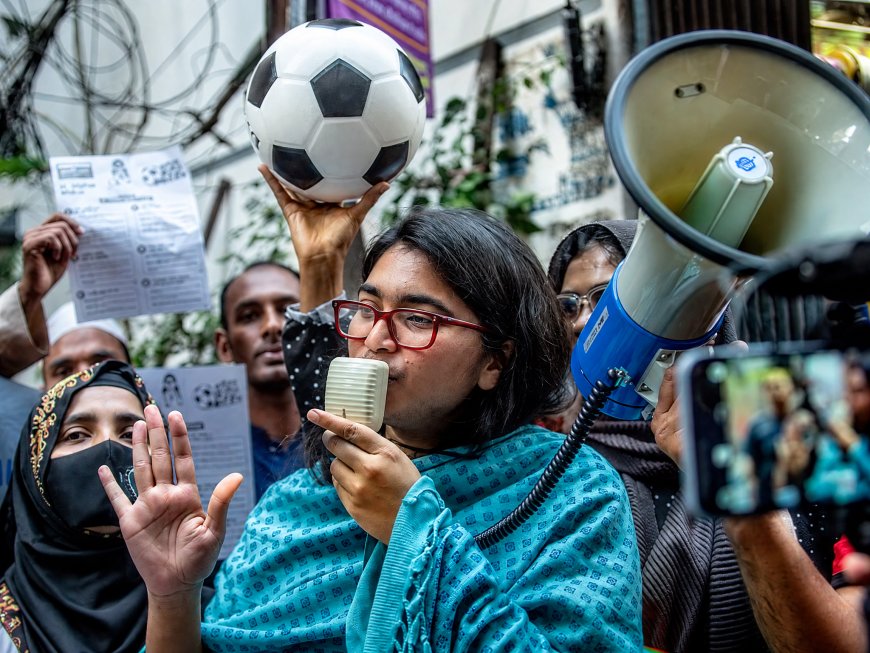
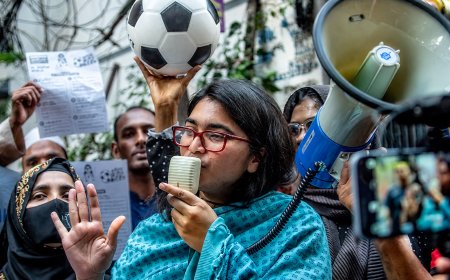
Barely two weeks after the National Citizen Party demoted her, one of its most senior and founding women leaders, Samantha Sharmin, walked out.
She had been a senior joint convener until the 23 October reshuffle cut her down to joint convener and left her off the new 16-member Political Council. On 5 November, she resigned from the party altogether, citing its alliance with Jamaat-e-Islami, the marginalization of women leaders and concerns over internal democracy.
Her resignation follows those of Dr Tasnim Jara and Dr Tajnuva Jabeen, two of the most recognizable faces of the party's early days, who both quit in December over the alliance with Jamaat.
Three high-profile female departures in under two years are no coincidence. They point to a pattern, and the pattern leads to a name the party would rather not hear.
The easy answer is patriarchy.
Bangladeshi politics is steeped in it, and no party is immune. But that explanation tells us too little. NCP did not emerge from a men's club. It was born out of July -- a movement women helped lead -- and still presents itself as its heir.
In July, the left stood beside the right, the religious beside the liberal, and women marched and organized alongside men under the banner of the Anti-Discrimination Student Movement. Inclusion was not merely a slogan then.
It was the point. The real question, therefore, is not whether women are being pushed out of NCP, but why, and whether the answer lies in the party next door.
The Roots of Disillusionment
NCP launched on February 28, 2025 with Nahid Islam as its convener and a promise that seemed to translate the spirit of July into a political platform. It announced its intention to contest all 300 parliamentary seats.
Instead, it joined a Jamaat-led alliance, contested 30 seats and won six. The departures of women began as that alliance took shape. Tasnim Jara and Tajnuva Jabeen resigned over the Jamaat alliance and the manner in which it was reached.
Samantha Sharmin went further. She said women who had led July were never given fair representation in the party's leadership, that the NCP had aligned itself with conservative forces, and that her five proposals for expanding the party's electoral prospects without an alliance had been rejected.
She also revealed that when all three women on the Political Council opposed the alliance, they were told they sat there for their own capacity, not as “women.” She described this as "a patriarchal decision".
The numbers reinforce her account. Following the seat-sharing arrangement with Jamaat, NCP was left with 30 seats and only two women candidates, neither of whom won.
The new Political Council has 16 members, only two of them women. In July, Nahid Islam himself acknowledged that the alliance arrangements had restricted the party's ability to field women.
The Ally’s Deeds and Doctrine
Let us be clear about one thing. Jamaat-e-Islami is a lawful political party with genuine electoral support and an established organizational structure. It has every right to contest elections.
We, in turn, have every right to scrutinise what it does with that right. And its record on women is no minor concern. It is rooted in the party's own doctrine.
In a January interview with Al Jazeera, Ameer Shafiqur Rahman said that a woman could never lead Jamaat, describing it as not possible due to God-given distinctions.
Jamaat's own women's wing secretary defended the restriction, arguing that Islam makes men the directors of women. The party's women leaders maintain that Jamaat empowers them.
Perhaps, within certain limits, it does. But empowerment with a ceiling is still limited empowerment, and the party did not field a single woman in a direct contest.
Then came the controversy surrounding a post on the Ameer’s verified X account. In late January, a message appeared on his account equating working women with prostitutes.
It was subsequently deleted, with the party blaming hackers. Although the DB sought access to the device for forensic examination to establish whether the account had been hacked, Jamaat never handed it over. He had also faced criticism before the election for publicly stating that Jamaat intended to reduce women's working hours.
Jamaat's organizational attitude towards women is further reflected in how it responds to controversies involving its own members.
Consider the scandal surrounding Satkhira-4 MP Gazi Nazrul Islam. After videos of him with a young woman went viral, several Jamaat leaders initially dismissed them as AI-generated fabrications, a conspiracy, or even an attempt at blackmail.
Satkhira-2 MP and Jamaat's central organising secretary went so far as to claim that the girl had willingly sought to “serve” Gazi Nazrul, casting aspersions on the character of a 19-year-old woman even after the MP had been expelled the previous day.
She later died by suicide, and her father has accused Nazrul of abuse. In April, a video clip of Kushtia-3 MP Amir Hamza body-shaming two women lawmakers went viral. Jamaat's own Kushtia secretary acknowledged that Hamza had repeatedly been warned by party leaders.
Yet, despite the controversy, he remains a Jamaat MP, with no reported disciplinary action against him. One scandal does not establish a doctrine. The cumulative responses, however, can reveal a party's priorities.
When a political party's first instinct is denial, followed by disciplinary action primarily concerned with protecting its reputation, it reveals whom it considers worth protecting. The same is true of a party that tolerates the public humiliation of women by its representatives.
Taken together, these incidents are not entirely disconnected. They form a pattern. For a party that regards women as wards of men, such responses are hardly surprising. They are consistent with its underlying outlook.
An independent woman is unlikely to choose to remain in an environment like that, particularly when the party she belongs to is increasingly tying its future to such an organization. Samantha Sharmin, Tasnim Jara and Tajnuva Jabeen did not leave for a lack of alternatives. Their departures were not tantrums. They were a verdict.
Is the Alliance Becoming an Influence?
Now place these developments alongside NCP's trajectory and ask the uncomfortable question: Is NCP following Jamaat's footsteps, and is the margizalisation of women becoming part of that process?
There are three possible explanations. The first is that Jamaat is dictating terms. There is no evidence of that, and no honest writer can claim otherwise. The second is coincidence: A young political party stumbling into an old problem.
That is possible, but the timing is difficult to ignore. The women left after the alliance took shape, and most explicitly identified it as a reason for their departure. The party's own convener acknowledged that the alliance had limited the number of women it could field. The coincidence argument must account for both.
The third explanation is the most concerning. NCP may be learning from its partner without being explicitly instructed to do so.
When a party's electoral prospects, organizational support and political security increasingly depend on an ally that fields no women and bars them from its highest leadership, women's inclusion can gradually cease to be a priority and become a liability. No one needs to issue an order.
Sharmin described an ideological drift within the party, alongside pressure from internal and external groups to resign because of her disagreement with the alliance. Such pressure is how a party changes its character without ever formally voting to do so.
Sharmin herself rejects describing NCP as Jamaat's B-team, as the party's failures cannot be attributed entirely to its alliance partner. But borrowed habits are often the hardest to abandon, particularly when they come with votes attached.
The Old Should Not Swallow the New
Here lies the uncomfortable possibility: That the youth-led party born out of the greatest uprising of a generation could eventually become Jamaat's junior partner in more than just electoral politics, retaining a younger face while reproducing the same attitudes towards women.
That, five years from now, its women will be photographed at rallies on International Women's Day but remain absent from the rooms where actual decisions are made. That the party of July will be remembered not for breaking with the politics of the past, but for giving it a fresh coat of paint.
Bangladesh already has one Jamaat. It does not need a second, least of all one wearing July's jacket. What it needs is an NCP capable of standing on its own, with an independent political identity and women occupying meaningful positions in its decision-making structures.
The party must hold the council it skipped, open up the Political Council, and publicly articulate where it differs from its alliance partner, beginning with its position on half the population. If the NCP cannot do even that, the women who left were never the problem. They were the warning.
Md. Abrar Galib is a student of Economics at the University of Chittagong. His writing interests include politics, governance, economic affairs, and human rights. He can be reached at [email protected].