























































What Was the True Lesson of November 7?
The history of November 7 belongs to Bangladesh. Its lessons must serve the whole nation -- not any single political party, personality, or faction.

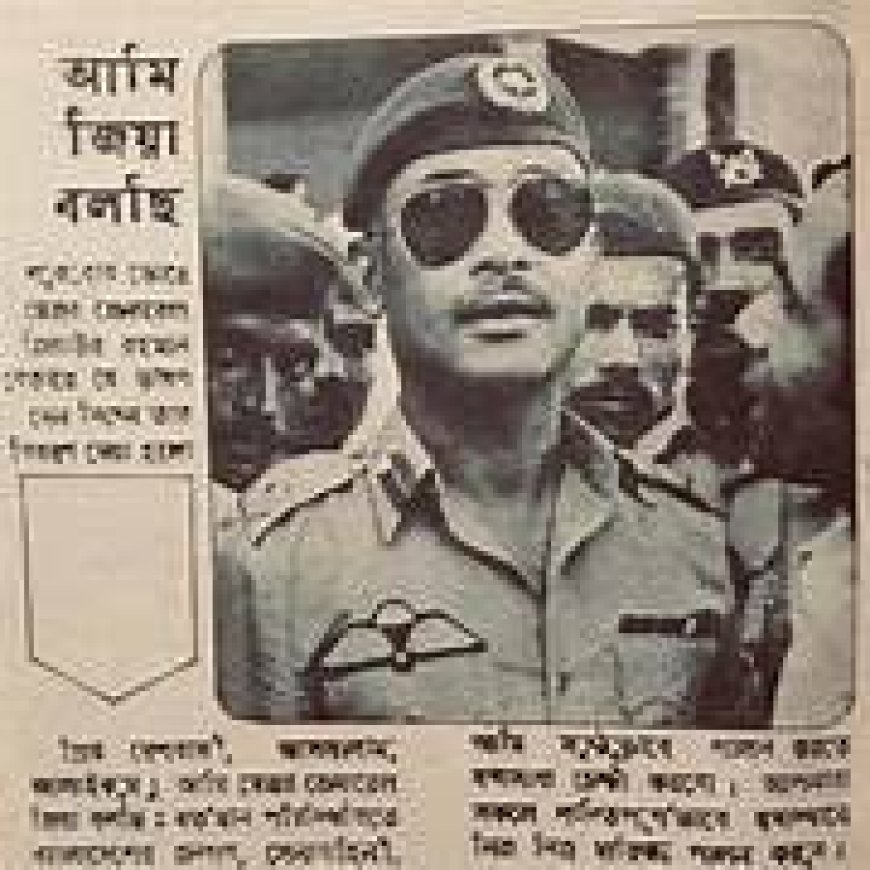
Bangladesh must remember November 7 not as the exclusive victory of one political camp, but as a defining moment that exposed the dangers of institutional breakdown, politicized armed forces, and the absence of national consensus.
Bangladesh’s history is often remembered through competing political narratives. November 7, 1975, is perhaps one of the clearest examples.
For some, it represents the Sepoy-Janata Revolution; for others, National Revolution and Solidarity Day.
There are also those who remember it as a tragic day when distinguished Liberation War officers were killed and the country’s military establishment descended further into turmoil.
Fifty-one years later, the most important question is not which political camp has the exclusive right to commemorate the day. It is what November 7 can teach Bangladesh about national cohesion, institutional integrity and the relationship between the armed forces and the state.
To understand that lesson, we must first confront the historical context.
A state caught in a cycle of coups
The political assassination of Sheikh Mujibur Rahman on August 15, 1975, fundamentally destabilized the young republic. The country entered a period of extraordinary political uncertainty, with competing military factions, contested authority and a weakening constitutional order.
The November 3 coup led by Brigadier Khaled Mosharraf was followed by the assassination of four national leaders inside Dhaka Central Jail on the same day. President Khondaker Mostaq Ahmed resigned on November 6, and Chief Justice ASM Sayem assumed the presidency.
Yet the crisis was far from over.
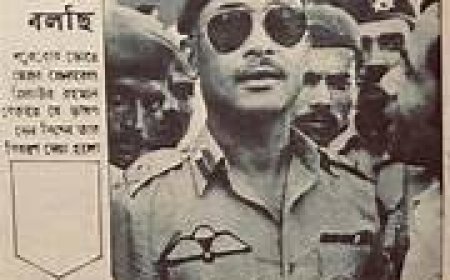
In the early hours of November 7, soldiers in Dhaka Cantonment revolted. Major General Ziaur Rahman, then under confinement, was released. Khaled Mosharraf, Colonel Khandaker Nazmul Huda, and Lieutenant Colonel ATM Haider were killed.
The uprising involved several forces with overlapping but not necessarily identical objectives. There was genuine discontent among sections of the rank and file over military hierarchy, privileges, and conditions of service. The Jatiya Samajtantrik Dal (JSD), through its military organizations, also played an important role in mobilizing the uprising. Colonel Abu Taher, a decorated Liberation War veteran who had left the Army and entered politics, was central to that effort.
But it would be historically inaccurate to assume that every soldier involved shared the same political ideology or that all participants pursued one coordinated national project.
The events of November 7 were not simply a spontaneous expression of public solidarity, nor can they be reduced to a straightforward transfer of power between military commanders. They were the convergence of military grievances, political organisation and a struggle over the future direction of the state.
The tragedy of competing visions
One of the most significant aspects of November 7 was the temporary convergence of interests between Ziaur Rahman and the forces associated with Abu Taher.
Zia's release and restoration to military leadership served the immediate interests of those seeking to remove Khaled Mosharraf's authority. But the political and institutional visions associated with Zia and Taher were fundamentally different.
Taher and sections of the JSD envisaged a radical transformation of the armed forces, challenging the traditional officer-centric hierarchy and advocating a more egalitarian, politically transformed military structure. Zia, by contrast, moved towards restoring the conventional chain of command and military discipline.
Their immediate objectives had intersected; their long-term ambitions had not.
The subsequent events made that divergence unmistakable. The soldiers' demands were not implemented as their advocates had envisaged. JSD leaders faced repression, and Taher was arrested on November 24, 1975. He was tried by a military tribunal and executed on July 21, 1976.
The fate of Taher illustrates a profound historical contradiction: a man whose organization had helped bring about the uprising that released Zia eventually became a victim of the political order that emerged from it.
This is not merely a story of individual rivalry. It demonstrates how alliances built around a common immediate objective can collapse when the question of institutional and political power comes to the fore.
The armed forces cannot become an arena for political competition
As a former military officer, I believe one of the most enduring lessons of November 1975 concerns the professional character of the armed forces.
An army's strength is not measured solely by its weapons, manpower or operational capabilities. Its institutional strength rests on discipline, professional competence, cohesion and confidence in the chain of command.
The relationship between officers and soldiers must be founded on mutual respect, fairness and shared responsibility. Rank and hierarchy are necessary for command, but they must never become justifications for arbitrary privilege, discrimination or disregard for the welfare of personnel.
The grievances reflected in the soldiers' Twelve Demands deserve historical examination. Questions of service conditions, dignity, promotion and institutional fairness cannot simply be dismissed because they emerged during a mutiny.
However, institutional reform cannot be achieved through indiscriminate violence, political manipulation, or the destruction of the command structure. When military institutions become instruments of factional competition, the consequences extend far beyond the cantonment. They threaten national security and constitutional stability.
A professional military must remain loyal to the Constitution and the state, not to an individual, political party or faction. Equally, political leadership must respect the military's professional boundaries and refrain from using it as an instrument of partisan advantage.
This is a lesson Bangladesh cannot afford to forget.
National cohesion is not political uniformity
The competing memories of November 7 reveal a wider problem in our political culture: the tendency to claim exclusive ownership of national history.
Political parties may interpret historical events differently. Such differences are legitimate in a democratic society. But history cannot be reduced to a party manifesto, and national memory cannot be built by erasing inconvenient facts.
Remembering November 7 as a day of soldier-civilian solidarity does not require us to overlook the killing of Liberation War officers. Recognizing the role of Abu Taher and the JSD does not require us to endorse every aspect of their political program. Acknowledging Ziaur Rahman's emergence as a central figure does not require us to treat his subsequent political trajectory as beyond scrutiny.
We must also remember Khaled Mosharraf, Nazmul Huda, and ATM Haider as Liberation War veterans whose deaths remain a painful part of our national history.
A mature nation does not demand that its citizens agree on every interpretation of the past. It demands that they respect evidence, acknowledge suffering and preserve the space for honest debate.
National cohesion is not the absence of disagreement. It is the ability to manage disagreement without destroying the institutions and relationships that hold a country together.
The responsibility of veterans and the next generation
There is another dimension to this discussion that deserves attention.
Retired military personnel are not merely custodians of institutional memories. They possess experience in leadership, crisis management, logistics, organizational discipline, and strategic planning. These capabilities can contribute meaningfully to national development.
Organizations such as the Retired Armed Forces Officers' Welfare Association (RAOWA) can help create constructive platforms where veterans engage with young people, contribute to policy discussions, promote civic responsibility and support national preparedness.
But this contribution must remain non-partisan and consistent with democratic and constitutional principles.
The younger generation must learn that patriotism is not measured by the intensity of political slogans. It is demonstrated through professional integrity, respect for law, public service and a commitment to the country's long-term interests.
Bangladesh today faces challenges that demand national cooperation: economic transformation, employment generation, technological change, regional geopolitical competition and evolving security threats. None of these can be addressed sustainably in an environment of permanent political confrontation.
We need strong institutions, accountable leadership, an independent judiciary, a professional civil administration and a military that commands public confidence.
Above all, we need a political culture in which opponents are not treated as enemies of the state.
From historical memory to national responsibility
November 7, 1975, should neither be romanticized nor forgotten. It should be studied as a moment when military discontent, political ambition, and competing visions of national transformation converged, with consequences that shaped Bangladesh for years.
The day reminds us that a change in leadership does not automatically produce national unity. The release of a commander does not resolve institutional grievances. A popular uprising does not, by itself, establish a durable political settlement.
National cohesion requires something more enduring: justice, accountability, institutional trust and a shared commitment to constitutional governance.
As someone who has served in the armed forces and witnessed the importance of professional cohesion in demanding operational environments, I remain convinced that the strength of any institution lies in the trust of its people and the integrity of its leadership.
The question Bangladesh should ask today is not simply who won or lost on November 7, 1975. It is whether we have learned enough from that turbulent chapter to prevent similar institutional crises in the future.
Let November 7 be an occasion not for renewed political division, but for a serious national conversation about the responsibilities of the state, the professionalism of the armed forces, and the rights of citizens.
The history of November 7 belongs to Bangladesh. Its lessons must serve the whole nation -- not any single political party, personality, or faction.
National unity cannot be imposed through slogans or manufactured through political alliances. It must be earned through justice, mutual respect and institutions that serve every citizen.
That is the national cohesion Bangladesh needs -- and the legacy worth building from the lessons of November 7.
Del H. Khan (Major Md. Delowar Hossain) is a retired Bangladeshi army officer, strategic analyst, author, and public commentator.