



































































Cheap Labour Will Not Deliver a Trillion Dollar Economy
Cheap labour helped Bangladesh cross half a trillion dollars in FY26. The next half trillion will have to come from better-paid, more productive workers and from firms able to pay them. That transition has to begin while the window is still open.
Japan is known for quality. It was not always. In the 1950s and 1960s, Made in Japan stood for cheap goods that did not last. Japan rebuilt its reputation, and it has held the top position in the Harvard Growth Lab's Economic Complexity ranking since 1981.
The ranking scores countries by the knowledge embedded in the products they export. China countered with cheap mass products. Japan then countered China by moving its own assembly into China while keeping the parts and materials at home.
By 2010, Japanese firms ran 2,326 manufacturing subsidiaries in China, 27.7% of their manufacturing subsidiaries worldwide. China imported intermediate goods from Japan and exported the final goods. Japanese companies still dominate the materials that chip makers use, such as photoresist. Countries move their position in global exports in response to each other. Bangladesh has not moved its own.
Take the case of China. It did not get stuck in cheap mass-produced products. China repeated Japan's move with others. Over the years, it gradually shifted its cheap production to other countries and used its own capacity for more premium products. As Chinese wages rose, with average urban manufacturing pay of about US$1,250 a month in 2024 by official data, low-end apparel moved to Bangladesh and electronics assembly moved to Vietnam.
Samsung ended its smartphone production in China in 2019. The shift shows in the ownership of China's exports. Foreign-invested firms produced 58% of China's exports in 2005 and about 29% in 2023, while Chinese private firms produced 65% in 2024.
The car industry is the result. In 2000, China produced a little over two million vehicles. In 2025, it produced 34.5 million, more than a third of the world's output, and exported 7.1 million of them. China overtook Japan as the world's largest car exporter in 2023. In just over two decades, China has captured the world's car market as its largest producer and exporter.
Vietnam benefits from China's leftover, but that is exactly the reason Vietnam will never become China. China was the second-largest source of new foreign investment in Vietnam in 2025, with 21% of newly registered capital. Foreign-invested enterprises produced 77.3% of Vietnam's exports in 2025. Vietnamese firms produced the remaining 22.7%, and the domestic sector ran a trade deficit of US$29.4 billion while the foreign-invested sector ran a surplus of nearly US$49.5 billion.
The foreign share of Vietnam's exports has risen from around 55% in 2010 to 77.3% in 2025. In China, the foreign share fell over the same period. Vietnam's exports are being built by foreign firms, while China's were built by its own.
Dubai, with a modest oil endowment, diversified into services, finance and tourism. Oil once accounted for about half of Dubai's output. In Dubai's official GDP table for the first quarter of 2025, mining and quarrying, oil included, accounted for 2.3%.
Norway, which was already rich, put its oil money into a sovereign fund. The Government Pension Fund Global was worth just under NOK 21,300 billion, around US$2 trillion, at the end of 2025. The fund invests only abroad so that the Norwegian economy does not overheat.
Bangladesh must learn from these examples. Countries shift away from their factor endowments, as an endowment that is abundant now will not stay so. Oil runs out through extraction. Cheap labour does not remain cheap forever, as wages rise when the economy grows. The cheap-labour-led growth delivered for forty years, but it will not deliver any longer.
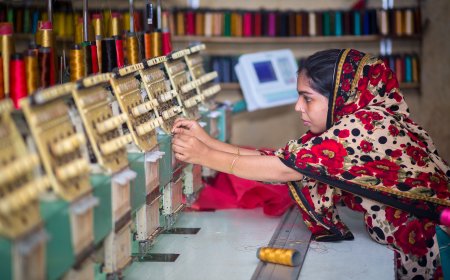
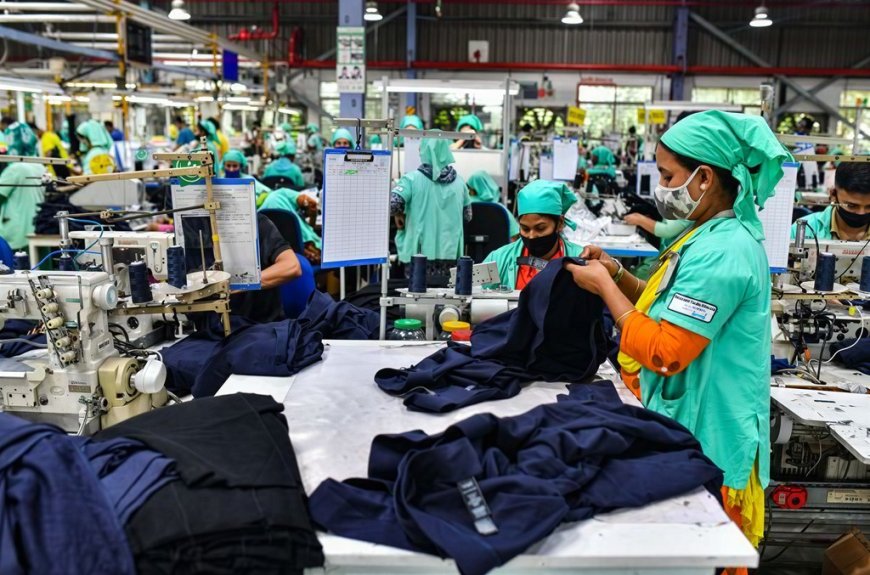
In Bangladesh, the policy makers became delusional about growth fed by cheap labour and kept on selling it. As a result, Bangladesh's export concentration is four times that of the average developing country. Ready-made garments earned US$38.7 billion in FY26, more than 80% of the country's merchandise exports of US$48 billion.
Garments already made up about 84% of exports in FY19. On the same Harvard Growth Lab ranking, Bangladesh stood 87th in 1995, above Vietnam at 107th. By 2018, Vietnam had risen to 52nd and Bangladesh had fallen to 108th.
When an economy grows, it creates expectations about living conditions and lifestyle. That expectation drives the value of time. Any worker, white collar or blue collar, readjusts the value of his or her time as the economy grows.
This expectation drives further economic growth. A product that was once purchased for TK 100 becomes a product valued at TK 150. This is not a bad thing, as it does not happen within 12 months. It happens over the years as the economy adjusts to the growth and to the expectations arising from it.
As such, cheap labour does not remain cheap in an economy that pays the true wage, a wage that tracks the cost of living and the value workers place on their time.
Bangladesh has not paid the true wage. The minimum wage for garment workers rose from TK 930 in 1994 to TK 12,500 in 2023 in nominal terms.
In real terms, the ILO's Global Wage Report 2020-21 found that Bangladesh's minimum wage suffered the steepest decline in Asia and the Pacific between 2010 and 2019. In 2023, the unions demanded TK 23,000 and the wage board set TK 12,500. This is a systemic failure, and it is the clearest evidence of a policy that kept on selling cheap labour. Suppressing the wage defers the true wage but does not remove it.
Unlike technology, which becomes cheaper with economies of scale, cheap labour becomes dearer with the scale of production, as technology drives away workers and we expect the same worker to deliver more.
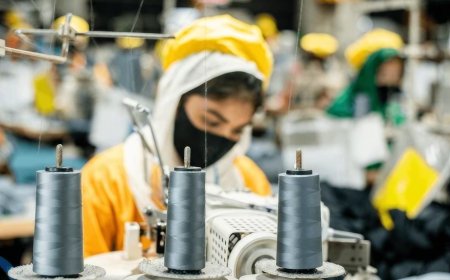
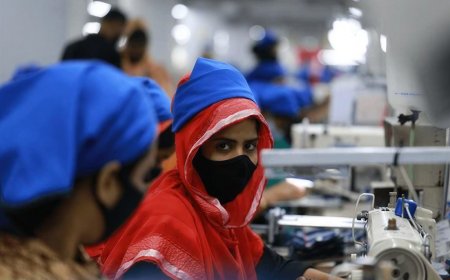
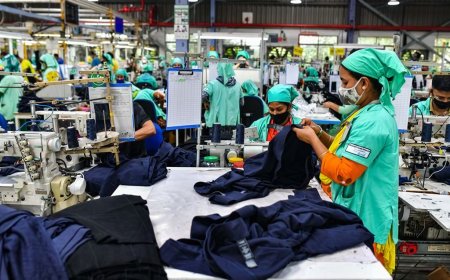
A study commissioned by the Bangladesh Labour Foundation, conducted by BRAC University scholars with support from Solidaridad and presented in December 2024, found that technological upgrading had cut the workforce by 30.58% across production processes in the garment factories it assessed. The cutting section lost 48.34% of its workers, and helpers were the most affected. The share of women in the garment workforce fell from 64% in 2015 to about 53% in 2023.
The remaining workers operate machines and are expected to produce more pieces a day. In an economy that pays the true wage, those workers are paid for the extra output, and the labour that was cheap becomes dear.
The objection I expect is that cheap labour built the garment industry and gave millions of women their first formal job. That is true of the last forty years. However, part of that competitiveness rested on a wage held below its true level.
The Finance Minister has told Parliament that the government aims to make Bangladesh a trillion dollar economy by 2034. That target requires the economy to double from around US$501 billion in FY26 in about eight years.
Labour productivity in Bangladesh stood at US$8.7 an hour in 2025, against US$10.7 in India, US$12.4 in Vietnam and US$19.8 in China, according to the General Economics Division of the Planning Commission. Once the true wage is paid, Bangladesh can compete only on productivity, and on these numbers it is not yet ready to.
The window we have for correction has now become narrow. The UN General Assembly has deferred Bangladesh's graduation from the least developed country category to 24 November 2029, which gives the country three more years of the benefits tied to that status.
The demographic dividend, the period in which working-age adults outnumber dependants, peaked around 2020 by current projections and will close between 2035 and 2040. The suppressed wage will also catch up, and when it does, the cheap-labour advantage will go faster than these dates suggest. China took 25 years to go from two million vehicles to more than a third of the world's output. Bangladesh has less than fifteen years before its dividend closes.
Bangladesh must now plan to make the transition from cheap labour as a factor endowment. The plan should begin with productivity rather than with the wage. The government should link export incentives to value added and output per worker, instead of export volume.
It should use foreign investment to build domestic suppliers and domestic firms, so that Bangladeshi companies produce a growing share of exports, as Chinese firms now do. The business associations should make training for the workers displaced by automation, most of them women, part of the next round of upgrading.
Cheap labour helped Bangladesh cross half a trillion dollars in FY26. The next half trillion will have to come from better-paid, more productive workers and from firms able to pay them. That transition has to begin while the window is still open.
Md. Rubaiyath Sarwar is the Managing Director of Innovision Consulting and a Trustee of Panam Institute.