






































































Beyond the Islamic NATO Hype
So the question becomes: If Bangladesh joins the Mecca Pact, which of its immediate security problems will be solved? My answer: Not very many.

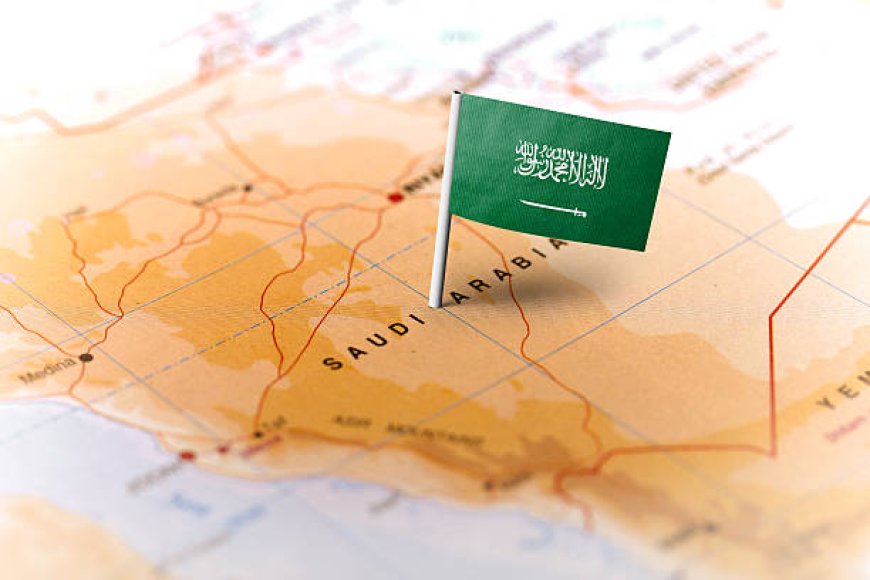
The Mecca Pact between Saudi Arabia, Turkey, and Pakistan has raised a question across the Muslim world: Has an Islamic NATO finally been created? Excitement on Facebook and Twitter is not small.
Some say this is a historic moment for Muslim security. Others say Saudi Arabia has at last found a strong military umbrella against Iran. In Bangladesh too, a similar hope has stirred: If such a large security architecture is being built, why should we stay outside?
The questions are not baseless. But when a state decides on security, something matters more than emotion: Finding the question inside the question.
What is the Mecca Pact actually? Why was it made? How strong are its military obligations? Will other Muslim countries join? And most urgent of all: If Bangladesh joins now, what does it gain, and what risks does it take?
My answer is straightforward. No, an Islamic NATO has not been created yet. But the foundation of a security architecture has been laid that could, in future, grow into something much larger.
This is the first distinction to grasp. What the alliance is named matters. What matters far more is what that alliance can actually do.
The Mecca Pact says that an armed attack on any one of the three countries will be treated as an attack on all three. They will increase joint deterrence and defence cooperation. The joint statement of August 7 made this clear. It sounds like NATO. But does writing “an attack on one is an attack on all” into a treaty make it NATO?
No.
NATO was built over more than seven decades. It has an integrated military command, common planning, long-standing joint exercises, military interoperability, institutional structure and deep defence coordination among members. Most of this does not yet exist for the Mecca Pact.
Even the detailed structure of what kind of military help each country would give in which situation is still unclear.So “Muslim NATO” may work as a headline. In military reality, it cannot yet be called NATO. It is better described as the beginning of a possible collective security framework.
Why did this beginning happen?
Here it is easy to fall into another simplification. Many say the pact is only to contain Iran. Iran is certainly a large part of the calculation. But Iran alone does not tell the whole story.Turkey’s foreign minister Hakan Fidan himself has said talks on this pact began before the recent Iran-United States-Israel war.
The war may have accelerated the pact or raised its importance, but it was not the only cause. Fidan has also said the pact is not directed against any particular country.
So what is the real reason?
I think it is security diversification.
Saudi Arabia has learned a hard lesson in recent years. Buying the world’s most expensive warplanes, missile-defence systems, and advanced weapons does not by itself make a country fully safe.
Remember the 2019 attacks on Abqaiq and Khurais? One of the world’s most important oil infrastructures was hit by drones and missiles. That episode put not only Saudi Arabia but the whole Gulf security system before an uncomfortable question: We have the weapons, but can those weapons deter an adversary from attacking?
That is the real question of deterrence.
Then came Houthi attacks, the spread of Iran’s missile and drone capability, unrest in the Red Sea, the Strait of Hormuz crisis and the widening of war in the Middle East. These taught Riyadh another lesson: depending on a single security guardian may be risky in future.
So Riyadh’s strategy now looks something like this: America will remain, China will remain, Europe will remain. But why should there not also be multiple partners in security?
This is not only a calculation to stop Iran. It is a calculation to increase strategic autonomy.
Turkey’s calculation is no less important. Over the past decade Ankara has established itself not only as a NATO member but as a regional power and a rapidly growing defence-industry country. Progress in drones, electronic warfare, missiles and naval technology has made Turkey important not only as a buyer but as an exporter.
Saudi Arabia’s vast defence market is therefore, for Turkey, not only business but also a chance to expand geopolitical influence.And Pakistan? Pakistan brings to this triangle military manpower, long experience, decades of security ties with Saudi Arabia, and the extra weight of a nuclear-armed state.
In other words, an unusual but attractive mix has formed among the three: Saudi money and geography, Turkish technology, Pakistani military capability.
On paper this is a strong equation. However, a battlefield is not paper.
The real test of any military alliance is a very simple question: if Riyadh is attacked tomorrow, what exactly will Ankara and Islamabad do? Send troops? Send air-defence systems? Share intelligence? Supply weapons? Or only offer diplomatic support?
The answer to that question will determine the future of the Mecca Pact.One point should be made clear. Our idea of NATO’s Article 5 is not entirely accurate either. It is not so simple that if one member is attacked the others immediately declare war. Help is given, but the form of that help is decided according to the situation.
For the Mecca Pact too, the question is not only: Will there be automatic war? The larger question is: Is an institution being built that can turn political promise into real military capability? That answer is still not fully known.
This is the pact’s first big test.
The second test is expansion.
Will all 57 Muslim countries now join? I do not think so. Being a member of the OIC and being a member of the Mecca defence pact are not the same thing. This is not an automatic OIC military treaty.
Turkey’s foreign minister has said the three founding countries will set the core principles and criteria. Other countries may join later with their consent. He has also spoken of Egypt’s possible accession.
But the Muslim world, though united in many religious and historical ways, is not uniform in security.
Iran is extremely important in Saudi Arabia’s security equation. For Pakistan, India and the western border are large realities. Turkey’s calculations revolve around Syria, Iraq, Russia, Europe and the eastern Mediterranean. Egypt has its own priorities.
So what about Bangladesh?
Open our security map. The distance from Mecca to Dhaka is not only geographic; it is strategic.
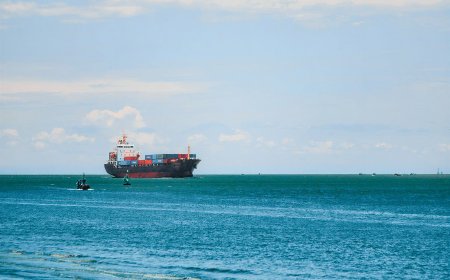
The centre of gravity of the Mecca Pact is the Middle East and the Arabian Sea. Ours is the Bay of Bengal. Our ports, seaborne trade, energy supply, marine resources and regional connectivity revolve around this sea. Our immediate neighbours are India and Myanmar.
Our security environment is also directly linked to Northeast India, the Indian Ocean, and Southeast Asia.
So the question becomes: If Bangladesh joins the Mecca Pact, which of its immediate security problems will be solved?
My answer: Not very many.
Political prestige may rise. New doors of security cooperation with Saudi Arabia, Turkey, and Pakistan may open. Opportunities for military training, defence technology, and intelligence cooperation may increase.
But will Bay of Bengal security improve overnight? Will border management with India become easier? Will problems with Myanmar be resolved? Will the Rohingya crisis be solved? Will energy security be assured?
If the answer is no, then a hard question must be asked: In trying to solve which problem are we importing which new problem?
The greatest advantage of an alliance is collective security. The greatest risk is also there: Someone else’s security crisis can become yours.
Suppose Saudi Arabia and Iran again enter a direct conflict. Is that Bangladesh’s war? No. Suppose a major military crisis erupts between Pakistan and India. Is that Bangladesh’s war? No.
But if Bangladesh is part of a structure in which members’ security is institutionally linked, it will be hard to stay completely outside the political and strategic fallout of such conflicts.
In this place, not joining now is not a decision of weakness. It can be a decision of strategic patience.
Ukraine is often cited. Many say Russia attacked because Ukraine wanted to join NATO. But if history is simplified that far, the wrong lesson is learned.
Russia seized Crimea in 2014 and started the conflict in Donbas when Ukraine was not a NATO member. It still was not a member at the time of the full-scale invasion in 2022. NATO itself says that although Ukraine received a political promise of future membership in 2008, it did not become a member.
After 2014 its NATO-oriented policy actually grew stronger.
So “wanting to join NATO caused the war” is not a full historical explanation. Ukraine does, however, teach an important lesson. An alliance’s promise is not a substitute for one’s own military capability.
After 2014 NATO trained Ukraine, helped with reforms, supplied equipment, and increased cyber defence and logistics capacity. Even then the 2022 attack could not be prevented. Not being a NATO member, Ukraine also did not receive the Article 5 security guarantee.
The lesson for Bangladesh is clear: Capability must be built before entering an alliance.
What is the realistic option before Bangladesh now?
In my view, the most intelligent policy for Dhaka is this: Do not become a member now, but stay deeply engaged.
Relations with Saudi Arabia, Turkey, and Pakistan should be deepened. But defence cooperation and a defence alliance must not be treated as the same thing.
Buying drones from Turkey is good. Better still is learning the technology, producing locally and doing research. Seeking investment from Saudi Arabia is certainly necessary. But beyond the old relationship of sending workers and receiving remittances, an effort must be made to bring Saudi capital into industry, energy, infrastructure and defence production.
With Pakistan, military education, staff training, peacekeeping, disaster management, and selected defence cooperation can be increased. But that must not be turned into an anti-India military equation. India is our neighbour. Making it the manager of our security is a mistake; imagining that we can isolate it is also unrealistic.
Bangladesh needs balance. Not the creation of enemies.
And here, I think, our greatest strategic asset has still not been fully used: the Bay of Bengal.
The more important trade and maritime links become between the Middle East, South Asia and Southeast Asia, the more valuable Bangladesh’s geography will become. If we can increase capability in maritime surveillance, search and rescue, anti-piracy, disaster management, naval training and maritime domain awareness in the Bay of Bengal, the need to stand under someone else’s security umbrella will decline.
Others will instead become eager to cooperate with us.
That is a country’s real strategic independence.The Mecca Pact is also a new opportunity for Bangladesh. But that opportunity does not mean we must run and become a member. Some time should be taken.
It is necessary to see how the alliance’s institutional structure takes shape, how effective joint defence becomes, how other countries attach themselves, what kinds of obligations actually fall on members, and most important of all how the three founding states respond in the first test of crisis.
The real strength of an alliance is not seen at its inauguration. It is seen in its first crisis.
The Foreign Ministry has said that if a formal proposal on the Mecca Pact comes, the matter will be considered positively. Officials have said Dhaka has interest and that the leadership has also been invited. Reuters has also reported that Bangladesh may consider the matter.
This position seems right to me. The door is not closed. But standing at the door is not the same as walking inside.Bangladesh will now observe, discuss, increase its own capability, understand the terms, and then decide. This is not the policy of a fearful state. It is the policy of a self-confident state.
A state that does not know what it wants looks for a place in someone else’s alliance. A state that knows where its interests lie builds relations with multiple powers and creates space for itself.
The Mecca Pact may, over the next ten years, become a large Muslim security architecture. Its scope may widen, countries like Egypt may join, many more states may come. It is also possible that, because of the different national interests of the three founders, its military integration will remain limited. No one can say for certain today which it will be.
That is why the biggest question after the Mecca Pact is this: Will it remain only a structure of political promises, or will it turn into real military power?
Bangladesh’s decision should depend a good deal on that answer.
To me today’s decision is clear: Bangladesh should not join the Mecca Pact now. But it should not ignore it either.
Stay deeply connected with it, increase economic and security relations with Saudi Arabia, advance in defence technology with Turkey, increase selected military cooperation with Pakistan -- and at the same time strengthen our strategic options with India, China, the United States, Japan and Europe.
Diversity in relationships, self-reliance in capability, independence in decision.
In the end, a state’s greatest strength is not the number of its allies. Its greatest strength is how many alternatives it can choose from when it needs to.
Bangladesh’s goal should not be to become the junior partner of some new “Islamic NATO.”
The goal should be to build a Bangladesh that can work with Saudi Arabia, take technology from Turkey, share military education with Pakistan, trade with China, build infrastructure with Japan, cooperate on maritime security with the United States and Europe, and maintain a neighbourly but interest-based relationship with India.
One can work with everyone. One can also work without becoming dependent on anyone.The Mecca Pact is not only news of a new military treaty for us. It has thrown a large question before Bangladesh: do we want to stand under one power’s security umbrella, or do we want to build the kind of capability that keeps several umbrellas open for us when needed?
My answer is the second.
Bangladesh’s future is not in the hands of any one alliance. The future will depend on how far we can turn our geography into a strategic asset, how far we can modernize defence capability, and how far we can retain the freedom to decide amid competition among world powers.
The greatest lesson from Mecca for Dhaka is not to join an alliance. It is to prepare ourselves so that joining or not joining remains Bangladesh’s own decision.
That is true strategic autonomy.
Del H. Khan (Major Md. Delowar Hossain) is a retired Bangladeshi army officer, strategic analyst, author, and public commentator.