

























































Digital Parliament: Guarding the Guard
Democracies have one great corrective: The election, the moment citizens who handed over power can take it back.

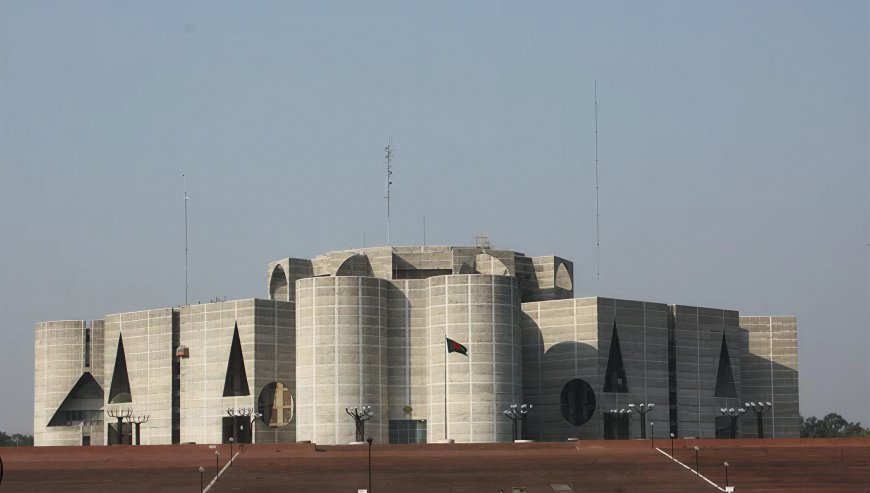
An MP's job is to hold the government accountable. But who holds the MP accountable and with what information?
Ask voters in Rangpur a simple question: what has their MP done in Parliament this year? How many days did the MP attend?
What did the MP ask ministers about? Did the MP raise the hospital that still has no working ambulance, or the river erosion that took a neighbor’s land? How did the MP vote on the bills that passed?
Almost no one can answer. Not because voters are uninformed, but because the information exists, is recorded, is paid for with public money, and was never built to be found.
In the parliament that opened in March, the first elected since the 2024 uprising, that gap is no longer a technical footnote. It is the difference between reform on paper and reform a citizen can check.
Every democracy runs on a chain of handovers: Citizen to MP, Parliament to ministers, ministers to bureaucrats, bureaucrats to the officer behind a desk in an upazila office. At every link, someone acts on behalf of someone else, and the person now holding the power has interests of their own.
Nobody has to be corrupt for this to go wrong. If you cannot observe your agent, you cannot correct your agent. Democracies have one great corrective: The election, the moment citizens who handed over power can take it back.
But an election is only as good as what the voter knows when they walk into the booth, and a verdict delivered without evidence is not judgment; it is a guess.
For most of the past two decades, Bangladesh did not even get to guess. On 12 February, nearly 60% of voters turned out, many casting a meaningful ballot for the first time in their adult lives. They chose among parties and promises, because that was all there was to choose from.
The next election, in 2031, will be the first in a generation in which an MP’s five years in the chamber can actually be weighed. Whether it can be will be decided now, by whether that record is built in a form a citizen can read.
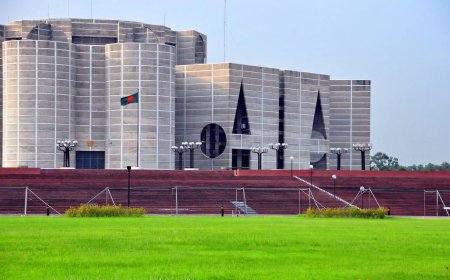
Here the problem doubles back on itself. An MP's central function is oversight: Watching the executive, questioning ministers, and scrutinizing budgets. Parliament is the guard posted over the government. But a guard nobody is watching is not much of a guard.
Parliament therefore carries two obligations: one upward, to hold the government to account, and one downward, to answer to the people who elected it. The first has rules, committees, and question hours. The second has never had any machinery at all, and it matters more in this parliament than in any before it.
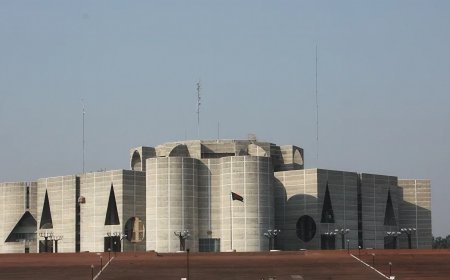
The ruling party holds 209 of 300 elected seats. When the opposition benches are that thin, the one check on the majority still at full strength is the public's ability to see what the majority is doing. In a chamber this lopsided, the record is the opposition.
This is not a data collection problem. It is a data access problem. Attendance is already recorded meticulously; it has to be, because the law that pays MPs a daily allowance of Tk 800 for each sitting says the money is admissible only where the member’s presence is supported by record.
Questions are numbered, ministries assigned, answers logged. Committee meetings produce minutes. Parliament’s own website has published a members’ attendance section.
When researchers dig into that record, what surfaces is exactly what citizens deserve to see unaided. The last parliament to sit a full term, the 11th, had a token opposition, and nobody watched.
Transparency International Bangladesh’s Parliament Watch examined its first 22 sessions and found that it spent just 16.7% of its working hours on making laws, that average attendance was 55%, and that not one of the 50 standing committees met monthly as the rules require.
14 minutes of every working day were lost waiting for a quorum. That is what a legislature does when it knows it will not be judged. But it took a funded research program to surface information the state already held, and even then, the result is a snapshot of the institution, not an answer about the Rangpur voter’s own MP this year.
A record buried in three hundred pages of PDFs is technically public and practically secret. So here is the proposal. Parliament should publish every MP’s record in a form a citizen can search, filter, and verify, and it should publish the evidence, not a verdict.
Picture a citizen opening an MP’s page: Attendance against sitting days, questions sorted by ministry, debates joined, committee meetings actually attended, recorded votes, local issues raised on the floor. Every number clickable, opening the original record behind it: Not someone’s summary of the MP but the MP’s own words and votes, as Parliament recorded.
The power is not that it shows everything at once but that different people can ask it different questions. A citizen filters by subject and sees only what that MP has said about fertilizer prices.
A journalist covering floods pulls every question from every MP in every flood-affected district. A website shows you what it decided to show you. A system lets you ask. That is why Parliament should release the underlying data itself, machine-readable and downloadable.
The state’s job is not to imagine every use of its records, only to release them reliably. None of this is untested. In India, the non-profit PRS Legislative Research runs MP Track, where any citizen can look up any member’s attendance, questions, debates, and private members’ bills against national averages, built entirely on records Parliament already published.
The United Kingdom built it inside Parliament: The House of Commons Library’s dashboard covers divisions, debate subjects, questions to government, and constituency petitions, and it warns users that an MP’s role shapes the numbers, since ministers do not ask questions and whips speak less.
Brazil’s Chamber of Deputies goes furthest, releasing votes, bills, and committee data through a public open-data interface. None of this required new technology, only a decision that a representative’s public work should be public in practice, not merely in principle.
Transparency does not fix governance. It repairs one broken link: Citizens’ ability to observe what they delegated someone to do. Elections then carry information rather than impressions. Journalism sharpens: Instead of calling an MP “largely inactive,” a reporter writes that the member attended 19 of 34 sittings and asked two questions, with a link behind each figure.
And MPs may respond to visibility alone: It is one thing to be absent when nobody is counting, another when the count is public and the neighboring constituency can see it.
One obvious way to get this wrong is to turn the data into a scoreboard. An MP who asks a hundred questions is not automatically better than one who asks 20. A minister’s role looks nothing like a backbencher’s, so ranking them together produces nonsense.
A quiet member who spent six months on committee on one badly drafted bill may have served the public more than a loud one who filed 40 scattered questions. Numbers describe activity. They do not measure judgment, courage, or the weight of a single well-placed question.
So the system must resist its own most tempting shortcut: No composite score, no algorithmic best or worst MP. The moment a dashboard issues verdicts instead of evidence, it becomes a new information asymmetry wearing the costume of objectivity. Show what happened. Link to where it happened. Let the citizen draw the conclusion.
Other risks deserve the same honesty. A system maintained by the government of the day can be starved or shaped to flatter incumbents; it needs a home insulated from changes in power, and the natural one is the Parliament Secretariat under the Speaker, with a published methodology and a correction mechanism.
A logging delay can make an MP look inactive on an issue raised weeks earlier. An interface built for researchers will be used only by researchers. None of this argues against building it, only for building it carefully.
A digital parliament is not a technology project. Sessions on television and documents on a website are not it. It is a decision about what a representative owes the people who sent them: Not only decisions taken on their behalf, but a visible, searchable, verifiable account of how they were taken.
Parliament already keeps that account: every question, every vote, every attendance mark. What is missing is the will to hand it back. Bangladesh has spent decades asking how to make Parliament a stronger guard over the government.
This year, for the first time in a generation, it elected one that can be held to account. Whether it will be depends on what its members leave behind for voters to read in 2031. The harder question is who guards the guard.
In a democracy, the answer can only be the people, and they cannot guard what they cannot see.
Dr. Mohammad Mohsin is a Tenure-Track Assistant Professor of Information Systems in the College of Business and Economics at the University of Wisconsin-Whitewater. He can be reached at [email protected] and Ariful Islam Abir is a final-year undergraduate student in the Department of Political Science at the University of Dhaka. He can be reached at [email protected].