



























































How Salinity is Threatening Coastal Public Health
The historical responsibility for climate change belongs to the developed world, yet the extreme price is still being paid by our marginalized coastal people.

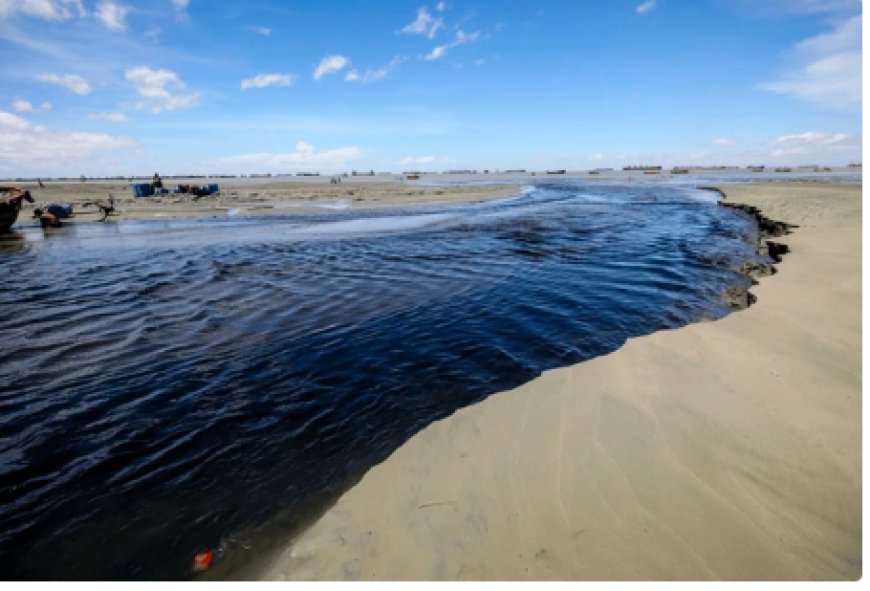
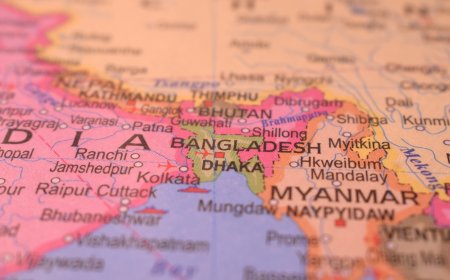
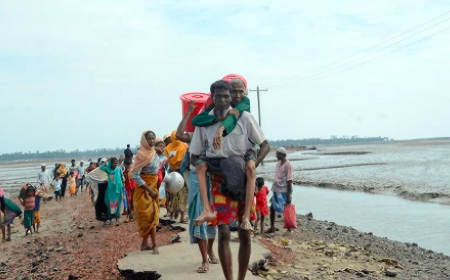
Imagine a village in Dakop or Satkhira's Shyamnagar. Under the scorching sun, women walk for miles with pitchers on their waists, seeking a distant pond or filter for a little sweet water.
Once, this locality had no such scarcity. Safe drinking water was easily available in nearby ponds or tube wells.
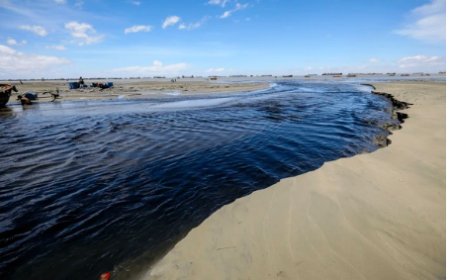
Now, the surrounding Shibsa, Pashur, and Kopotakkho rivers are teeming with salt. This aggressive salinity invasion not only intensifies thirst but gradually destroys coastal public health.
Rising sea levels and recurrent climate change-driven cyclones have poisoned freshwater reservoirs. Storms like Aila,
Amphan and Remal leave permanent salt scars on the land. Salinity has become a deep structural health crisis and a source of inequality.
Coastal people naturally survive by fighting storms and tidal surges.
However, as saltwater floods agricultural lands, farming has become almost impossible. Forced by circumstance, men migrate to urban brick kilns or venture into the deep sea, risking their lives.
Women left at home spend their days in extreme anxiety. Added to this is the chronic stress of fearing lost livelihoods, livestock deaths during disasters, and dwindling income.
A recent study by icddr,b and NIPORT, published in a Springer Nature journal, reveals a terrifying picture of coastal women's health.
Scientists show that these health risks extend beyond consuming saline water; they are intricately linked to chronic mental stress. Nearly 75% of the over four thousand surveyed women experience moderate to severe mental stress.
Environmental uncertainty is not a one-time disaster. It repeatedly returns, creating long-term anxiety and depression that disrupt the nervous system.
This immense stress, combined with involuntary sodium intake, silently breeds deadly diseases like hypertension within these women's bodies.
The long-term consequences of drinking highly saline water are dire. Medical science indicates that while saline water may not directly cause a specific disease, it is linked to fatal health risks.
The icddr,b study states that approximately 25% of coastal women suffer from high blood pressure. If sodium levels increase by 100 milligrams per liter in drinking water, hypertension risk rises by at least 10%.
Furthermore, women drinking highly saline water while suffering severe mental stress face a blood pressure risk nearly two and a half times higher than normal.
Ordinary villagers cannot comprehend their sudden blood pressure spikes. They ignore symptoms like neck pain or dizziness, dismissing them as general weakness.
This silent killer takes root due to the lack of safe water. Yet, these marginalized communities have no opportunity for awareness or regular health checkups.
Coastal women remain the biggest victims. Researchers warn that drinking high-salinity water during pregnancy severely increases the risk of pre-eclampsia and gestational hypertension.
In many cases, it links directly to tragic events like maternal mortality and premature miscarriages. Daily reproductive health and menstrual hygiene are also under extreme threat.
Lacking safe water, women must wash sanitary cloths in saline, polluted water. Consequently, thousands suffer complex gynecological diseases, including uterine infections.
Without proper medical treatment, many are tragically forced to surgically remove their uterus at a young age, marking an extreme tragedy for the community.
Children are not exempt from this saltwater invasion.
Their immune systems are significantly weaker than adults'. Daily excess salt in bathing and drinking water causes severe skin diseases in youths. Outbreaks of diarrhea, dysentery, and other waterborne illnesses are constant coastal realities.
Repeatedly falling ill, children suffer severe long-term malnutrition, drastically hindering their physical and mental development.
Furthermore, encroaching saline water has drastically reduced local vegetable and fruit production. Traditional yard trellises stand empty, and fruit trees are dying rapidly. Consequently, children's natural nutritional sources are shutting down one by one.
This salinity crisis is not an equal burden. It is a structural inequality unjustly imposed on the marginalized. People can somewhat control dietary salt, but the massive sodium intake through water is entirely environmental.
Those with financial means buy bottled water or install modern deep tube wells and rainwater harvesting systems.
Poor families lack that option. The exhausting walk to fetch safe water robs women of working hours and destroys their physical health.
Severe health risks and economic distress place a disproportionate burden on impoverished families. The benefits of climate adaptation projects often fail to reach these ultra-poor people.
Public health experts state conventional high blood pressure treatment is insufficient to tackle coastal health risks. Integrating mental health checkups and psychological support into primary healthcare is an urgent demand.
Alongside this, preserving rainwater, artificially recharging groundwater, and building community-based water treatment plants are absolute priorities. Appointing dedicated mental health counselors in coastal centers must be considered seriously.
As global sea levels rise due to climate change, salinity will penetrate deeper inland. If the fundamental right to safe drinking water cannot be ensured and coastal health infrastructure strengthened, climate justice talks will remain empty rhetoric.
The historical responsibility for climate change belongs to the developed world, yet the extreme price is still being paid by our marginalized coastal people.
AL Sharia is a student in the Department of Disaster Science and Management, Begum Rokeya University, Rangpur, and an environmental writer, organizer, and columnist.