






























































China’s Quiet War for Influence in Iran and the Middle East
China can simply keep enough doors open for Iran to survive and enough alternatives available for other Middle Eastern states to avoid choosing the US alone.

China is a significant actor in the Middle East by virtue of being the second largest global economy with extensive involvements through BRI, high dependence on regional oil and gas, and competition against the US for regional influence.
The US-Israel war on Iran presented China with new interest calculus, most notably energy supply security. Yet the most revealing question about China's role in the US-Iran war is not whether it will enter the battlefield; it is whether China can change the outcome without entering it.
China has condemned the use of force, opposed Washington's unilateral sanctions, maintained its economic relationship with Tehran and defended what it calls its legitimate interests.
Yet it has stopped well short of becoming Iran's military ally. That is not neutrality, however. It is something potentially more powerful, more consequential.
China Is Hedging
Policymakers in Beijing have tried to find a space between alliance and neutrality. The old vocabulary of international politics struggles with China's position: An ally fights alongside you, a neutral state tries to stay out. China is doing neither.
China has repeatedly called for an end to hostilities and opposed the use of force and unilateral sanctions. But it has simultaneously maintained important economic links with Iran.
That relationship matters enormously because Iran's economic survival has increasingly depended on its ability to keep exporting oil despite American sanctions. China has been the destination for more than 80% of Iran's shipped oil, making Chinese buyers the most important remaining outlet for Tehran's petroleum exports.
Chinese independent refiners continue to purchase Iranian crude, with some transactions structured through alternative shipping arrangements and settled in yuan.
This is the first paradox of China's strategy: China does not have to defend Iran militarily if it can help prevent Iran from being economically strangled. And that may be exactly what makes China's role so difficult for Washington to neutralize.
American military power can destroy Iranian infrastructure. Sanctions can restrict access to financial markets. But neither can automatically determine what every other country does. That is where China matters.
The US economic strategy assumes that enough international cooperation can eventually make Iran's economy unsustainable. This is also the goal of the latest round of unprecedented sanctions on Iran aimed at producing an “economic D-Day” for the Iranians.
But China's continued purchases of Iranian oil and non-compliance with American sanctions create an escape valve, though not a perfect one. Iranian oil shipments have fallen dramatically under wartime pressure and sanctions.
But even reduced flows can matter if they provide Tehran with foreign currency and prevent complete economic isolation. Every barrel of Iranian oil that reaches a Chinese refinery represents a small demonstration of the limits of American economic coercion.
Entering the geopolitical landscape
The US has threatened secondary sanctions against countries and companies doing business with Iran. China has responded that it will safeguard its own interests and rejects unilateral sanctions.
The confrontation is therefore no longer simply about Iran. It is about a much bigger question: Who gets to decide the economic rules of the international system?
But there is a danger in interpreting this as evidence of a Chinese-Iranian alliance. In reality, this is not. China has no interest in seeing the Persian Gulf descend into permanent war.
It imports enormous quantities of energy from the Gulf, has deep commercial relations with Saudi Arabia, the UAE and other Gulf states. It wants stable shipping lanes and predictable energy markets.
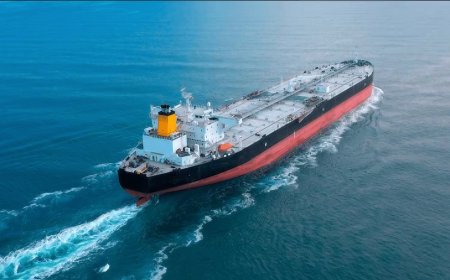
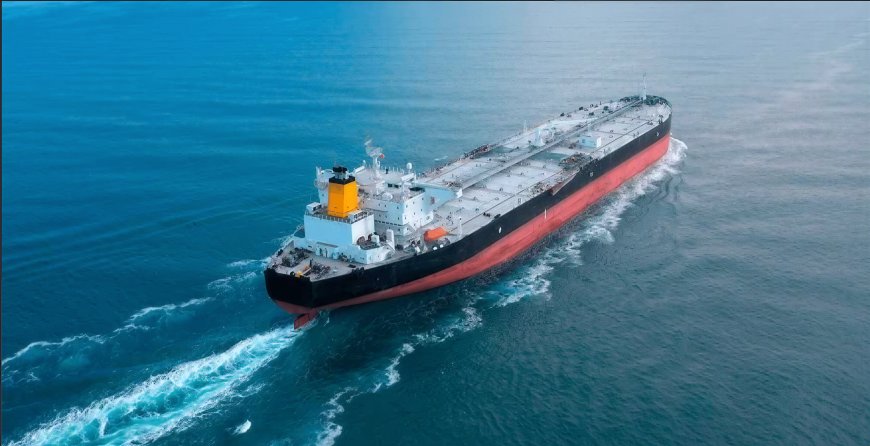
The Strait of Hormuz makes this contradiction painfully clear. For Iran, Hormuz is an instrument of asymmetric power: A narrow waterway through which a huge share of global oil trade passes. For China, it is a vulnerability.
When shipping through Hormuz is disrupted, Chinese energy security suffers alongside everyone else's. The latest escalation demonstrates the problem. After a US strike on Iranian positions near the strait on August 30, oil prices jumped and concerns about shipping disruption intensified.
Reuters reported Brent crude was traded above $90 a barrel as the crisis again threatened the world's energy arteries. The latest oil tanker war has created more vulnerability and risks for global economy, with oil prices surging to $100 per barrel.
China therefore faces a strategic contradiction: The more effectively Iran uses Hormuz to impose costs on the US, the more China itself pays for the resulting instability.
This is why China prefers a winding down of the war. Then, China is practicing what might be called indirect balancing. It does not balance American power by constructing an anti-American military alliance around Iran.
Instead, it limits the effectiveness of American power by maintaining alternative economic and diplomatic channels.
America’s China problem
The Trump administration now faces an awkward dilemma. If the US wants to economically isolate Iran, China is the obvious target. But if the US hits China too hard, the Iran war risks becoming entangled with the already fragile US-China relationship. Recent reporting captures the dilemma.
The US has intensified sanctions pressure on Iran and Chinese entities involved in Iranian oil business, but Mr. Trump has also been cautious about directly targeting China's most important financial institutions.
That hesitation is strategically significant. It suggests that Washington understands the difference between pressuring Iran and confronting China. This is a classic paradox of interdependence: The US may possess enormous coercive power over Iran precisely because the global economy is interconnected but that same interdependence gives China opportunities to dilute American coercion.
The Middle East as a lab for Chinese power
The consequences of war extend beyond Iran. For decades, Middle Eastern states have operated under an American security umbrella.
Even countries that disliked US policies often depended on US military capabilities. But the Iran war is forcing regional governments to reconsider the risks of dependence.
Saudi Arabia, the UAE, Qatar, Oman and others have strong incentives to maintain ties with the US. But they also increasingly have reasons to diversify their diplomatic and economic relationships. China offers something attractive: Partnership without political alignment.
Beijing can trade with Saudi Arabia while maintaining relations with Iran. It can cooperate economically with Israel while opposing Israeli military actions.
It can deepen relations with Gulf monarchies without demanding that they join a Chinese alliance system. This flexibility is one reason China's influence may grow without China ever becoming the Middle East's new policeman. China does not necessarily want to replace the US.
It may prefer something more advantageous: a Middle East in which no state can dominate completely.
The paradox of Chinese power
This is where the US-Iran war may become a turning point in the evolution of international order.
America's traditional advantage has been its ability to combine military power, alliances, financial influence and diplomatic reach.
China is testing a different model. It does not need global military alliances everywhere, but economic relationships, alternative markets, diplomatic access, strategic partnerships, infrastructure, technological connectivity, and enough political influence to prevent rivals from exercising uncontested power.
Iran is an unusually revealing case. China does not have to transform Iran into an ally but seeks to prevent the U.S. from turning Iran into a fully isolated state.
That is a much easier task. And it is precisely why China's role should not be dismissed as “neutrality.”
A new kind of alignment
The most important geopolitical consequence of China's involvement may therefore be conceptual.
The Middle East is increasingly moving beyond the old categories of ally versus adversary. States are hedging, diversifying and maintaining relationships with competing great powers simultaneously. Iran can cooperate with China without becoming a Chinese satellite.
Saudi Arabia can rely on American security while expanding relations with China. China can oppose American sanctions while maintaining commercial relations with US partners. And the US can pressure Iran while simultaneously trying to prevent its Iran strategy from destroying its relationship with China.
It is a multi-polar bargaining system. And the US-Iran war is accelerating it.
The question facing Washington is therefore no longer simply whether Iran can be defeated. It is whether the US can achieve its objectives while China remains outside the war but inside the economic and diplomatic game.
China can simply keep enough doors open for Iran to survive and enough alternatives available for other Middle Eastern states to avoid choosing the US alone.
That is China’s no alliance, no neutrality policy in the Iran war -- a type of quiet exercise of great power influence.
Dr. Mohammed Nuruzzaman is a Professor of Political Science at NSU, specializing in International Relations.