












































![A Ledger of the Soul: Navigating the Allah-Bhagavant Nexus in a 19th-Century Puruṣākāra Jñāna Caupara [Gyan Chauper]](https://counterpointbd.com/uploads/images/202608/image_430x256_6a93baa3b09a7.jpg)





















The Boys We Push Away Just When They Need Us Most
We do not need to treat every adolescent as a potential delinquent, nor romanticize their behaviour; we simply need to stop treating their awkwardness, anger, arrogance, and confusion as reasons to abandon them.

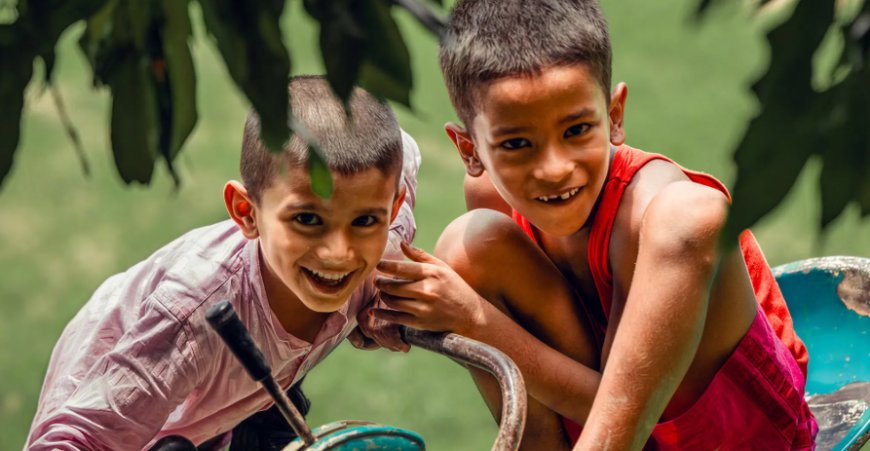
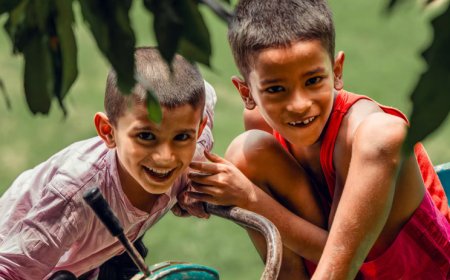
"There is perhaps no greater nuisance in this world than a thirteen- or fourteen-year-old boy." Rabindranath Tagore wrote this in his famous short story Chhuti in 1892, describing with remarkable precision the awkwardness of the adolescent boy: Neither child nor young man, robbed of childhood innocence yet not mature enough to understand what is happening to him.
He is embarrassed by his own existence, feels he does not quite fit anywhere, and hungers intensely for affection. But society is reluctant to offer it, because what might be kindness to the boy is often dismissed as indulgence. And so, Tagore concluded, his face and demeanour began to resemble those of a stray dog without a master.
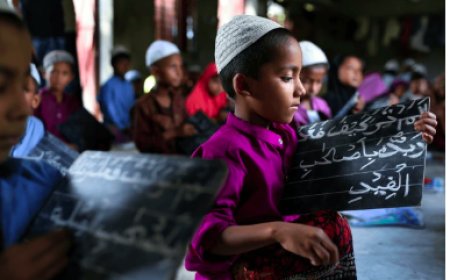
It is remarkable that Tagore understood this more than 130 years ago, and perhaps more remarkable that Chhuti once formed part of our school curriculum, so generations of Bangladeshi children met these observations while passing through adolescence themselves.
Nonetheless, how many of us actually understood what they meant? Look around us today and the answer seems rather obvious.
Adolescence is difficult for girls too, but when a girl enters puberty there is usually someone in the family -- a mother, elder sister, grandmother, or aunt -- who can explain at least some of what is happening, or simply acknowledge that something is.
Boys more often have no such person, and for them adolescence can be particularly isolating.
At 12, 13, or 14, a boy's body and mind can change almost overnight. His voice changes, his body develops, sexual feelings emerge, and he becomes acutely conscious of how other people see him. Still, in many Bangladeshi families, nobody sits down with him and talks about any of this.
Fathers, uncles and older brothers are too occupied with their own lives, assuming boys will figure things out for themselves. So they do -- through friends who know only half the story, through roadside choti books, and increasingly, through pornography online.
The physical changes may eventually become familiar, but the psychological ones remain unexplained: Nobody tells him that confusion, shame, and an overwhelming desire to be accepted are normal parts of growing up.
Worse, the very moment boys enter this unfamiliar territory is often when the adults closest to them start withdrawing. Before puberty, many boys are particularly close to their mothers, sisters, and other women in the family.
Then, almost suddenly, boundaries change: Certain matters are no longer discussed in front of them, and they are asked to leave the room.
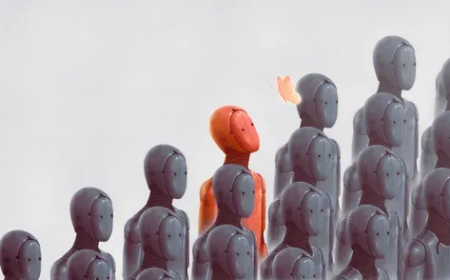
This may be a natural part of growing up, but what is often missing is the other half of the transition: nobody steps forward to bring the boy closer to the world of adulthood. He is left in an emotional no-man's-land, no longer treated like a child, but not yet welcomed among adults either.
This is also the age when belonging becomes extraordinarily important. An adolescent boy wants an identity, a purpose, and validation that he matters, and if he cannot find it at home or school, he will look elsewhere. Sometimes the search takes a positive direction: he discovers a passion, throws himself into books or sport, and builds an interest that becomes the foundation of his career.
But he can just as easily find importance in being the toughest person in the neighbourhood, smoking or taking drugs, dominating a video game, becoming popular on TikTok or Facebook, riding a motorbike recklessly, or joining a gang of trouble-making older boys who make him feel powerful.
These behaviours may look irrational to adults, but they give him something he desperately wants: Recognition. A boy who feels invisible at home or school can become deeply attached to the first person who makes him feel seen.
This is where a vicious cycle begins. The very age at which parental affection, teacher guidance, and the mentorship of older siblings could shape a child's future is often the age at which he becomes most vulnerable to bad company. And once negative behaviour becomes visible, adults frequently withdraw even further.
So, the boy who was neglected and began to lose his way is neglected even more for showing the symptoms of having lost it. He becomes difficult, so people stop trying; aggressive, so they push him away; disrespectful, so nobody wants to listen. Eventually he learns that the only people willing to accept him are those who behave like him.
Of course, not every boy who falls into bad company loses his future; many find their way back. But a child whose potential is repeatedly met with humiliation, exclusion, and failure can become an intensely bitter, aggressive, vindictive, or misogynistic adult, damaging his prospects and making life difficult for everyone around him.
Some never reach a proper adulthood at all: they die in accidents or violence, or fall into serious crime and the criminal justice system. The consequences are never confined to the child; an entire family pays the price.
The state has a role in preventing this. It can regulate minors' access to social media and harmful digital content, prevent underage gambling, enforce the law against minors riding motorbikes, keep drugs away from children, improve safety in schools and neighbourhoods, and ensure crimes against children are prosecuted effectively.
Society has every right to demand them. But no amount of regulation can replace the person who sits beside a 13-year-old boy and asks him what is happening in his life.
That responsibility belongs to us. There are boys in almost every family, apartment building, neighbourhood, and school who are quietly struggling to understand themselves.
We do not need to treat every adolescent as a potential delinquent, nor romanticize their behaviour; we simply need to stop treating their awkwardness, anger, arrogance, and confusion as reasons to abandon them.
We can listen to them, spend time with them, give them responsibilities, introduce them to books, sport or art, and, most importantly, make them feel that they matter before somebody else offers them that feeling for all the wrong reasons.
The state can make laws, schools can make rules, and families can impose discipline.
But whether a boy grows up believing he belongs somewhere may depend on whether, at the age when he feels most like a stray dog without a master, someone chooses to sit beside him and stay.
Jannatul Naym Pieal is a Dhaka-based writer, researcher and journalist. He can be reached at [email protected].