









































































Five New Digital Banks and the Long Road to the Last Mile
A digital bank may have a head office, but no branches, sub-branches, agents or ATMs of its own. For anything involving cash, it has to rely on the networks of existing banks and mobile financial services (MFS) providers.


In December 2023, shortly after the first preliminary licenses were issued, pi STRATEGY wrote that digital banking was unlikely to be the panacea many were hoping for. Nearly three years on, the country finds itself at the starting line once again.
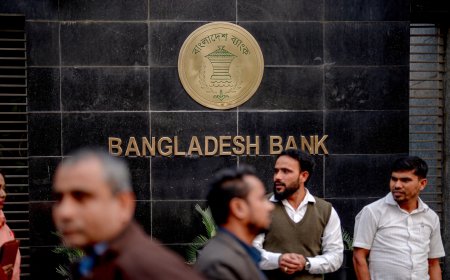
On September 24, Bangladesh Bank issued Letters of Intent (LoIs) to five proposed digital banks. The one full license granted in the first round was suspended shortly after the political changes of August 2024.
A board meeting in February 2026, meant to approve the second round, ended without a decision after objections from within the central bank. The process resumed only after a new government and governor took office. In the meantime, Bangladesh Bank revised its rules.
Version 2 of the Guidelines to Establish Digital Bank, dated August 20, 2025, is what these five entities must now satisfy. Much of the public discussion has centered on one figure: The minimum paid-up capital, which has risen from Tk 125 crore to Tk 300 crore.
Read side by side, the two versions reveal a number of smaller changes that say a good deal about the regulator's thinking.
What has not changed
The foundations remain the same. The policy stance, carried over almost word for word, still describes the purpose of a digital bank as expanding low-cost access to finance for the unserved and underserved. The operating model is also unchanged.
A digital bank may have a head office, but no branches, sub-branches, agents or ATMs of its own. For anything involving cash, it has to rely on the networks of existing banks and mobile financial services (MFS) providers.
It must still list on the stock exchange within five years, and it is held to the same prudential standards as any conventional bank. The purpose and the operating model we highlighted in 2023 are still the backbone. Much of what surrounds them has been rewritten.
What has changed, and what it means
The door is closed to incumbent banks. In 2023, we noted a distinction the guidelines did not spell out. Existing banks could already offer digital services under their current licenses, and the first-round decisions suggested that only entities without a banking license would be considered.
Version 2 now makes this explicit. Clause 6.11 states that no bank or finance company operating in Bangladesh may sponsor a digital bank. This appears to be a deliberate choice to bring in new competition rather than let incumbents open lighter, lower-capital arms of their existing businesses.
One practical consequence is that a new digital bank cannot count on a parent bank's balance sheet, treasury, or cash network. It will have to negotiate access to those services with the very banks it hopes to compete with, which brings back the partnership challenge we described in 2023.
Meanwhile, incumbent banks are free to strengthen their own apps, so competition for smartphone-savvy customers may well intensify. One question the guidelines leave open is whether a bank can still take part through a subsidiary.
The bar for sponsors is higher. Beyond the capital increase, institutional sponsors now need at least three years of ongoing business, supported by audited accounts. Shell companies are explicitly excluded, and sponsors must disclose every citizenship they hold or have renounced.
An LoI now lapses automatically if the applicant does not submit its full license application on time. These changes should mean fewer, better-capitalized and more transparent sponsors, and make it harder to trade an LoI rather than build on it.
They read very much like lessons drawn from the first round, as well as from the difficult predicament the broader financial sector seems to find itself in. The trade-off is that the new bar favors large business groups and established foreign institutions.
Smaller fintech-led consortia, common in other markets, may struggle to qualify.
Every customer starts fresh. Clause 9.8 may prove the most consequential change, yet it has drawn little attention.
It requires a digital bank to complete know-your-customer (KYC) checks afresh for every customer, and it does not allow a relationship to be established using information "collected earlier by any other means."
The intent, most likely, is to protect customer data. In practice, though, it changes the economics considerably. Sponsors that already serve tens of millions of wallet or mobile subscribers will bring brand recognition and app familiarity, but they will not bring verified customer records.
Each customer must be persuaded to onboard again, and some will drop off along the way, particularly in rural areas and among those less comfortable with technology.
Customer acquisition is likely to become the largest early cost for every digital bank, and the path to the millions of active users these banks need will probably be longer than many expect.
The range of business is narrower. Version 1 allowed digital banks to handle inward remittances, outward payments and foreign currency accounts. Version 2 allows only inward remittances. The restriction on lending to medium and large industries now covers all loans rather than only term loans.
Access to Bangladesh Bank's refinance schemes, which offer relatively cheap funds for small business and green lending, has been removed.
As a result, digital banks will earn most of their income from small loans, deposits and payments, which are among the most expensive segments to serve and to underwrite.
Inward remittances will help attract deposits, but a complete relationship with migrant families will be harder to build. Losing refinance access raises the cost of funding for precisely the small-business and climate-related lending these banks could be designed to support.
Exit planning is lighter. In Version 1, the Business Resolution Plan, which sets out how a struggling digital bank would wind down without harming depositors, was a detailed requirement.
Version 2 keeps the trigger points and basic exit options but drops much of the operational detail. For a type of bank that has never been tested in Bangladesh, a fuller plan would give customers and the regulator greater confidence.
Balancing two goals
Taken together, the revised guidelines seem to pursue two goals that sit in some tension. Bangladesh Bank has made entry considerably more rigorous: more capital, better-vetted sponsors, clear deadlines, and no existing local banks.
At the same time, the space these banks can operate in has narrowed, with fewer products, higher funding costs, and no inherited customers. The purpose remains ambitious, and the operating rules may make it somewhat harder to reach.
The tighter entry requirements are a sensible response to the difficulties of the first round, and we are not suggesting they be relaxed. A few targeted adjustments, however, might be worth considering.
Customers could be allowed to consent to reusing their existing verified KYC, checked against the national ID database. Refinance schemes for small enterprises and climate adaptation could be opened to digital banks, since those are the very segments they could serve well. The fuller resolution plan could also be restored.
The 2023 test, revisited In 2023, pi STRATEGY suggested that success would be uncertain unless a digital banking aspirant made a large and sustained investment, acquired the right capabilities quickly, and built on a related business that already operated at scale. The new rules make each of these a little harder.
On investment, Tk 300 cr is roughly US$24 million at today's exchange rate. Our 2023 estimate of US$100-150M over ten years still holds, so the minimum capital covers perhaps a sixth to a quarter of what is likely to be needed.
Hong Kong points to the same long horizon. Its eight digital banks brought their combined losses down to about US$192M in 2025, and the first two to turn a full-year profit did so in their fifth and sixth years.
On capabilities, the picture is mixed. The experience rules have loosened slightly. Five years in fintech or digital payments is now preferred rather than required for sponsors and directors, and a chief executive may now come from a fintech background rather than banking alone.
However, a new clause recognizes technology-banking experience only if it comes from an institution with an operating profit over the previous five years, which may exclude a good share of the region's fintech talent.
On scale, the market has grown. The Bangladesh Bureau of Statistics reports that three in four households now own a smartphone, up from under two-thirds in 2023, although only about half of individuals use the internet.
This cohort also brings more relevant experience than the first, including mobile money operators, telecom operators and a foreign bank. With fresh KYC required, however, none of them can convert an existing customer base overnight.
A note on predictability
One lesson from the past three years lies outside the guidelines themselves. Investors committing capital for a decade or more will look for assurance that a license, once earned, will survive changes in government.
Bangladesh Bank could offer that assurance by publishing the conditions attached to these LoIs, the deadlines for meeting them and the criteria for the final license.
Clear and predictable processes are often the most effective encouragement a regulator can offer.
From the gate to the last mile In 2023, pi STRATEGY cautioned that digital banking would be harder than it looked. Nearly three years on, that view still holds, though for somewhat different reasons.
The second round has put stronger safeguards in place at the point of entry, and that is welcome. What remains is to make sure the operating rules give these banks a fair chance to reach the customers they were created for, so that the last mile becomes a destination rather than a distant aspiration.
Pial Islam is Managing Partner at pi STRATEGY, an advisory firm. His December 2023 article on digital banking is available at https://pistrategy.org/2023/12/25/digital-banking-de/. He can be reached at [email protected].