






























































Nine Reasons Jamaat Missed Its Moment
On the question of 1971 and apology, Jamaat’s tone was arrogant. Had they shown even minimal reconciliation, people might have celebrated August 5’s victory with them on the election day, specially given their alliance with the student movement.

Any serious analysis of electoral outcomes in Bangladesh must begin with an acknowledgment of structural realities. The general stance of the bureaucracy, politicized law enforcement, entrenched business interests and elite networks shape our political field.
Administrative eco-systems and power alignments define the boundaries within which democratic competition takes place. No credible reading of elections in Bangladesh can ignore these constraints.
Yet structural explanations alone are insufficient. Alongside institutions and power networks operates another, often neglected dimension: the moral and cultural psychology of voters at specific historical moments.
What I mean is this: How people interpret language, symbols, behavior, alliances and silences matters. Political outcomes are shaped not only by mechanisms of control, but also by shifting perceptions of a candidate’s ethical solidity.
There is little disagreement that, at the end of the day, structural realities shape political possibilities. But it can also be fairly argued that within those structures, public sentiment still fluctuates.
This essay does not attempt to reduce Jamaat’s defeat to mere moral failure. Rather, it suggests that in this particular context, certain symbolic, ethical and behavioral patterns crossed social thresholds and became politically consequential for them.
When rhetoric, imagery, alliances and omissions generate widespread discomfort among ordinary families, specially women and middle-class voters, they weaken political credibility, regardless of how constrained the system may be.
Issues such as obscenity, gender exclusion, historical denial and ambiguity toward mob behavior are not unprecedented in Bangladesh’s political history. What matters here is their cumulative effect at this moment and how that accumulation altered public judgment about Jamaat.
Ideological compromise (about which I will elaborate later) is universal in politics. No major formation is immune to it. Yet when compromises visibly contradict declared moral claims, voters interpret them as hypocrisy. It is this perception, rather than abstract doctrinal purity, that shaped voter response in this election.
Jamaat’s distinctive cadre-based organizational model and internal discipline remain important features of its political identity. But precisely because it claims ethical superiority, it is judged more strictly when inconsistencies appear. Moral authority, once weakened, is difficult to recover.
The argument advanced here is therefore not 'moral punishment instead of structure,' but moral legitimacy operating within structure. Based on comparative studies of recent elections in several countries, I am convinced that both dimensions operate simultaneously.
Ignoring structural constraints produces lack of wisdom. But ignoring moral psychology produces technocratic domination by self-declared 'experts' (in Jamaat’s case, these were social media elites who dominated online narratives in its favor.)
This essay explores the interaction between these two forces and examines how ethical perception, cultural sensibility and accumulated discomfort intersected with institutional realities to shape the outcome of Bangladesh’s 2026 national election.
Let us now turn to the nine reasons Jamaat missed its moment and failed to convert momentum into victory, despite aligning itself with the students body that toppled the previous regime of Sheikh Hasina.
1. Two Misread Narratives
Jamaat became confident by standing behind two so-called positive narratives.
(a) The 'Last Refuge' Narrative
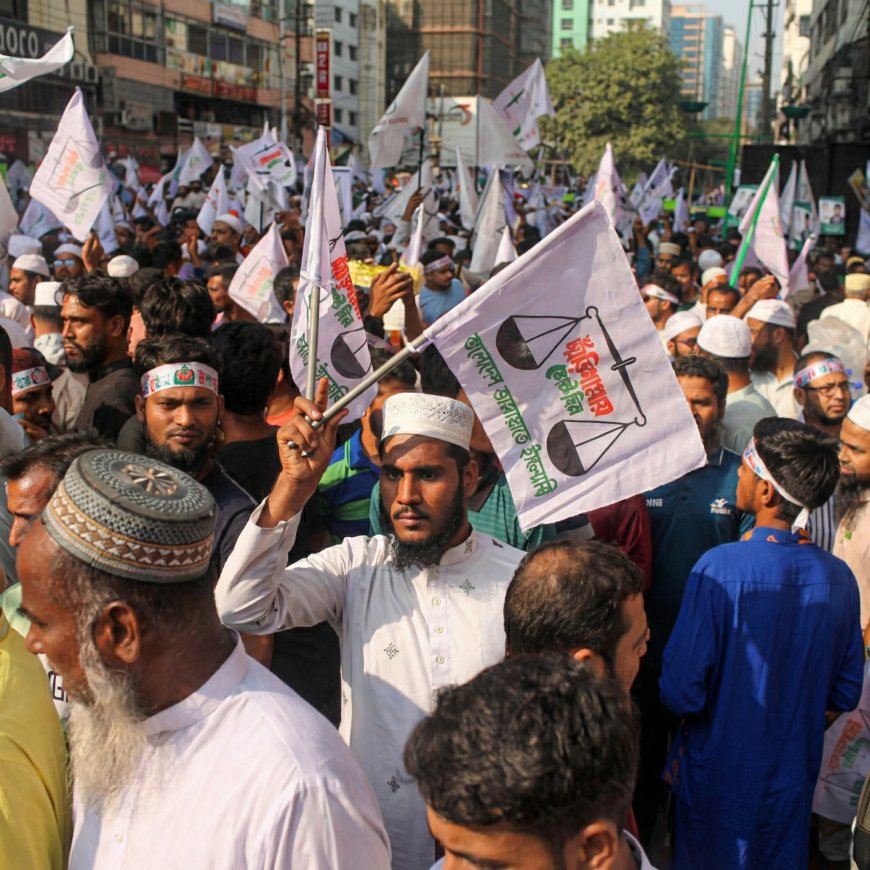
They tried to present themselves as the final refuge against corruption, chaos and misrule by using religious symbols like beard, cap, robe, and by saying, 'Give us one last chance.' The implied message was: We are your final hope. Vote for us and secure heaven.
But Bengalis were uncomfortable with this 'last refuge' narrative. The visual politics of beard-cap-robe did not inspire trust. Instead, it conveyed either moral arrogance or simple boorishness. This 'super-Islam' positioning failed to appeal even to religious voters.
For example, people were disturbed by a Jamaat leader’s speech: 'Those who don’t recognize me are still underground. Allah is with me. The sun will stand still for me. Allah has given me this status.'
Many believers responded: This sounds like shirk.
(b) Distortion of 1971
Nearly 50 million voters did not witness 1971. What they saw after the fall of the previous regime was a distorted version promoted by Inqilab Manch and Jamaat, portraying Bangabandhu in obscene, vulgar, and hateful ways as a cruel, vengeful monster.
When Jamaat crossed the red line by rejecting even the minimum acceptable history of Bangladesh under the banner of anti-India politics, people reacted strongly.
As political language became increasingly obscene and filled with sexual abuse, vulgar gestures, and crude imagery, ordinary families, specially women, felt threatened.
There is a difference between traditional insults and explicit sexual vulgarity involving genitals or flatulence on YouTube. The latter produces shame. No one wants to feel that shame in front of children, spouses, parents or siblings.
And the shame quickly turned into fear: fear of moral collapse and social disintegration. People concluded that Jamaat did not represent civilized, value-based politics.
2. YouTuber Intimidation Culture
People strongly disliked the aggressive, abusive behavior of Jamaat-linked YouTubers. Their tone resembled Hasina-style authoritarian threats. After August 5, citizens wanted peace and stability, not another regime of intimidation.
3. Exclusion of Women
When Jamaat announced that it would not nominate a single woman, many women realized they were being reduced to kitchens and bedrooms. Their ambitions and identities were being dismissed.
In the 21st century, this is unacceptable. Rural women who ride motorcycles and work outside the home are not ready to return to just silent domestic roles. Jamaat failed to understand this reality and mocked progressivism instead of recognizing it as a genuine social transformation.
4. Silence on Mob Violence
Jamaat never took a clear stand against mob violence. They refused to distance themselves from Inqilab Manch, believing social media popularity was everything. But ordinary people fear mobs. They wanted Hasina’s fall, not bloodshed. Many concluded that Jamaat’s rule might increase mob violence.
5. Contradictions on India
One Jamaat leader said in the US: 'If India attacks, five million youths will fight.' Yet their election manifesto promised friendly relations. This duality created confusion and distrust.
6. Non-Muslim Membership
When Jamaat declared that people of other religions could not become party members, many saw it as discriminatory. At the same time, Jamaat benefited from a certain Hindu influencer’s popularity. This selective inclusivity appeared hypocritical and angered voters.
7. Attacks on Media
The burning of The Daily Star and Prothom Alo offices shocked the nation. Jamaat failed to disown Inqilab Manch at that moment. Had they done so, people would have understood that Jamaat opposed mob justice. Their silence proved costly.
8. August 5 Aftermath and 1971
Before voting began on February 12, I wrote in several WhatsApp groups that Jamaat would lose due to their post-August arrogance and chaos.
People rejected: (a) The destruction of Bangabandhu’s House No. 32; (b) Denial of Pakistan’s discriminatory policies; (c) Claims that only 300-3,000 died in 1971.
On these issues, Inqilab and Jamaat became inseparable in public perception. Jamaat also failed to distance itself from Inqilab's attacks on the army and its leadership.
On the question of 1971 and apology, Jamaat’s tone was arrogant. Had they shown even minimal reconciliation, people might have celebrated August 5’s victory with them on the election day, specially given their alliance with the student movement.
9. Alliance with NCP
Bringing NCP into the alliance disappointed ideological supporters. It showed strategy over principle. When a party claims ideological politics, voters expect consistency. This contradiction weakened Jamaat’s moral authority.
Final Observations
(1) Many Bangladeshis may be labeled 'uneducated,' but they are open-minded and anti-elitist. BNP must not become elitist.
(2) NCP has demonstrated relevance and potential. If it leaves the anti-Liberation War camp, its support base will expand significantly.
(3) Facebook is not everything. Winning on Facebook means winning on a faceless platform. It does not guarantee real political support.
Mashrur Arefin is a banker and poet, translator and fiction writer.