






























![A Ledger of the Soul: Navigating the Allah-Bhagavant Nexus in a 19th-Century Puruṣākāra Jñāna Caupara [Gyan Chauper]](https://counterpointbd.com/uploads/images/202608/image_430x256_6a93baa3b09a7.jpg)



















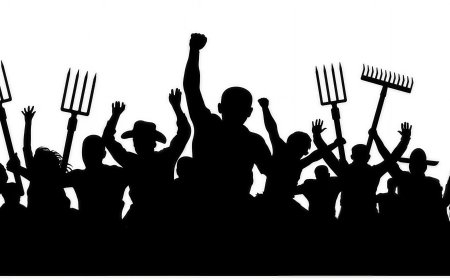
When a Mob Becomes a Political Attack
Democratic pressure seeks to influence a decision through persuasion. A mob seeks compliance through intimidation. That distinction matters because political purpose does not neutralize coercive method.

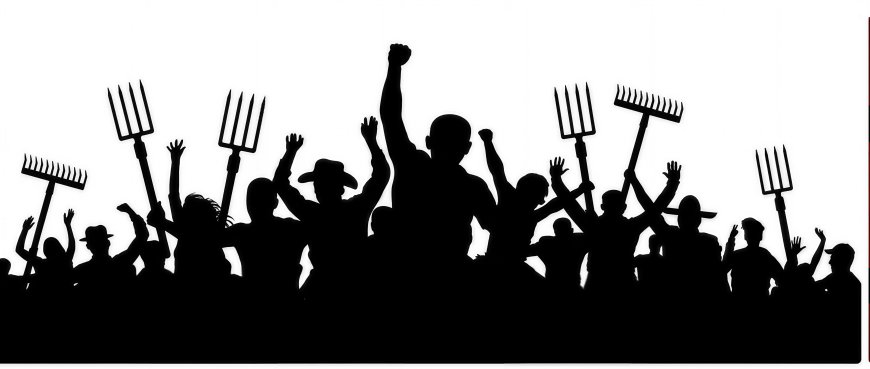
The attack on Azmeri Haque Badhon in Venice has no justification. If someone disagrees with a political position, the answer is speech, writing, protest or the ballot box, not physical assault.
Yet the intense collective outrage that followed the incident, while reassuring in one sense, also raises an uncomfortable question: Where was this moral clarity over the past two years?
Shafiqul Alam offered the new theory of the “pressure group.” He has argued that when a group arrives with a specific demand and seeks to create pressure, it should not simply be described as a mob. It is, in his formulation, a group attempting to create political pressure.
But there is a basic category error in this reasoning. Whether a group has a political demand and whether that group behaves as a mob are two entirely different questions. Calling something a pressure group tells us what a group wants. Calling it a mob tells us something about how it tries to get what it wants.
A pressure group can petition, rally, lobby, chant slogans, submit a memorandum and organise public campaigns. But if the same group surrounds people, threatens them, physically assaults them, destroys property or attempts to secure compliance through collective intimidation, the existence of a political demand does not exempt it from being a mob. A more precise description would be politically motivated mob violence.
Consider a group of students demanding the resignation of a vice chancellor. Making that demand and organising a protest constitute political pressure. But if the students confine the vice chancellor, intimidate that person and force a resignation through fear, the demand has not changed, but the nature of the action has. Similarly, a religious group has the right to demand the cancellation of an event. If it gathers a crowd and frightens organisers into cancelling it, however, that is coercion.
Democratic pressure seeks to influence a decision through persuasion. A mob seeks compliance through intimidation. That distinction matters because political purpose does not neutralize coercive method.
Alam has also argued that a mob is something without a political character. This is the most serious conceptual problem in his definition. Mobs can be deeply political, and history contains countless examples of politically motivated mobs. Ethnic riots, political lynchings and collective attacks on political opponents have all carried explicit political or ideological purposes. The crowd that entered the United States Capitol on January 6, 2021 had an unmistakable political objective. If the absence of political character were a condition for defining a mob, a vast part of the history of political mob violence would disappear from the category altogether.
Alam gives the example of suddenly enraged people gathering together and lynching someone as the sort of event that should be called a mob. But this reduces the category to spontaneous, politically unaffiliated lynching.
Lynching is one form of mob violence. It is not the complete definition of a mob. Mobs can be spontaneous or organised, political or nonpolitical. Turning one subset into the entire category distorts the concept.
The same problem appears in the question of a “political clash.” If the behaviour has the characteristics of mob action, political motivation does not remove those characteristics. At the same time, not every political clash is a mob attack.
A confrontation between two political processions may be described as political violence. When a collective surrounds an individual or a smaller group and uses threats, physical force or collective punishment against them, mob dynamics may clearly be present.
The phrase “political clash” does not provide immunity from that analysis.
This distinction becomes particularly important in the Venice case. If political identity automatically transforms mob behaviour into a “political attack”, then the same reasoning must apply consistently to collective attacks on political activists in Bangladesh.
If one incident is called a mob attack but another ceases to be a mob because the attackers possess an identifiable political affiliation, classification is no longer based on conduct. It is being determined by the political identities of the victim and the perpetrator.
People being assaulted at Dhanmondi 32, attacks on shrines and sculptures, the surrounding and intimidation of political opponents, or the harassment of artists and women do not change their character according to the political identity of those committing them.
If my side does it, it becomes “public anger” or “resistance.” If your side does it, it becomes a “political attack,” “fascism” or a “mob.” That is not the rule of law. It is tribal morality equipped with a political dictionary.
There should be unequivocal protest against what happened to Badhon. But that protest acquires moral credibility only when the same principle is extended to Tofazzal, Dipu, Awami League activists, artists, women, minorities, and caretakers of shrines.
The real test of a commitment to human rights is not whether we defend the rights of people we consider our own. It is whether we can recognize the rights of people whose politics we profoundly dislike.
There is no good or acceptable version of a mob. Giving the attackers a political identity does not suddenly transform mob behaviour into a political attack and erase its mob character. Political identity may explain the motive for an attack. It does not change the nature of the act.
Dr. Lubna Ferdowsi is an academic and researcher based in England.