






































![A Ledger of the Soul: Navigating the Allah-Bhagavant Nexus in a 19th-Century Puruṣākāra Jñāna Caupara [Gyan Chauper]](https://counterpointbd.com/uploads/images/202608/image_430x256_6a93baa3b09a7.jpg)


















The Mecca Pact Just Failed Its First Real Test
A defence pact that only defends when nobody is actually being attacked is not a defence pact. It is a press release, and Mecca's first stress test made that painfully clear.

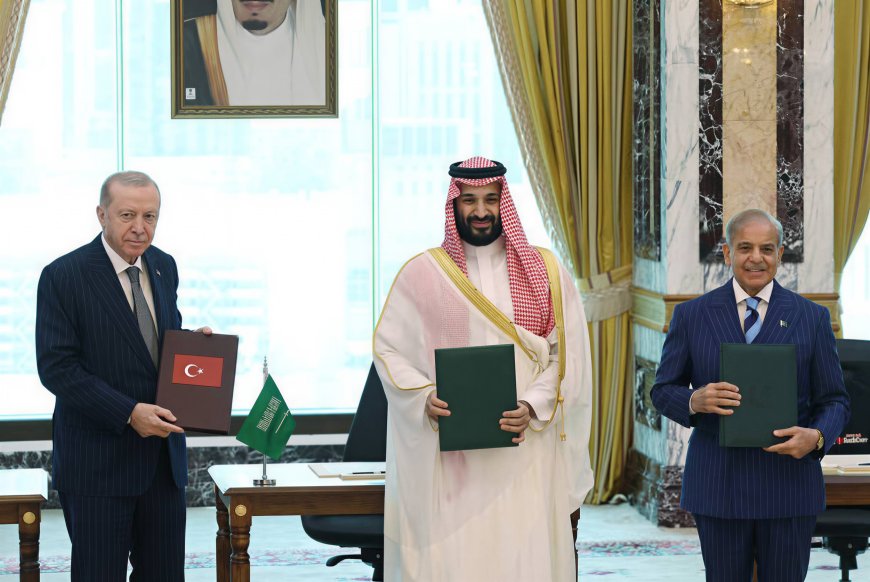
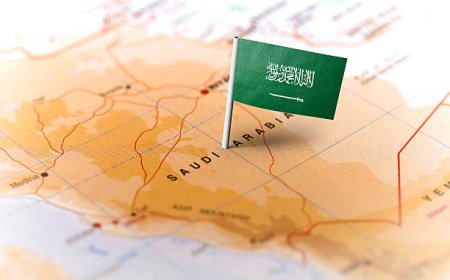
Five weeks after Riyadh, Islamabad, and Ankara promised that an attack on one was an attack on all, Houthi missiles found out that promise was empty.
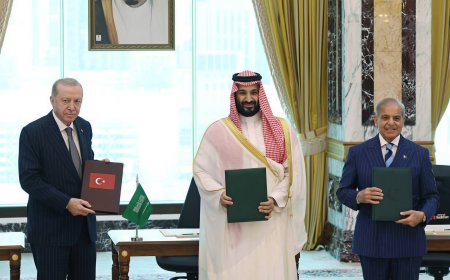
On August 7, Crown Prince Mohammed bin Salman, President Recep Tayyip Erdoğan and Prime Minister Shehbaz Sharif stood together in Mecca and signed a pact that borrowed, almost word for word, the language of NATO's Article 5: “An armed attack against any one of the three states,” the communiqué declared, “shall be regarded as an attack against them all.”
The phrase was chosen deliberately. It was meant to evoke the most successful deterrent clause in modern history and to tell Iran, in terms Tehran could not misread, that Saudi Arabia now had two serious military powers standing behind it.
Five weeks later, on September 8, the Houthis put that promise to the test. Ballistic missiles and loitering drones struck Abha, Khamis Mushait, Jazan, and Najran.
73 civilians were wounded. Fires broke out at Aramco distribution sites and at the Jazan refinery, one of the Kingdom's largest. It was exactly the kind of scenario the Mecca Pact existed to deter: A coordinated strike on Saudi territory and Saudi energy infrastructure, launched by an Iran-aligned force.
The pact failed that test. Not on a technicality, and not because of an overly literal reading of the text, it failed on the plain terms its own authors advertised to the world.
A defence pact that only defends when nobody is actually being attacked is not a defence pact. It is a press release.
Consider what “failure” looks like here. It does not require troops on the ground or shots fired in anger by Pakistani or Turkish forces. It requires only that the mutual-defence clause be treated, by the very governments that signed it, as inoperative at the first moment it was needed. That is precisely what happened.
Riyadh never invoked the pact. Islamabad's own Defence Minister, Khawaja Asif, said the agreement “could become operational” -- only for his own Foreign Ministry to publicly contradict him within 48 hours, insisting no military response was even under discussion. Turkey never engaged the question at all, limiting itself to a phone call between foreign ministers.
Three governments spent a month telling the world they had built an Islamic NATO. When the missiles actually landed, all three quietly agreed to pretend the clause did not exist.
The excuses don't hold.
The pact's defenders, and there are many, in Riyadh, Islamabad and Ankara alike offer a familiar set of justifications. Saudi Arabia never formally requested assistance, so Pakistan and Turkey were under no obligation to act.
The attack came from a non-state actor, the Houthis, not from a state, so classic collective self-defence doctrine does not cleanly apply. The treaty text was never published, so no one can say for certain what was actually promised.
Each of these points is true as a matter of international law. None of them rescues the pact's credibility, because credibility was never a legal question. It was always a political one, and it was staked entirely on rhetoric that promised something far more automatic than what the small print apparently allows.
If the Mecca Pact's real message was “we will help you, but only if you ask us nicely, and only for conventional invasions, and only after months of quiet consultation,” that is not what three heads of state told the cameras in August.
They said an attack on one was an attack on all. They did not say an attack on one is an attack on all, terms and conditions apply.
This is the same trap that swallowed the Central Treaty Organization and SEATO during the Cold War, and the comparison is not flattering. Both of those alliances discovered, at their first real crisis, that members would default to national interest the moment collective action carried any cost.
Both limped on for years as hollow shells before formally dissolving.
The Mecca Pact is one month old and has already produced the exact same tale: A defence ministers making a bold promise, and a foreign ministry spokesperson walking it back within two days. That is not the sound of an alliance discovering its discretion. It is the sound of an alliance discovering it has no spine.
The most serious cost is not reputational embarrassment. It is that deterrence is a currency you can only spend once per audience, and Iran was watching closely. Tehran now has direct, recent evidence that arming a proxy to strike Saudi energy infrastructure does not risk Pakistani or Turkish retaliation.
That is an extraordinarily valuable lesson for Iranian planners, and the Mecca Pact handed it to them for free, one month after its own signing ceremony. Every future Houthi strike will now be calibrated against the same knowledge: Riyadh will absorb it alone.
None of this means the pact is worthless, or that it must collapse entirely. It may well settle into a genuinely useful defence-industrial partnership - Turkish drones, Pakistani manpower and training, Saudi capital, none of which requires anyone to die for anyone else. There is nothing shameful in that arrangement.
But it is a fundamentally different product from the one that was marketed in Mecca, and Gulf and South Asian publics deserve an honest accounting of the difference rather than a semantic defence of a clause that visibly buckled the first time it mattered.
Alliances are not judged by their text. They are judged by what happens when the missiles are already in the air and a government has to decide, in real time, whether its signature means anything. On 8 September 2026, three governments were asked that question. Two of them answered, quietly and almost immediately, that it did not.
A defence pact that only defends when nobody is actually being attacked is not a defence pact.
It is a press release, and Mecca's first stress test made that painfully clear.
Shafqat Aziz is a barrister (Lincoln’s Inn) and an accredited Civil-Commercial Mediator (ADR-ODR International).