








































































The New Bangladesh-India Dynamic
The India-Bangladesh relationship is undergoing not rupture, but delayed normalization. Bangladesh is asserting the right to disagree without permission. India is confronting the limits of informal hegemony

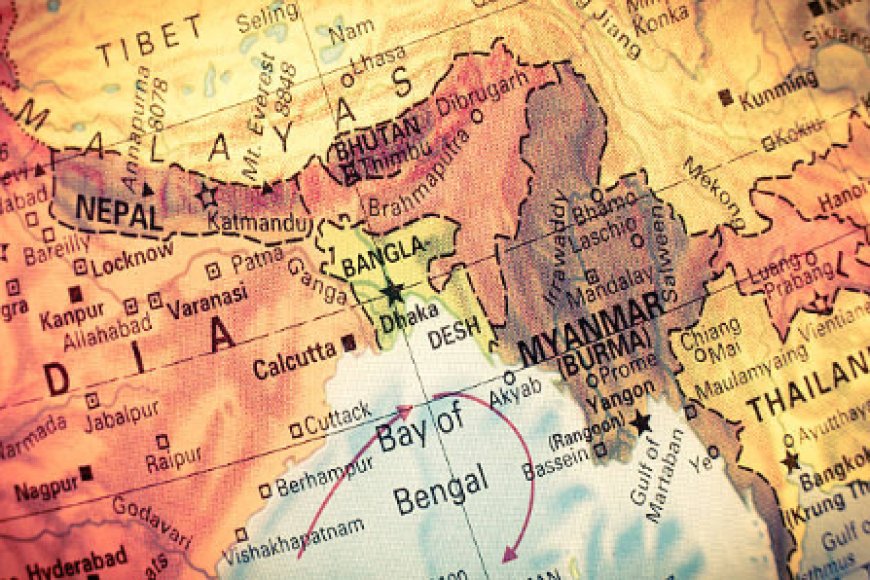
For much of the post-1971 period, relations between India and Bangladesh were governed less by formal equality than by an implicit hierarchy.
India’s role in Bangladesh’s independence, its regional weight, and its proximity fostered an assumption in New Delhi that influence could be routinized and dissent managed quietly.
Bangladesh, in turn, was expected to calibrate its domestic politics and foreign policy with Indian preferences in mind.
That equilibrium has now collapsed. What has unfolded since 2024 is not a temporary diplomatic dispute but a structural inflection point.
India’s Bangladesh policy faltered not because it lacked intent or resources, but because it conflated influence with control, misread legitimacy as expendable, and underestimated how rapidly leverage erodes once feedback turns negative.
Bangladesh’s recent behavior is not revisionism; it is delayed normalization.
India’s Core Miscalculation: Conflating Influence with Control
India’s approach toward Bangladesh over the last decade rested on three assumptions: Political outcomes in Dhaka could be stabilized through elite alignment. Security cooperation would outweigh questions of domestic legitimacy. External actors would defer to India’s regional primacy by default
These assumptions produced short-term predictability but long-term fragility. The unqualified backing of political continuity under Sheikh Hasina represented the apex -- and the breaking point -- of this strategy.
By prioritizing partisan continuity over consent, New Delhi tied its Bangladesh policy to a single political configuration rather than to institutions or processes. Legitimacy was treated as an internal Bangladeshi variable with limited external consequences.
As domestic consent eroded over time, India became increasingly overexposed: Associated with a delegitimized order, yet unable to shape the transition once continuity ceased to be stabilizing.
Bangladesh’s Shift: Boundary-Setting Under Altered Constraints
The most visible change in Bangladesh’s posture since 2024 has been diplomatic, not ideological. Historically, Dhaka absorbed Indian pressure discreetly. Disagreements were managed through back channels; public rebuttal was avoided.
That pattern ended. Bangladesh’s responses became legalistic, symmetrical, and public -- a deliberate shift in diplomatic posture.
This was not escalation. It was boundary-setting under altered constraints. Bangladesh no longer assessed its external legitimacy primarily through Indian approval. Once vulnerability declined, deference ceased to be a rational strategy.
This raises a critical question: What altered Bangladesh’s external constraint environment sufficiently to make such boundary-setting viable?
The Student-Led Uprising and the Collapse of the Binary
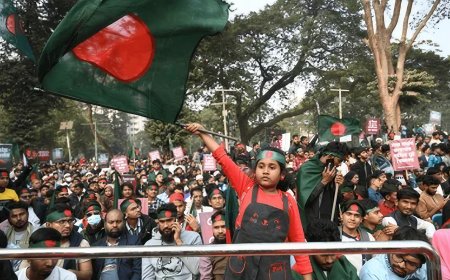
The answer lies in the student-led civic uprising of 2024 and the legitimacy shock it produced.
For over a decade, India’s most persuasive argument in Western capitals rested on a stark binary: Political continuity under Hasina equaled stability, while disruption risked Islamist resurgence or state collapse.
That framing unraveled once events on the ground invalidated its premises.
The uprising was non-sectarian, non-Islamist, and procedurally focused. Led by urban, educated students, it articulated demands for accountability and electoral credibility rather than ideological transformation.
Crucially, it produced disruption without collapse. The predicted chaos did not materialize.
The appointment of Muhammad Yunus completed the collapse of the binary. Yunus’s role mattered not because of personal authority, but because he functioned as a credibility bridge -- a non-partisan, process-oriented caretaker acceptable to international stakeholders.
The choice facing external actors was no longer continuity or instability, but delegitimized continuity or supervised normalization.
This legitimacy shock restructured the external decision environment. India’s narrative leverage eroded, and the reputational cost for Western actors to diverge from Indian preferences declined sharply.
Why Rhetoric Increased as Leverage Declined
The same legitimacy shock that expanded Bangladesh’s diplomatic space simultaneously narrowed India’s.
India’s sharper public rhetoric toward Bangladesh therefore follows a familiar pattern: As material leverage declines, signaling intensifies. What appears paradoxical is, in fact, predictable.
India now faces clear constraints. Coercive measures risk internationalization; economic pressure is blunted by Bangladesh’s diversified partnerships; diplomatic pressure is limited by Western prioritization of process normalization.
Under such conditions, rhetoric serves domestic audiences and preserves bureaucratic narratives. It is not designed to alter Dhaka’s behavior, but to manage India’s adjustment to diminished influence.
The United States, China, and Decoupling as Risk Management
The recalibration of India-Bangladesh relations cannot be understood without reference to United States and China, but this triangle is best understood as constraint-shaping, not alignment politics.
In late 2023, US policymakers tacitly accepted degraded electoral credibility in Bangladesh in exchange for political continuity, judging that pressure risked instability and vacuum dynamics in the Bay of Bengal.
That calculation changed after mid-2024.
Once long-eroding domestic consent became publicly untenable and continuity itself became destabilizing, electoral and procedural credibility ceased to be a normative preference and instead became a risk-management necessity.
Continued deference to Indian preferences under those conditions would have implicated Washington in democratic erosion without delivering stability. Decoupling Bangladesh policy from Indian preferences was therefore conditional, not ideological.
China’s role in this environment has been that of an opportunistic beneficiary, not a prime mover.
Beijing’s engagement reflects availability, not alignment. Its interest in Bangladesh lies in option preservation and political legitimacy, not regime specificity or overt military positioning.
Each instance of Indian overreach lowered the political cost for Dhaka to diversify partnerships. China did not need to persuade Bangladesh to pivot; it merely needed to remain available.
Bangladesh’s Next Phase: Layered Deterrence Without Alignment
Autonomy, once asserted, must be sustained. For Bangladesh, this does not imply militarization or parity with India, but the construction of layered deterrence without alignment.
The first layer is institutional deterrence. Defense cooperation frameworks with the United States -- logistics, interoperability, and information-sharing arrangements -- do not constitute alliances or guarantees.
Their deterrent value lies in raising visibility, ambiguity, and internationalization costs in any coercive scenario. They function as deterrence multipliers, not commitments.
The second layer is denial-based military capability. Investments in air defense, maritime domain awareness, surveillance, electronic warfare, and civil-military resilience increase friction and uncertainty, raising the threshold for coercive pressure without signaling offensive intent.
The third layer is strategic diversification. Selective engagement with multiple partners -- including Japan, European states, and regional multilateral forums such as ASEAN -- reduces overdependence and preserves options. Diversification here is not balancing; it is insurance.
Together, these layers protect diplomacy rather than replace it. Deterrence in this model stabilizes expectations and narrows the range of coercive options, reinforcing Bangladesh’s legitimacy-based posture.
India’s Strategic Choice
India now faces a choice. One path involves accepting Bangladesh’s normalization, rebuilding relations on institutional rather than partisan foundations, and adapting to a South Asia where influence must be continuously earned.
The alternative -- continued grievance, rhetorical escalation, and informal pressure -- risks accelerating the outcomes India seeks to avoid: deeper diversification by neighbors, increased third-party involvement, and erosion of regional credibility.
Regional powers remain most stable when they learn to live with loss of control without equating it to loss of status.
The India-Bangladesh relationship is undergoing not rupture, but delayed normalization. Bangladesh is asserting what smaller states eventually must: The right to disagree without permission. India is confronting the limits of informal hegemony.
If managed with realism, this moment could yield a more stable and less resentful relationship. If mishandled, it will endure as a case study in how power erodes when legitimacy is misread.
The era of automatic deference has ended. No amount of rhetoric can restore it.
Nazrul Islam is a policy-focused opinion columnist and entrepreneur with experience across healthcare, ICT, fertilizer, and chemical retail.