










































![A Ledger of the Soul: Navigating the Allah-Bhagavant Nexus in a 19th-Century Puruṣākāra Jñāna Caupara [Gyan Chauper]](https://counterpointbd.com/uploads/images/202608/image_430x256_6a93baa3b09a7.jpg)



















The Politics of Sweetness
Behind every woman labelled "too harsh" may be years of swallowed humiliation. Years of carefully choosing politeness over dignity. Years of emotional labour performed for everyone except herself.


Have you ever heard anyone say about a man: "He's incredibly successful, but I wish he were a little sweeter"? Or perhaps: "He's one of the country's most successful businessmen, but it would be nice if he were a bit more loving"?
I certainly haven't. Yet we make remarkably similar comments about women without a second thought.
"She's doing exceptionally well, but she's a little too harsh." "She has built an impressive career, but she doesn't smile enough." "Yes, she's financially independent, but she's not exactly a sweet girl."
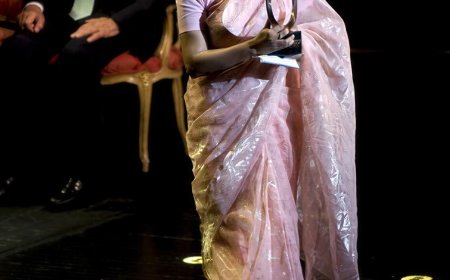
That is precisely why Deepa Khandakar's statement made me stop and think. Can an independent woman be sweet? Absolutely. Can she be warm, affectionate, loving, and emotionally generous? Of course she can.
But that is not the question that interests me. The more important question is this: Why does an independent woman require that reassurance in the first place? Why does female independence arrive with an additional behavioral disclaimer?
"Don't worry, she's independent, but she's also very sweet."
At first glance, this appears to be an inclusive statement. It seems to challenge the stereotype that independent women must necessarily be rude or abrasive. But sociology teaches us that language does more than communicate intentions. Language also reproduces assumptions.
A statement can be permissive in intention while simultaneously revealing the expectations embedded within a culture.
The issue, therefore, is not what the speaker intended.
The issue is why such reassurance becomes socially meaningful at all. Because reassurance only becomes necessary when there already exists an underlying anxiety. Nobody reassures us that a brilliant male surgeon can also be kind. Nobody says,
"A successful businessman can also be affectionate."
Nobody introduces a male CEO by reminding us that he smiles nicely. Why? Because male competence is generally accepted as a complete identity.
Female competence rarely is. Women's competence is frequently expected to arrive wrapped inside emotional acceptability. This is where sociology becomes useful.
In our society, men are largely evaluated according to what they do. Their competence. Their income. Their achievements. Their leadership. Women, however, are evaluated on at least two separate dimensions. Not only what they, but also how they make other people feel.
Does she smile enough? Is her voice gentle? Is she approachable? Is she too direct? Does she make others uncomfortable? Does she threaten fragile egos?
In other words, women are rarely evaluated solely through their work. They are evaluated through their emotional performance.
Sociologist Arlie Hochschild described this phenomenon through her theory of emotional labour. Women are expected not merely to perform their jobs efficiently.
They are expected to perform emotions. To remain pleasant. To remain patient. To remain emotionally available. To reassure. To soothe. To make difficult conversations feel comfortable. This expectation extends far beyond traditionally "caring" professions.
A woman may be an outstanding physician, professor, lawyer, banker, manager or politician. Yet competence alone seldom appears sufficient. She is expected to be competent and agreeable. Assertive but warm. Confident but gentle. Strong but never intimidating.
The same behaviour that signals professionalism in men is often interpreted as personality in women. A male manager who is firm is considered decisive. A female manager who behaves identically may suddenly acquire "an attitude." The performance remains unchanged. Only the gender changes. And so does society's interpretation.
But there is another question we rarely ask. Whose sweetness are we talking about?
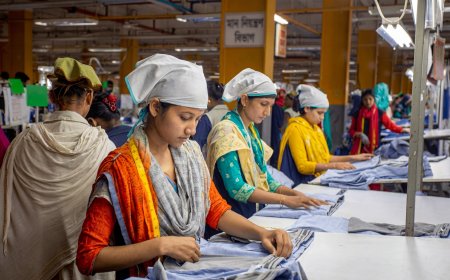
A celebrated actress? A middle-class executive working in a multinational corporation in Dhaka? A university lecturer? Or the garment worker who wakes before sunrise every day and spends two hours standing inside overcrowded buses before arriving at the factory?
What about the domestic worker who raises other people's children while barely seeing her own? Or the widow selling fish in a local market because she has become the sole provider for her family? Can we honestly pretend that all women inhabit the same emotional landscape?
Of course they do not. Yet discussions about femininity often erase class altogether.
This is precisely where the conversation becomes class blind. Because the overwhelming majority of economically independent women in Bangladesh do not emerge from inspirational Instagram posts or carefully curated Pinterest boards.
They emerge from exhaustion. From precarity. From relentless negotiation with systems that demand everything from them while offering very little in return. Their independence is rarely glamorous. It is expensive. Emotionally. Physically. Psychologically.
That distinction matters. Because once class enters the conversation, the question changes completely. It is no longer simply: "Can independent women be sweet?" Instead, it becomes: Who has the privilege to remain soft?
Class, Survival, and the Privilege of Softness
This is where class fundamentally changes the conversation.
Because when we talk about whether independent women are "sweet" or "rude," we often assume that all women begin from the same social starting point. They do not.
An actress, a corporate executive in Gulshan, a university professor, a garment worker in Gazipur, a domestic worker in Dhanmondi, and a widowed street vendor may all be financially independent. But their independence does not emerge from the same social conditions, nor does it demand the same emotional cost.
Treating them as though they inhabit the same reality is not simply inaccurate, it is a form of class blindness.
This is precisely why Kimberlé Crenshaw's theory of intersectionality remains so important. Crenshaw argued that women's experiences cannot be understood through gender alone. Class, occupation, economic security, education, geography and countless other structures intersect to shape women's lives.
There is no such thing as "the independent woman." There are independent women, living radically different realities. That difference matters because social expectations are rarely distributed equally. The expectation that women remain emotionally pleasant falls most heavily upon those who have the fewest resources with which to perform it.
The reality is that most economically independent women in Bangladesh do not emerge from motivational speeches, lifestyle magazines or carefully curated Pinterest aesthetics.
They emerge from necessity. They work because someone has to pay the rent. Because children need feeding. Because ageing parents need medicine. Because survival does not wait for ideal circumstances.
This is where Pierre Bourdieu's concept of habitus becomes particularly illuminating. Bourdieu argued that our gestures, speech, confidence, posture, even what we perceive as personality, are not simply individual choices. They are produced through repeated interaction with our social environment. In other words, what we often dismiss as "rudeness" may actually be a habitus formed under structural pressure.
Imagine a woman who drops her child at school before rushing to work. Throughout the day she listens to condescending jokes from male colleagues who mistake her competence for arrogance. She spends the afternoon dealing with impossible deadlines before returning home to cook dinner, care for ageing parents, supervise homework and prepare tomorrow's presentation.
Someone eventually tells her: "You have a rather strong attitude."
Strong attitude? Or accumulated exhaustion? Should she respond to structural inequality by sprinkling rose water over it?
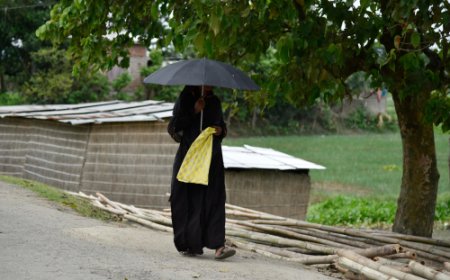
Now imagine another woman. A garment worker. She spends ten hours standing beside sewing machines while supervisors monitor production quotas. If targets are missed, she is shouted at publicly. Her wages remain painfully low despite relentless labour. She squeezes herself into overcrowded buses where she must constantly protect her own body from unwanted touch.
She bargains over vegetables because every taka matters. She returns home to cook, clean, wash clothes and care for children before repeating the entire cycle the next morning.
In that world, her tone of voice naturally becomes firmer. Her body language becomes more guarded. Her boundaries become more visible. Not because she enjoys appearing difficult. But because the world has taught her that softness is often punished.
We, standing safely outside that reality, label those boundaries as attitude. We mistake self-protection for arrogance. We confuse emotional exhaustion with bad manners. Yet very few people ask a far more uncomfortable question: If the world had not been so relentlessly harsh toward her, would she have needed to become so emotionally guarded in the first place?
My professional security. My education. My relatively stable income. My institutional protection. Those things had afforded me something I had never consciously recognised before: the luxury of remaining emotionally soft.
For many working-class women, softness is not a permanent state. Sometimes it becomes an unaffordable luxury. Because softness requires safety. It requires predictability. It requires the confidence that saying "no" will not cost you your livelihood. That confidence is unevenly distributed.
This is why I find statements like "An independent woman can also be sweet" intellectually incomplete. Not because sweetness is undesirable. Not because independent women cannot be affectionate.
Of course they can. The limitation lies elsewhere. The statement quietly assumes that all independent women possess the same emotional freedom to perform warmth.
They do not. For a privileged actress, sweetness may simply be an expression of personality. For a working-class woman supporting an entire family, toughness may be the very condition of survival. That distinction changes everything.
Perhaps the greatest irony is that society demands the greatest emotional gentleness from precisely those women carrying the heaviest burdens. The woman who is the family's sole breadwinner. The woman surviving domestic violence while raising children. The woman standing on factory floors for 10 hours every day.
The woman who deliberately hardens her face while walking home at night to discourage harassment. She is the one people tell: "You would look much nicer if you smiled more."
But almost nobody asks, When was the last time anyone made the world gentler for her?
This brings us to another uncomfortable question. Do we actually recognise women as full human beings? Or do we still expect them to provide emotional service alongside economic labour?
Working-class women do not simply sell their labour. Very often, they are also expected to sell patience. To sell politeness. To sell reassuring smiles. To sell emotional resilience. To swallow humiliation without protest. To absorb disrespect without becoming "difficult." This is precisely why Hochschild's concept of emotional labour remains so powerful.
When society says: "An independent woman can also be sweet," it may sound harmless. Yet within societies where women are already expected to manage everyone else's emotional comfort, such statements risk quietly reinforcing the idea that emotional accommodation remains part of women's social responsibility.
And that expectation is never distributed equally. Like almost everything else, it follows class.
The Binary of the "Sweet Woman" and the "Difficult Woman"
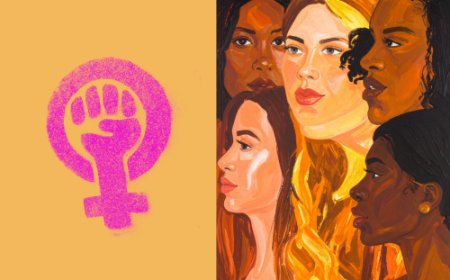
This brings us to what I believe is the heart of the problem. Our society continues to imagine women through a remarkably narrow binary. She is either the sweet, loving, feminine woman, or she is the rude, difficult, career woman.
There seems to be very little room in between. But why? Why can't a woman be loving and uncompromising? Gentle and ambitious? Warm and assertive? Emotionally generous and capable of saying "no"? Confident, exhausted, angry, compassionate and resilient, all at the same time?
Why does she have to choose only one identity? The interesting thing is that we almost never impose this binary on men.
A man can be ruthless in the boardroom, deeply affectionate with his children, emotionally vulnerable with close friends, highly competitive at work, and quietly sensitive in private.
Nobody finds this contradictory. We simply recognise him as a complex human being. Complexity is considered part of masculinity. Contradiction is accepted as part of being a man. But women are rarely granted that same psychological complexity. The moment a woman refuses easy categorisation, society becomes uncomfortable.
Suddenly she must be sorted. She is either a "good woman" or a "bad woman." Either feminine or bossy. Either approachable or intimidating. Either polite or arrogant. Either soft or threatening.
It is almost as though society is incapable of imagining women as psychologically layered human beings. This is precisely what Judith Butler's theory of gender performativity helps us understand.
Butler argues that femininity is not something women simply possess. It is something they are expected to perform. Every single day. The smile. The soft voice. The modest body language. The emotional availability. The willingness to avoid conflict. The habit of making everyone feel comfortable. Together, these become a cultural script for acceptable womanhood.
And like every script, it comes with consequences. The woman who follows it receives approval. The woman who departs from it becomes a problem. She becomes "too much." Too ambitious. Too loud. Too direct. Too intimidating. Too opinionated. Too angry. Too serious.
Notice something remarkable. None of these labels describe competence. They describe discomfort. The problem is not necessarily that the woman lacks ability. The problem is that she makes other people uncomfortable. This is why I find discussions about women's "sweetness" so revealing. Because sweetness is rarely discussed as a personality trait. It functions as a measure of social acceptability. And social acceptability has always been deeply gendered.
Here is the question we almost never ask.
Who appointed the judges? Who decided how much a woman should smile? Who established the acceptable volume of her voice? Who measured the precise point at which confidence becomes arrogance? Who determined that saying "no" is healthy boundary-setting when a man does it, but bad attitude when a woman does?
There is no scientific answer. No psychological law. No biological evidence. Because these standards are not natural. They are cultural. They are historical. They are political.
As sociologist R. W. Connell argues through the concept of hegemonic masculinity, societies elevate particular forms of masculinity as the norm while simultaneously positioning femininity as accommodating, emotionally available and relational. This hierarchy shapes not only how men are expected to behave. It also shapes how women are expected to make men feel.
That is why the same behaviour acquires different meanings depending on who performs it. A serious man is mature. A serious woman has an attitude. A decisive man is a leader. A decisive woman is controlling. A man who protects his boundaries is respected. A woman who protects hers is difficult. A man who refuses unreasonable demands knows his worth.
A woman who refuses them is "not nice." Nothing changed except gender. Yet everything changed. The judgement. The language. The moral evaluation. This is exactly how gender norms operate. Not through dramatic acts of discrimination every day. But through thousands of tiny interpretations that accumulate over a lifetime.
Each one appears insignificant. Together, they construct an entire social reality. This is why I often hesitate when people insist that comments about women's personalities are "just feedback."
Sometimes they are. Of course they are. Not every criticism of a woman is sexist. Not every disagreement is patriarchal. But sociology is less interested in isolated comments than in recurring patterns. When women repeatedly hear:
"Smile more."
"Be softer."
"Don't sound so aggressive."
"Don't make things uncomfortable."
"You'd be more likeable if ..."
... while men disproportionately receive feedback about performance, authority or results, we are no longer looking at random individual opinions.
We are looking at a social pattern. And patterns tell us something about culture. They reveal what a society rewards. They reveal what it fears. They reveal what kinds of women become acceptable. Ultimately, this is not about whether women should be sweet.
Many women are naturally sweet. Many are naturally gentle. Many are deeply affectionate. Others are not. Some are introverted. Some are emotionally reserved. Some are blunt. Some are sarcastic. Some are endlessly nurturing. Some have little patience for emotional performance.
None of these qualities determine their worth. Because human beings are not personality archetypes. Human beings are contradictions.
Yet women are repeatedly denied the freedom to inhabit those contradictions. Society seems willing to accept women who are strong, as long as they remain reassuring.
Independent, as long as they remain pleasing. Successful, as long as they remain emotionally accessible. Assertive, as long as they never become intimidating.
It is not independence that unsettles society. It is independence without emotional accommodation. That is why I increasingly believe the real expectation is not female independence at all. It is curated femininity.
A woman who is modern but not threatening. Educated but not intellectually intimidating. Financially independent but emotionally available. Outspoken but unfailingly polite. Ambitious but always family-first. Strong but only strong enough not to disturb anyone else's comfort.
That equation deserves to be questioned. Because the society that struggles to understand an independent woman's anger often struggles to understand the history that produced it.
Sometimes a woman's anger is the language of trauma. Sometimes it is the language of exhaustion. Sometimes it is accumulated disrespect finally refusing silence. Sometimes it is simply the sound of boundaries that should have been respected years ago.
Behind every woman labelled "too harsh" may be years of swallowed humiliation. Years of carefully choosing politeness over dignity. Years of emotional labour performed for everyone except herself.
Perhaps the question was never whether independent women can also be sweet. Perhaps the more revealing question has always been this: Why does an independent woman's toughness make us so uncomfortable in the first place?
Dr. Lubna Ferdowsi is an academic and researcher based in England.