





































![A Ledger of the Soul: Navigating the Allah-Bhagavant Nexus in a 19th-Century Puruṣākāra Jñāna Caupara [Gyan Chauper]](https://counterpointbd.com/uploads/images/202608/image_430x256_6a93baa3b09a7.jpg)





















Nation, Religion, State, and the Plural Nature of Being
Whenever one reads the great poets and writers of China, India, Russia, Latin America, West Asia, or any other part of the world, they can find themselves inhabiting their worlds and seeing life through their eyes. Their experiences become part of my own intellectual and emotional landscape. In that sense, I cannot confine myself to being only an ethnic Bengali.


The journey of Alex Haley to the Gambian village of Jufureh was not merely a geographical movement but an act of historical revisit. The oral fragments of family history, like Kunta Kinte, Kamby Bolongom, repeated across generations, became the threads that pulled him across the Atlantic to shed light on erased ancestry.
When an elderly griot began narrating the story of his forefather Kunta Kinte, the search for genealogy transformed into a recovery of selfhood. In this encounter, Roots emerges not only as a family history but as an allegory of identity itself, a matter of soul and self-searching, without which Haley felt like being rootless even after living an affluent life in the United States.
Indeed, identity has become a contested realm of politics in the 20th century; for Haley, it was far from it. The search for his identity attests to what Rabindranath Tagore contends about identity: Identity is both inherited and constructed; one dimension is relatively fixed -- rooted in birth, language, and cultural inheritance. For Haley, it was a matter of tracing back his ancestry and lineage, the absence of which can create a hole in the human mind, which cannot be filled in by anything on earth.
Identity provides recognition, belonging, and historical continuity for sure, yet it can also become the basis of exclusion and violence when reduced to a singular axis. Episodes from the twentieth and 21st centuries -- including world wars, partitions, genocides, and ongoing ethno-religious conflicts -- demonstrate that identity performs a dual function: Both as a language of liberation and as a mechanism of destruction. The central question of this article is to explain whether identity operates as a site for human plurality or as a cage that restricts it.
Amartya Sen’s intervention in Identity and Violence: The Illusion of Destiny is particularly significant in this context. He argues that human identity cannot be essentially limited to a single realm, as human beings simultaneously bear multiple, overlapping affiliations -- cultural, professional, political, ethical, and existential.
The shrinkage of human beings to one dominant identity constitutes an act of epistemic violence that enables political mobilization through the politics of exclusion. For Sen, peace in a globalized world depends on recognizing the plurality of human existence, rather than caging it into rigid categories.
Yet globalization has paradoxically intensified anxieties around the issue of identity. While identity has given people the meaning of their lives, it goes well beyond mere ontology to beget even violence. When people are treated based on Identity, when they are singled out for it, identity becomes a source of cultural insecurity, prompting renewed searches for ‘pure’ or ‘authentic’ identities.
This is visible in the rise of ethnonationalism in Europe, religious majoritarianism in South Asia, anti-immigrant politics in North America, and sectarian polarization in parts of the Global South. Identity, rather than dissolving under globalization, often hardens in response to it.
Rabindranath Tagore’s critique of nationalism anticipates this dilemma. For him, nationalism is not merely patriotism but an organized form of state power that risks subordinating humanity to the logic of political and economic domination. When moral life gives in to the apparatus of the nation-state, identity ceases to be humanistic and becomes instrumental. Tagore thus privileges humanity over nation and ethical universality over aggressive belonging.
In post-colonial thought, Partha Chatterjee complicates this picture by showing that identity is not simply imposed from above but also produced within colonized societies through the internal negotiation of “home” and “world.” National identity, therefore, is neither purely emancipatory nor purely oppressive; it is constructed through cultural resistance as well as hierarchical reproduction.
Subaltern histories further demonstrate that identity can function as both a tool of resistance and a structure of exclusion, particularly when nationalist or religious frameworks obscure internal inequalities.
Alex Haley’s Roots and Samuel Huntington’s “clash of civilizations” thesis represent two divergent interpretations of cultural identity. The former frames ancestry as a reclamation of dignity and historical continuity; the latter interprets civilizational identity as a potential realm of geopolitical conflict.
Critics of Huntington argue that such frameworks overstate cultural coherence while underestimating internal pluralism. Sen’s argument reinforces this critique by insisting that civilizational reductionism intensifies violence by simplifying human complexity into rigid blocs.
Within this theoretical landscape, identity emerges as a fundamentally ambivalent construct. It provides historical grounding and emotional anchorage, yet it becomes dangerous when transformed into exclusivist ideology. The challenge of the contemporary world lies not in abandoning identity but in preventing its reduction into singularity.
Rabindranath Tagore’s reflections on “self-identity” further reinforce this distinction. Identity, in his formulation, is both inherited and constructed: One dimension is relatively fixed -- rooted in birth, language, and cultural inheritance -- while another is shaped through education, experience, and creative self-formation. Human beings are therefore not only products of history but also agents of self-fashioning.
The Case of Bangladesh
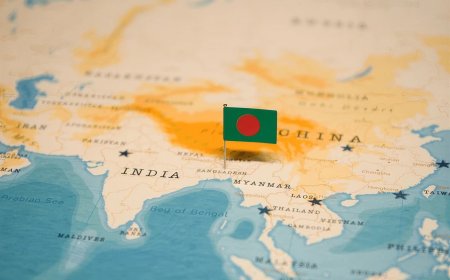
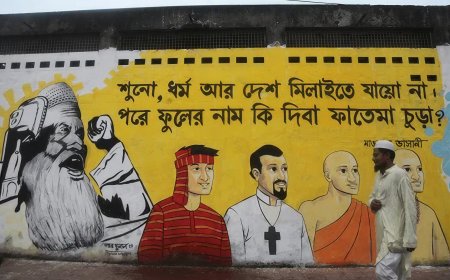
In the context of Bangladesh and broader South Asian postcoloniality, this ambivalence becomes particularly visible. Bengali nationalism played a crucial emancipatory role in the struggle against linguistic and cultural domination. Yet, in certain historical moments, it has also marginalized indigenous and non-Bengali communities. Similarly, shifts between religious and national identity demonstrate that belonging is historically contingent rather than fixed.
Even before 1947, there was already a balancing act between being part of Bengal’s language and culture and belonging to a broader Muslim identity.
That tension became sharper during the Pakistan period, especially under political and cultural pressure from West Pakistan. In response, the Language Movement and later the Liberation War turned Bengali identity into a powerful political force tied to dignity, rights, and self-rule.
After independence, the picture shifted again. Religious identity gradually became more visible in public life, influenced by shifts in politics, state policy, and the fading of strong secular narratives.
Today, these two strands -- ethnic-cultural identity and religious identity -- often coexist, sometimes in harmony and sometimes in quiet tension, appearing in politics, education, and cultural debates.
The most glaring failure for a nation like ours is the inability to evolve into a cohesive national identity, despite a Liberation War that was driven by Bengali nationalism and a rejection of the religiously defined identity imposed by the Pakistani state. Instead of resolving this foundational question, an artificial dichotomy has taken shape between religion and national identity, which has been used by different political actors for their respective leverage.
This unresolved tension has also become a governance challenge. It has often led to policy inconsistency, fragmented public messaging, and shifting ideological priorities across regimes. As a result, state institutions have struggled to maintain a stable civic narrative that can integrate diversity without polarization. This is not merely a historical dilemma for the population; it has steadily translated into weaknesses in political consensus-building, public trust, and long-term institutional coherence.
But this is not anything new in origin. Even in medieval Bengal, Bengali Muslims have shown a kind of ambivalence about their sense of belonging. Akbar Ali Khan, in his famous book Discovery of Bangladesh, shows that the diverse justifications advanced by Muslim poets in this region for the use of the Bengali language reveal the intensity of the long-standing tension between territorial belonging and religious identity that has shaped the experience of Bengal’s Muslims over the past six centuries.
Khan argues that, seen in this historical context, the shifting foundations of nationhood in Bangladesh -- from religion to language and back to more complex combinations of identity -- are far from surprising. They are rooted in a deep historical struggle over the meaning of collective belonging.
On the other hand, Binayak Sen (2000) is reluctant to treat history as a final arbiter. The past may explain how this duality emerged, but it cannot decide which element should ultimately carry greater weight. Whether Bangladesh defines itself primarily through religion, language, culture, citizenship, or some combination of these is not a question that historians can answer by uncovering historical facts.
It is a political choice, a collective act of imagination directed toward the future. Identity, therefore, is not something waiting to be discovered; it is something continuously negotiated. In fact, he echoes what Rabindranath said about the second aspect of identity, which is shaped through education, experience, and creative self-formation. Human beings are therefore not only products of history but also agents of self-fashioning.
Globalization and Multiplicity
Globalization intensifies this multiplicity by enabling transnational cultural circulation. Contemporary literary and intellectual life increasingly sheds light on hybrid subjectivities that cannot be confined within a single national or linguistic frame. Writers operating across languages and geographies exemplify what may be termed transnational identity -- an identity shaped through movement, encounter, and continuous reinterpretation.
At its core, the central proposition emerging from this discussion is that identity must be understood as relational rather than essential. It is constructed through interaction between memory and power, locality and globality, inheritance and choice. To treat identity as singular is to misrecognize its inherent plurality; to treat it as purely fluid is to ignore its historical grounding.
The ethical implication is clear: The task of the contemporary world is not to eliminate identity, but to de-essentialize it. Human belonging must be reimagined not as confinement within a single category, but as participation in multiple overlapping worlds. In this sense, the human subject is neither rootless nor fixed, but expansively situated across histories, geographies, and cultures.
Ultimately, the question of identity is not whether one belongs to a nation, religion, or language, but how such belonging is practiced. When identity becomes a boundary, it produces exclusion; when it becomes a bridge, it enables coexistence. The future of global society depends on sustaining this tension without resolving it prematurely.
Home in the World
At the opening of Home in the World, Amartya Sen recalls a journalist’s question that is deceptively simple but revealing in its complexity: Where do you consider your home to be? The question, as he reflects, does not have a straightforward answer, as his life cannot be confined to a single geographical or cultural marker.
From Dhaka to Santiniketan and Kolkata; then a broader journey to Cambridge, and many other intellectual and emotional landscapes that have shaped his sense of self for more than half a century. So where is his home?
In this sense, the concept of “home” expands beyond a physical location into a broader moral and intellectual realm. The journalist’s question exposes the limitations of thinking in terms of a single home, while Sen’s reflection opens up the possibility of multiple homes existing simultaneously.
The world, then, is not something external to belonging but part of it. Home becomes a network of relationships and experiences, making it possible to feel rooted in more than one place at the same time -- ultimately extending the idea of home to the world itself.
National identity and culture, though apparently exclusive, don’t necessarily have to be the same. They are constantly evolving, shaped by encounters, experiences, and exchanges.
Whenever one reads the great poets and writers of China, India, Russia, Latin America, West Asia, or any other part of the world, they can find themselves inhabiting their worlds and seeing life through their eyes. Their experiences become part of my own intellectual and emotional landscape. In that sense, I cannot confine myself to being only an ethnic Bengali.
In effect, human beings can belong to many traditions at once. In fact, curiosity about other cultures -- and the willingness to absorb and reflect them in literature -- is one of the most meaningful ways of connecting with the wider world.
Literature has a unique capacity to transcend political, national, and ideological boundaries. Through engagement with diverse literary traditions, readers encounter varied experiences, histories, and ways of understanding the world. Such encounters can foster empathy and intellectual openness, reducing the tendency to view unfamiliar people and cultures through the lenses of suspicion, hostility, or prejudice.
In contrast to political narratives that sometimes caricature, demonize, or dehumanize perceived outsiders, literary exchange encourages understanding across cultural differences. It creates a space in which individuals and societies can be appreciated in their complexity rather than reduced to stereotypes.
Different societies have developed distinct ways of living, thinking, and organizing social and political life. While these differences may invite debate and disagreement, they also merit understanding on their own historical and cultural terms. From this perspective, meaningful cultural engagement begins not with judgment or exclusion, but with curiosity, dialogue, and a willingness to learn from the diversity of human experience.