


































































What the Body Does Not Forget
Perhaps we have placed shame in the wrong place. We shamed the body instead of violence. We questioned the survivor instead of the aggressor. We taught embarrassment where we should have taught consent. And we said: Hush. We do not speak of these things.

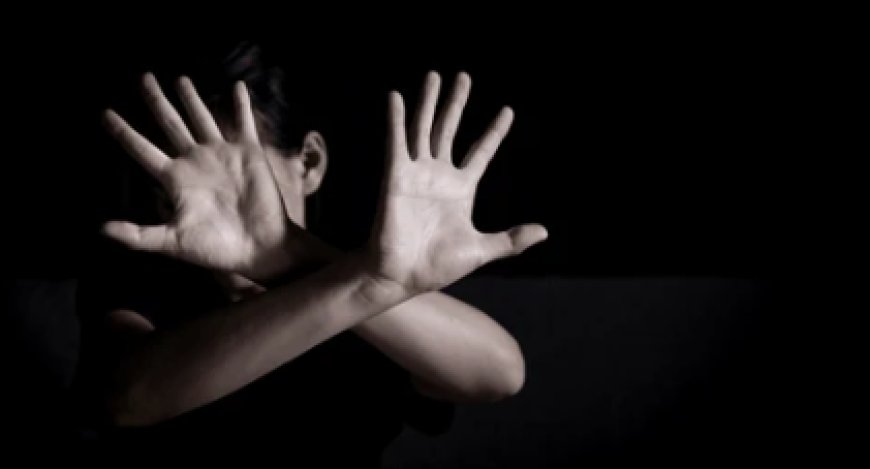
I keep stopping as I write this.
Some truths are difficult not only because they are private, but because returning to them means sitting face to face with a much younger version of yourself. Even now, when I return to that child, my eyes fill with tears.
Still, I am writing.
Not for pity. I am writing because countless girls, boys, women, and men carry unspoken histories inside their bodies. We have wrapped the body, blood, desire, sexuality, and abuse in so much silence that sometimes the person who has been harmed does not even know what language to use for what happened to them.
I did not learn about this pain from a distance.
I do not remember exactly how old I was -- six, perhaps seven. I only know I was too young for words like love, desire, and consent to have entered my world.
It happened in Japan, with an older white man whom, for whatever reason, my family trusted.
I do not remember the room. I do not remember the day. I do not remember how I came to be alone with him. Sometimes I think I may have been on a moving bus, because the memory still carries a strange sense of speed, of everything rushing past. Was something actually moving, or was my small world simply swaying with terror? I do not know.
I also remember a sharp, unfamiliar smell, almost like sulphur.
Memory is strange. It does not always preserve the whole event. It erases time, place, sequence -- yet leaves behind a smell, a sense of motion, a few sensations.
But I remember the fear.
I remember him holding my hair tightly and forcing me into a sexual act I did not want, did not understand, and that no child should ever have to experience.
Then I remember vomiting. A violent ache in my head. Pain moving through my small body in ways I was too young to understand.
I had no language for the meaning of what had happened, but my body had already learned its pain. My child-mind did not yet understand; my body already knew that someone had broken through its boundary.
What came after is blurred. Perhaps I told my parents I felt unwell. Perhaps I vomited in front of them too. I do not know.
And that not-knowing is part of the truth of memory.
I remember being told not to tell my parents.
I think I wanted to. But two fears grew side by side. One was that they would be devastated. I did not want to hurt them. The other was darker: What if they confronted him? What if he discovered I had spoken? What if he came back and hurt me even more?
A child’s fear does not obey the grammar of reason.
So I stayed silent.
The child who should have been running into someone’s arms for protection was instead trying to protect herself and her parents at the same time.
No child should have to grow up that quickly.
I do not blame my parents. They loved me. Like many parents of their generation, perhaps they simply did not know that teaching a child the language of bodily boundaries is also an act of love.
It is not enough to say: “If anything happens, tell me.”
A child must know: Your body belongs to you. If someone crosses its boundary, it is not your fault. I will listen. I will believe you. I will keep you safe. It is not your job to protect me. It is my job to protect you.
We have confused innocence with ignorance.
And sometimes, by refusing to give children a simple, truthful, beautiful language for their bodies, we leave them defenseless before someone else’s distorted one.
That helplessness of childhood gave birth to something else in me too: Resistance.
In my teenage years, moving through the world on my own, I faced sexual violence more than once. There were moments when I screamed and no one came. I had to survive with my voice, my teeth, whatever strength I had, whatever was within reach.
I learned that if someone refused to hear my “no,” I had to make that “no” impossible to ignore.
The frightened child became a wild young woman.
She knew how to scream. How to fight. How to save herself.
Sometimes I think a form of Kali rose inside me then -- not as destruction, but as protection. A force that said: This body is mine. Its sovereignty is mine. You do not get to take it from me.
But resistance is not only a story of victory.
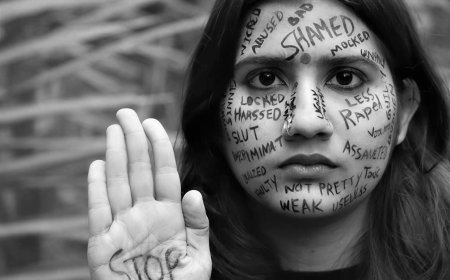
Sometimes when I sought help, the questions turned toward me instead. Why was I alone? Where had I gone? What was I wearing? How did I carry myself?
As though the explanation for a man’s violence had to be found somewhere in the woman’s life.
Questions that should have gone to the aggressor returned to the person who survived him.
That judgment is also a wound.
A survivor does not first need a trial of her character.
She needs to be believed.
Sometimes I wonder how many invisible rivers of my life were redirected by that first memory. A human life cannot be reduced to one event. Still, I ask myself whether some of my desire to numb the past, my fierce return to my own roots, my resistance to Western cultural power -- whether some thread of these things runs back there.
I do not know.
But I know this: Violence against a child is never “one small incident.”
Some events end in minutes. Their echoes can last a lifetime.
Much later, I married a white man. He was not the man from my childhood -- my mind knew that. Yet in certain moments of intimacy, my body would suddenly return to that frightened child. Nausea came. My body recoiled. Eventually, remaining in that relationship became impossible.
I say this not to blame him.
I say it because the body sometimes keeps time differently from the mind.
Even now, writing this, I am crying.
The wound remained. But it did not only break me. Through it, I also discovered my strength. What once made me helpless eventually taught me to defend my voice, my body, my life.
Pain did not become the final word of my life; somewhere inside it, resistance learned to speak.
I learned to be independent. To question. To refuse anyone’s ownership over my body, my life, my beliefs. Perhaps some part of my wildness still belongs to that child who was once silent and later decided she would not remain silent forever.
As a teenager, I loved wandering the streets of Dhaka. That is where I met Munir, a street child with a beautiful singing voice.
One day he told me that the man who taught him the Qur’an had raped him. He had run away from the madrasa.
I was young. I did not yet know how to separate faith from institutions built in its name. I only felt rage.
If the person through whom a child is meant to hear the word of God is the very person from whom his body is unsafe, what kind of religion have we taught that child?
Later I understood that this darkness belongs to no single religion. It has happened in madrasas, churches, ashrams, schools, homes. To girls. To boys. And abuse does not end with childhood.
Marriage is not a lifelong contract of consent. No woman’s or man’s body becomes someone else’s property through love, age, marriage, or relationship.
Age does not diminish bodily dignity. Marriage does not transfer ownership. Love is not possession.
And this brings me to the question beneath everything: Why are we so afraid of the body?
We whisper about the very body we are born into. We hide the blood that carries the possibility of life. We turn desire -- which can bring two people tenderly toward one another -- into something shameful.
When I raised my children, I wanted another language.
My son is only a year older than my daughter. When his voice began to change, when his body began to change, when I knew he was entering the stage where his body could create the seed of life, I did not want it to become a secret shame.
I told him: You are growing. Your body is entering another chapter. With that change comes joy, but also responsibility -- to your own body, to another person’s body, to your desire, to another person’s consent.
I asked my male friends to write him letters. I wanted men who had already crossed that bridge to tell him that becoming a man was not only about the body -- it was also about tenderness, responsibility, and respect.
A year later, my daughter had her first period. She already knew what it meant. So she was not afraid. She came running out of the bathroom, full of excitement: “Ma! Ma! Ma! I got my period!”
That night there was a full moon. I called my mother and the women close to us. We sat together under the moon and told her the stories of our own first periods -- some with laughter, some with tenderness.
I asked my women friends to write her letters too. I wanted her to step into womanhood not with a list of prohibitions, but with stories, wisdom, courage, and love passed down from women who had walked before her.
Then we made the celebration larger.
In my cultural space -- where there was art, music, poetry, theatre -- we created an event called Lal: Red.
There was photography, visual art, music, poetry, theatre, workshops, conversation. Women and men spoke together about menstruation, puberty, sexuality, desire, consent, birth, pleasure, the body, and even their spiritual dimensions.
Lal was not only the red of menstrual blood. It was the red of birth. The red of flowers. The red of fire. The red of life.
When my children crossed from childhood into another stage of life, we did not cover it with “hush.” We celebrated it.
And yet in Bangladesh we still call menstruation “shorir kharap” -- the body being unwell. But the body is not unwell.
I am now nearing the end of my own menstrual years. I look back at that blood not with shame, but with reverence. That cycle prepared my body for the possibility of life. My body was once the first world my children knew.
Where did we learn to call shameful the blood in whose shelter life first makes its home?
A boy’s changing voice, the body beginning to create seed, first ejaculation, the awakening of desire -- these are not obscene either. They are the language of life.
Our job is not to teach shame. It is to teach beauty, restraint, responsibility, respect.
Your desire is natural.
But another person’s body is not yours.
We did not teach this language well enough. Instead, we said: Hush.
Do not speak about blood. Do not speak about bodies. Do not speak about desire. Do not speak about sex.
And into that silence came distorted stories, violence, pornography.
Perhaps the deepest danger of pornography is not nakedness. It is the disappearance of the human being from inside the body. Real lovemaking can be its opposite.
Two free human beings slowly learning one another’s unfamiliar geography -- where touch brings peace, where it brings pleasure, where to wait, where the body says no, where it freely says, come closer.
No one conquers anyone.
A man’s pleasure is not a right. A woman’s pleasure is not a favour. Size, strength, stamina -- none of these measures love.
The deeper question is: Do you know how to listen to the body of the person you love?
Their breathing? Their hesitation? Their pleasure? Their silence? Their “no”? Their freely given “yes”?
Because the body is not only something to be seen. It is something to be listened to.
The body is not dirty. Blood is not dirty. Seed is not dirty. Desire is not dirty. Pleasure is not dirty.
Love certainly is not.
What is ugly is using power to take another body. What is ugly is frightening a child into silence. What is ugly is calling ownership love.
Perhaps we have placed shame in the wrong place.
We shamed the body instead of violence. We questioned the survivor instead of the aggressor. We taught embarrassment where we should have taught consent.
And we said: Hush. We do not speak of these things.
It is that hush I want to break. Not because everything private must become public, but because no one should be forced into silence by fear.
I want a child to love their body before they learn to fear it. A girl to meet her first blood without shame. A boy to meet his changing body with wonder, responsibility, and respect.
And when one day they love another person, I want them to understand that love does not mean possession. It means meeting another human being with their freedom, their history, their body, their boundaries, their pleasure intact.
Violence breaks through the door of the body. Love waits outside. Violence takes. Love asks.
Violence says: Your will does not matter.
Love says: Tell me what you want.
Perhaps this is why we need to speak about bodies and love more honestly, more beautifully, in more light.
So that fear is not a child’s first lesson. So that pornography is not a teenager’s first teacher. So that a girl does not learn to hate her blood. So that a boy does not mistake desire for power.
Love is not obscene.
The body is not impure. Blood is not impure. Seed is not impure.
Two people freely opening themselves to one another in trust, tenderness, and pleasure are not impure.
The ugliness is not in love. The ugliness begins when the human being disappears from it. Because violence can make a person feel exiled inside their own body.
And true love can help them come home to themselves again.
Anusheh Anadil is a Bangladeshi musician, artist, cultural activist, and social entrepreneur.